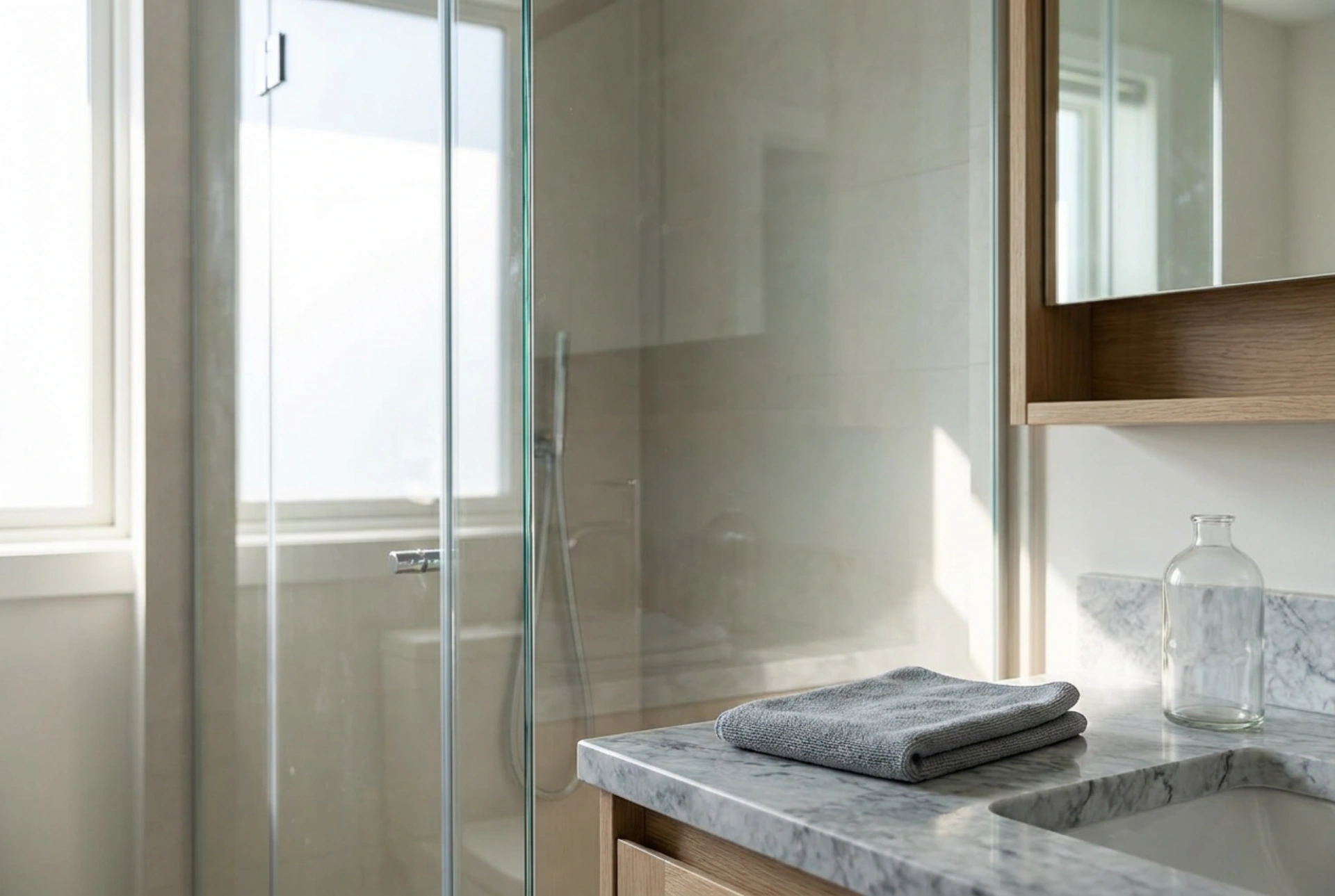


Achieving a crystal-clear, streak-free glass shower screen relies on understanding the chemistry of mineral deposits and the physics of water evaporation.
The Science Behind Shower Grime and Water Spots
To effectively clean shower glass, one must understand what causes the stubborn haze and spots. Tap water contains dissolved minerals, primarily calcium and magnesium ions. When water droplets cling to the glass and evaporate, these minerals are left behind, forming crystalline structures known as calcium carbonate (limescale). Over time, these mineral deposits bond with body lipids and saponified fats from soaps, creating a highly resilient, water-resistant film of soap scum. Wiping this mixture with a dry cloth only smears the fatty acids across the glass, causing the classic cloudy streaks that are difficult to remove.
The Role of pH and Chemical Emulsification
Removing this complex layer requires a two-pronged chemical approach: breaking down the mineral bonds and emulsifying the organic fats. Limescale is highly alkaline, meaning it must be dissolved by an acidic agent. Formulations containing organic acids, such as citric acid or lactic acid, work by chemically converting insoluble calcium carbonate into highly soluble calcium salts. Simultaneously, surfactants (surface-active agents) are required to lower the surface tension of the water, allowing the acidic solution to penetrate the greasy lipid barrier of the soap scum. When choosing or preparing a cleaner, ensure it has a mildly acidic pH to target the minerals without damaging the silicon seals or metal framing of the enclosure.
The Correct Order of Operations and Dwell Time
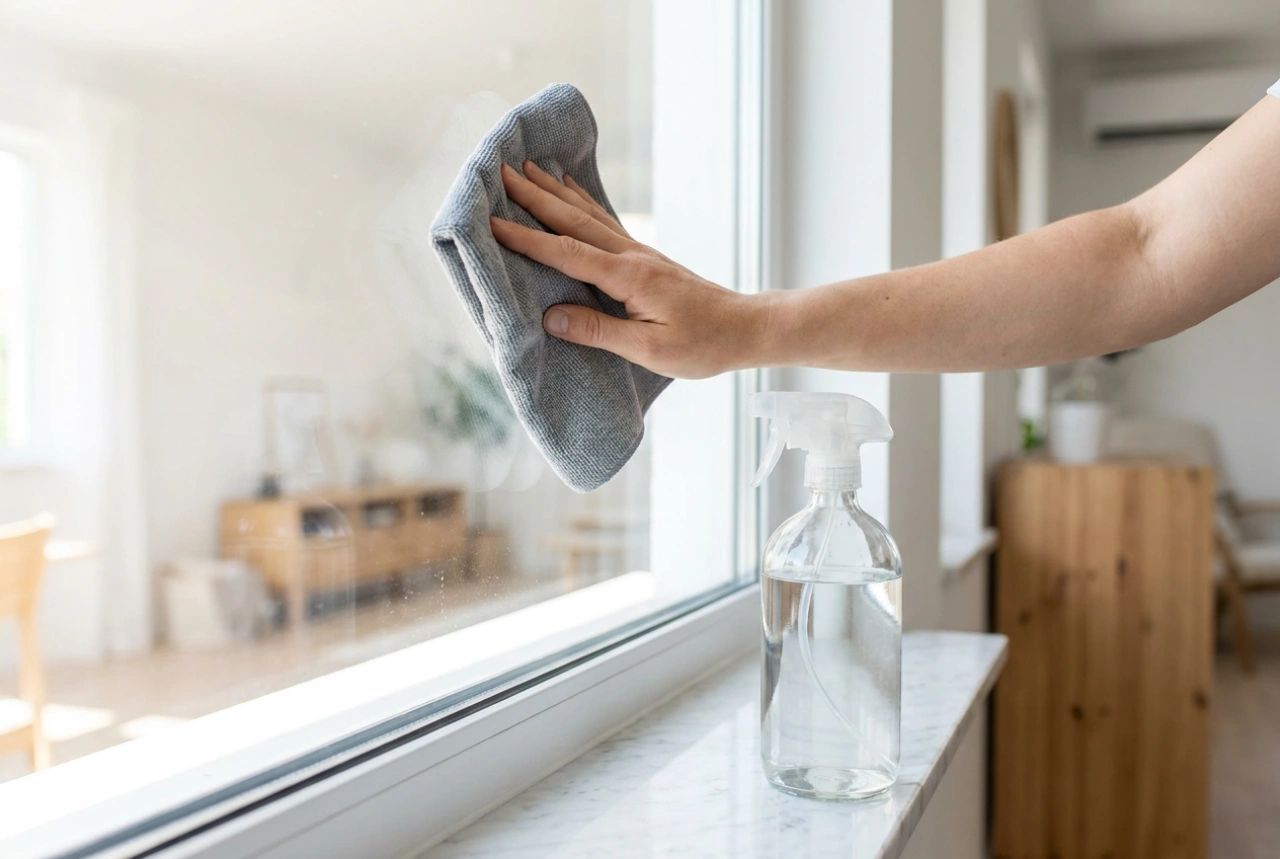
The application method is just as critical as the chemical composition of the cleaner. Spraying a surface and immediately wiping it away does not allow sufficient time for the chemical reaction to occur. First, rinse the glass with warm water to expand the organic matter and wash away loose dust. Next, apply the cleaning solution evenly in a fine, overlapping mist. Avoid heavy application that leads to rapid running, as these vertical channels can dry unevenly and cause chemical etching. Allow the solution to dwell on the surface for two to five minutes. This dwell time is essential for the acid to break down the crystalline lattice of the limescale. However, the solution must never be allowed to dry on the glass; if it evaporates, the dissolved minerals will recrystallise in a more concentrated, harder-to-remove state.
Mechanical Agitation and Rinsing Techniques
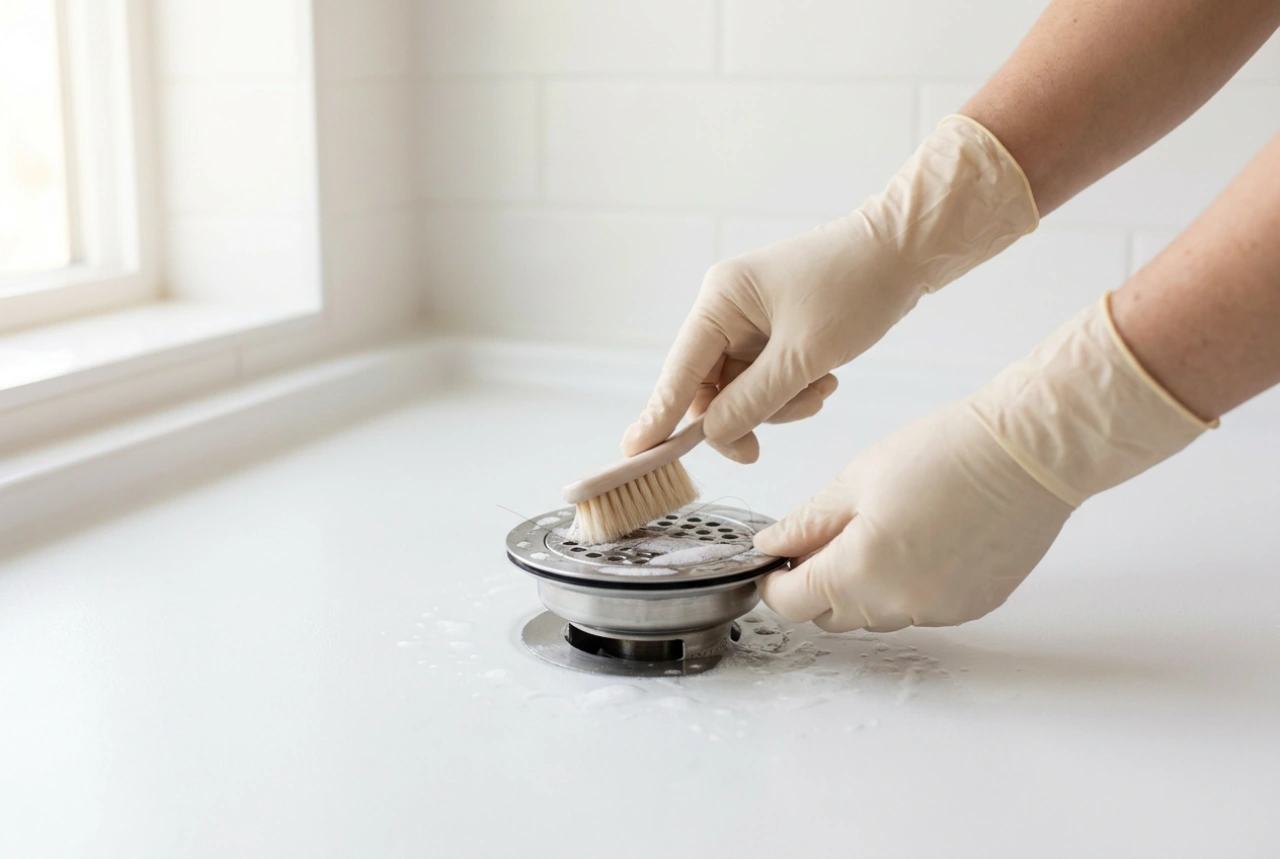
Once the chemical bond of the grime has been weakened, gentle mechanical agitation is necessary to lift the suspended soils. Use a non-abrasive white scouring pad or a high-density microfiber cloth. Avoid using green kitchen scourers or abrasive powders, as these can create microscopic scratches on the glass surface, providing ideal anchoring points for future limescale accumulation. Work in small, circular motions from top to bottom. Once agitated, rinse the entire surface thoroughly with cold water. Cold water is preferred for the final rinse as it lowers the temperature of the glass, reducing the rate of spontaneous evaporation and giving you more time to dry the surface mechanically.
The Physics of Drying: Squeegeeing and Microfiber Finishing
The final and most crucial step in preventing streaks is the mechanical removal of water before it can evaporate. A squeegee is the most efficient tool for this purpose. Using a flexible rubber blade, start at the top corner of the screen and pull downwards in a continuous, even stroke. Overlap each stroke by approximately two centimetres to ensure no moisture is left behind. Crucially, wipe the rubber blade with a dry microfiber cloth after every single pass; otherwise, you will reintroduce suspended minerals back onto the clean glass. To finish, use a dry, tightly woven microfiber glass cloth to buff the edges and frame. The capillary action of the microfiber splits will absorb any remaining microscopic droplets, leaving a completely spot-free finish.
Preventing Future Buildup with Hydrophobic Barriers
To reduce the frequency of deep cleaning, you can alter the physical properties of the glass surface. Glass is microscopically rough and porous, which allows water droplets to cling to it easily. Applying a hydrophobic polymer coating—often containing silicon-based compounds—fills these microscopic pores and creates an ultra-smooth barrier. This increases the contact angle of the water, causing it to form tight beads that easily roll off the surface under gravity, taking dissolved minerals with them and preventing the initial formation of scale.