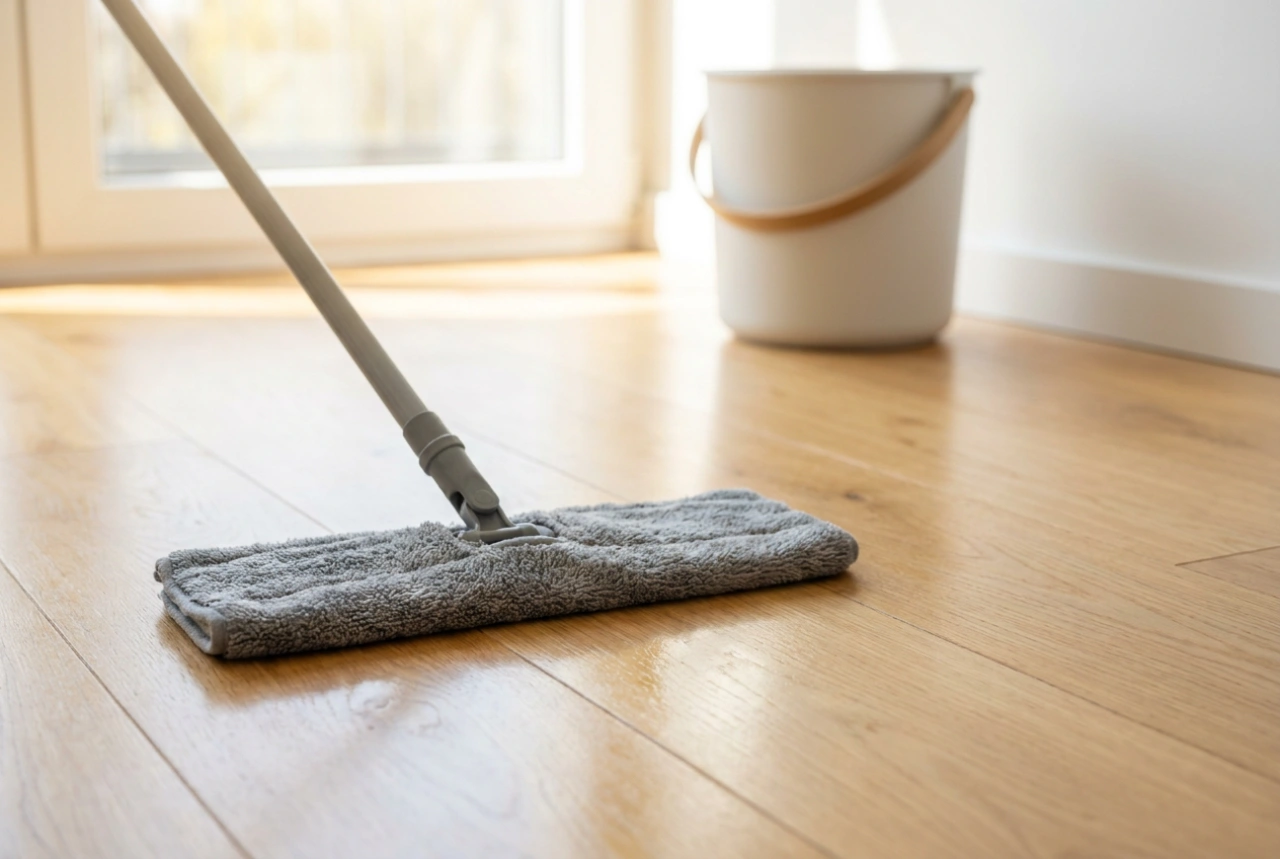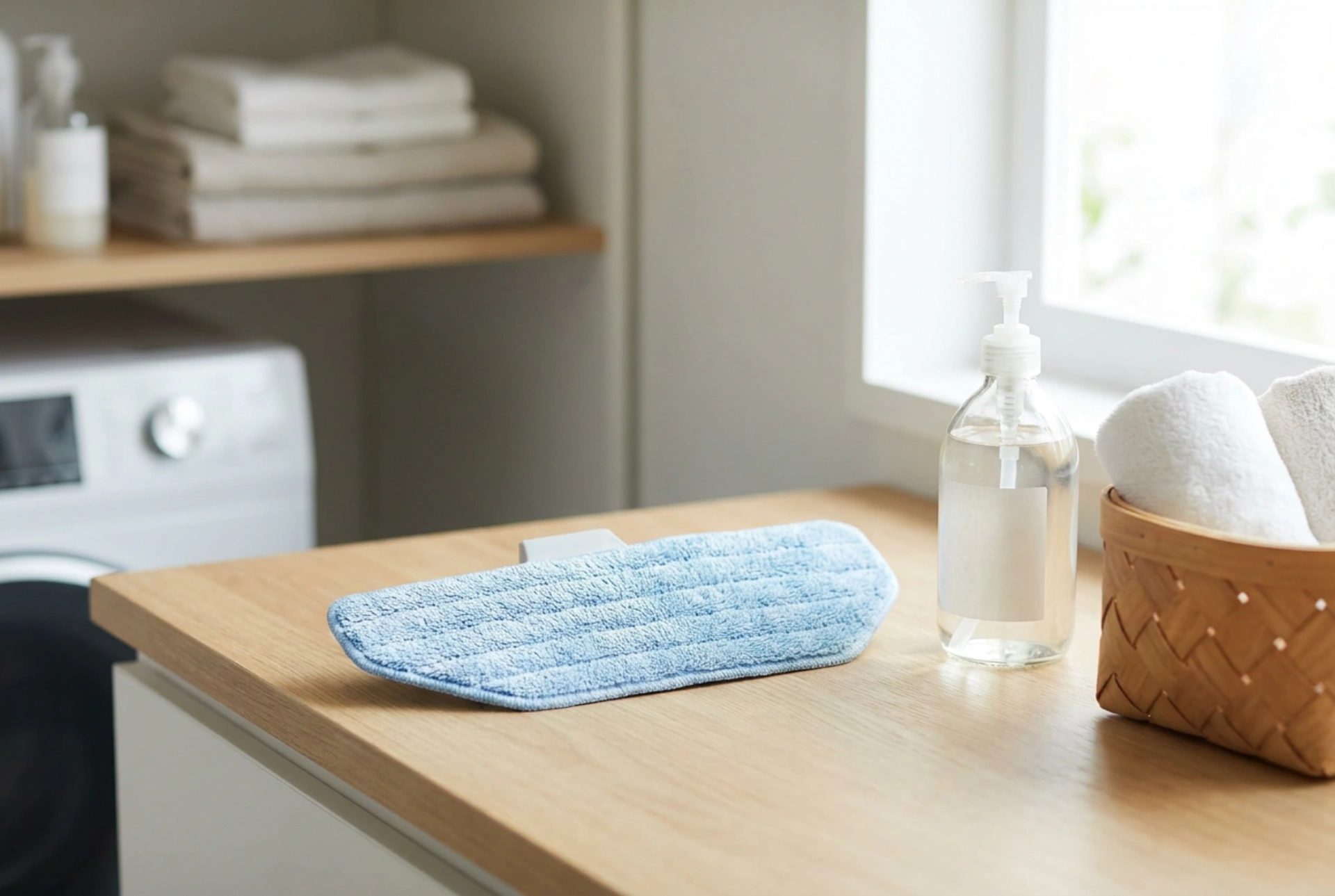


Using a dirty or poorly washed flat mop pad does not clean your floors; instead, it merely redistributes grease, bacteria, and fine dust across the surface. To maintain the hygiene of your home and extend the lifespan of your cleaning tools, you must understand the science behind washing microfibre and synthetic mop attachments.
The Physics of Microfibre: Why Mop Pads Hold Onto Grime
Most modern flat mop pads are made of microfibre, a synthetic blend typically consisting of polyester and polyamide. The structure of these fibres is engineered to be split, creating microscopic hook-like shapes and capillary channels. This physical design allows the pad to lift and lock in dirt, grease, and moisture through capillary action and static electricity rather than relying solely on chemical cleaners.
Polyester is lipophilic, meaning it naturally attracts and binds oils and grease. Polyamide is hydrophilic, allowing it to absorb and retain water. However, once these microscopic channels are saturated with grease, soil, and hard water minerals, the mop pad loses its ability to hold new dirt. If you do not thoroughly extract these trapped particles during the wash cycle, the pad will release them back onto your floors during the next use, leaving unsightly streaks and film.
Why Fabric Softeners and Bleach Ruin Your Mop Pad
One of the most common mistakes in laundering mop pads is the use of fabric softeners or conditioning agents. Fabric softeners work by depositing a thin, hydrophobic layer of cationic surfactants and silicones over the textile fibres to make them feel soft. While pleasant for clothes, this chemical coating completely clogs the microscopic channels in microfibre. The pad becomes hydrophobic, pushing water and dirt around the floor instead of absorbing them.
Similarly, strong chlorine-based bleaches should be avoided. Chlorine is highly corrosive to polyamide fibres, breaking down the polymer chains. Over time, this chemical degradation causes the mop pad to shed lint, lose its structural integrity, and fail to generate the electrostatic charge needed to attract dry dust.
The Pre-Wash Routine: Mechanical Extraction
Before tossing your flat mop pad into the washing machine, a brief pre-cleaning step is essential to protect both the pad and your appliance. Washing a pad covered in loose hair, grit, and large debris will lead to redeposition of these particles onto the rest of your laundry and can clog your machine’s drain pump filter.
- Scrape and Brush: Use a stiff-bristled utility brush or a dedicated scraper over a rubbish bin to remove loose hair, dust bunnies, and dried mud from the surface of the dry pad.
- Rinse in Warm Water: Rinse the pad under running warm water (around 30°C). Gently massage the fibres to flush out loose silt and surface grime. This prevents the washing machine water from turning into a highly abrasive mud bath in the initial minutes of the cycle.
The Machine Wash Protocol: Step-by-Step
To completely emulsify the oils and release the trapped dirt from the microfibres, follow a specific washing machine protocol designed for technical textiles:
- Wash Separately: Always wash microfibre mop pads separately from cotton items like towels or t-shirts. Cotton sheds lint, which will immediately clog the microscopic hooks of the microfibre, permanently reducing its cleaning efficiency.
- Choose the Right Detergent: Use a simple, liquid laundry detergent. Avoid powders, which may not dissolve fully in lower temperatures and can leave abrasive mineral deposits inside the fibres. Ensure the liquid detergent contains no added softeners, essential oils, or optical brighteners.
- Select the Optimal Temperature: Wash the pads at 60°C. This temperature is high enough to melt and emulsify greasy residues and kill bacteria, but low enough to prevent the synthetic polyester and polyamide fibres from melting or shrinking. If the pad is only lightly soiled, 40°C is sufficient.
- Sanitise Safely: If you need to disinfect the pads after cleaning high-risk areas like bathrooms, use an oxygen-based bleach (sodium percarbonate) instead of chlorine. This releases active oxygen which sanitises without destroying the synthetic fibres.
Drying and Storing for Longevity
The care of your flat mop pad does not end when the washing machine cycle finishes. How you dry the fibres dictates how well they will perform during the next cleaning session:
Air drying is the most reliable method. Hang the pads by their loops or lay them flat on a drying rack in a well-ventilated area. If you must use a tumble dryer, select a low-heat or synthetic cycle. High heat from a tumble dryer or placing the pads directly on a hot radiator can melt the ultra-fine synthetic tips of the microfibres, fusing them together. Once fused, the fibres lose their capillary properties permanently, turning a high-performance cleaning tool into a stiff, non-absorbent piece of plastic fabric.