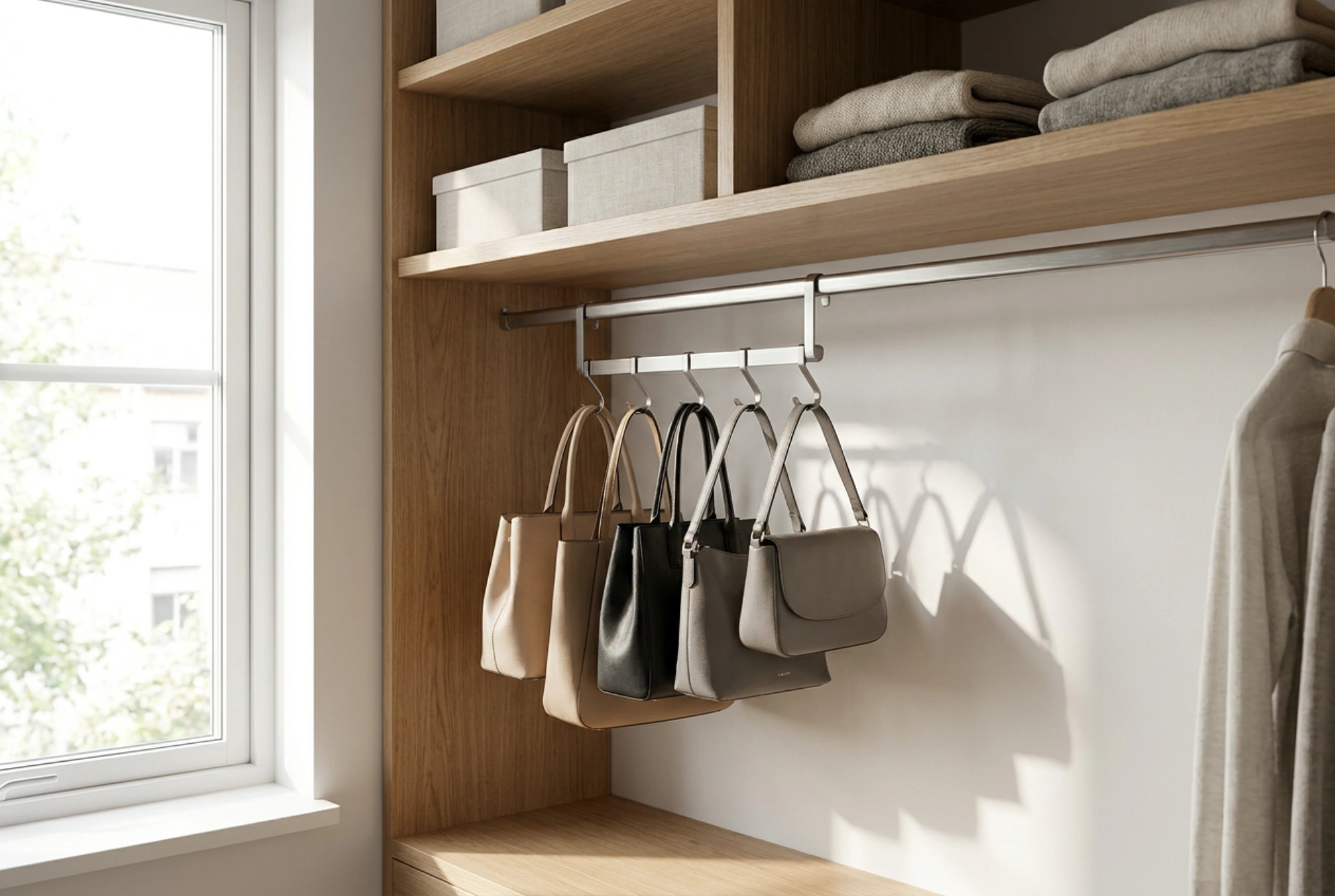


Storing handbags efficiently requires more than just finding an empty corner in your wardrobe; it involves understanding material tension and spatial distribution to prevent structural damage. Utilizing dedicated handbag hangers is the most effective method to maintain the shape of your accessories while maximizing the vertical volume of your storage space.
The Physics of Handbag Distortion
When handbags are stored improperly—such as being piled on shelves or crammed into drawers—they are subjected to uneven mechanical stress. Gravity acts continuously on the materials. For structured bags, resting on a flat surface for extended periods can cause the bottom panels to sag, especially if the internal filling or base shapers are absent. Conversely, hanging a bag by a thin strap on a sharp nail or a narrow wire hanger concentrates the entire gravitational pull on a tiny surface area. This high localized pressure stretches the leather fibers or synthetic polymers past their elastic limit, resulting in permanent deformation, cracks, or broken stitching. A properly designed wardrobe handbag hanger distributes this load across a wider, curved surface, mimicking the natural contour of a human shoulder or hand grip.
Maximising Wardrobe Volume Through Vertical Storage
Wardrobes are inherently limited by their linear hanging rail space. Standard horizontal shelf storage often leads to deep stacking, where items at the back are forgotten and suffer from poor air circulation. By transitioning to vertical handbag hangers, you exploit the unused vertical column of space beneath the main hanging rail. This spatial strategy group-suspends multiple bags vertically without them touching or compressing one another. Maintaining physical separation prevents friction between metal hardware—like zippers, buckles, and chains—which can scratch delicate leather or snag woven fabrics. Furthermore, elevating the bags off the wardrobe floor protects them from dust accumulation and potential moisture microclimates that form near ground level.
Choosing the Right Hanger Geometry
The efficacy of a handbag hanger relies heavily on its physical design and material composition. To ensure optimal care, certain structural features must be prioritized:
- Wide, Curved Support Hooks: The hook element that supports the bag strap should have a width of at least two to three centimeters and a gentle radial curve. This matches the bend radius of the strap, preventing sharp creases in leather or fabric.
- Load-Bearing Capacity: The hanger must be constructed from rigid materials like high-grade steel, thick aluminum, or solid hardwood. Pliable plastics can bend under the weight of heavier tote bags, causing the bags to slide off or hang at angles that stress the seams.
- Non-Slip Surfaces: Look for hangers with textured or rubberized coatings on the hook area. This increased coefficient of friction prevents silk-lined straps or smooth leather handles from slipping off when adjacent items are moved.
A Step-by-Step System for Wardrobe Organisation
Implementing an organized handbag system requires a systematic approach to ensure both accessibility and preservation. Follow this logical sequence:
1. Empty and Inspect
Before hanging any bag, completely empty its contents. Leaving heavy items inside—such as wallets, keys, or cosmetics—adds unnecessary weight, accelerating strap elongation and structural wear. Inspect the interior for dust or debris, wiping it down with a dry microfiber cloth.
2. Group by Weight and Frequency
Categorize your bags by how often they are used. Place frequently accessed bags closer to the wardrobe door. Additionally, arrange them by weight: place heavier bags on hangers closer to the structural support brackets of your closet rail to prevent the rail from bowing over time.
3. Protect Delicate Materials
For high-end or vintage bags made from exotic leathers or delicate fabrics, place them inside breathable cotton dust bags before hanging. Ensure the dust bag has an opening that allows the hanger hook to pass through, maintaining the vertical suspension while shielding the material from UV light and dust.
Summary Checklist for Handbag Preservation
To keep your collection in pristine condition, adhere to this quick maintenance routine:
- Never hang bags by thin chains on narrow hooks; use wide-set hangers instead.
- Distribute the weight evenly across your wardrobe rail to avoid structural sag.
- Keep bags empty during storage to eliminate constant tension on seams and straps.
- Ensure adequate spacing between hung items to facilitate natural air circulation.