

Optimising the physical space around a top-loading washing machine is essential for ensuring unrestricted lid operation and preventing long-term mechanical strain on the hinges. Understanding the spatial clearance, hinge mechanics, and moisture dynamics of these appliances allows for a more ergonomic laundry routine and extends the lifespan of the machine's components.
Spatial Mechanics and Lid Clearance Calculations
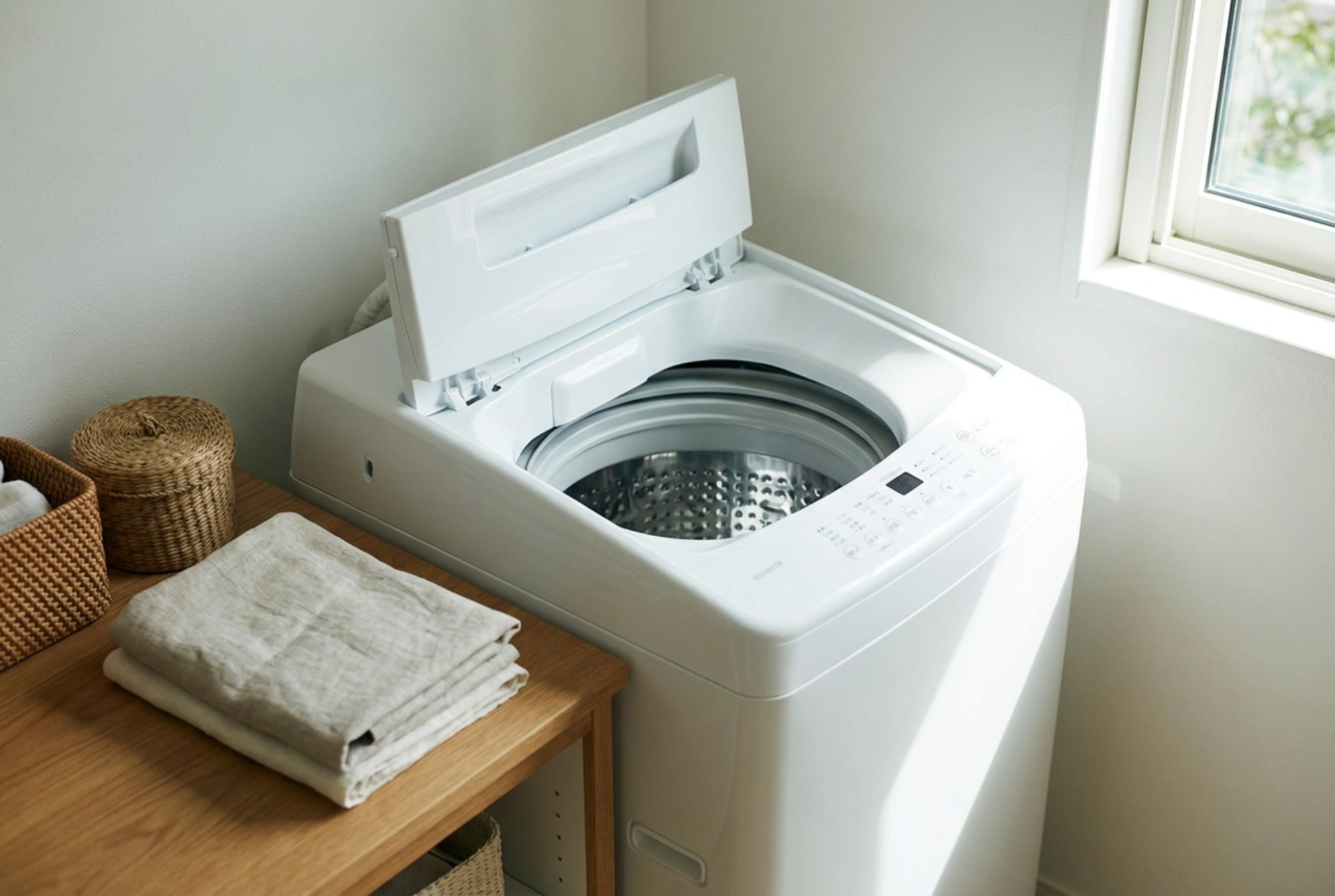
Unlike front-loading appliances, a top-loading washing machine requires significant vertical clearance to allow the lid to swing fully open. Most top-loader lids operate on a simple pivot hinge, describing an arc of approximately 90 to 110 degrees. To prevent the lid from striking overhead shelving, cupboards, or boilers, you must calculate both the static height of the machine and the dynamic height of the fully extended lid.
When planning the layout, measure the distance from the floor to the lowest point of any overhead obstruction. Subtract the height of the washing machine cabinet. The remaining space must exceed the depth of the lid itself by at least 5 to 10 centimetres. This safety margin prevents accidental impacts that can crack plastic lids, warp metal frames, or misalign the safety interlock switch—a critical component that halts the spin cycle when the lid is lifted.
Hinge Physics and Mechanical Maintenance
The ease of opening a top-loader depends heavily on the hinge mechanism. Modern top-loaders often utilise torsion springs or hydraulic dampers to assist with lifting and to provide a "soft-close" feature. This mechanism counteracts gravity, preventing the heavy lid from slamming down and causing structural fatigue to the plastic casing.
Over time, detergent residues, lint, and ambient humidity can infiltrate the hinge joints, increasing friction and causing the lid to squeak or resist opening. To maintain smooth operation, avoid using heavy, dust-attracting oils. Instead, apply a dry PTFE (polytetrafluoroethylene) lubricant or a light silicone spray directly to the pivot points. These materials reduce friction without attracting airborne particles. If your machine features an adjustable tension spring, minor adjustments can balance the lid's weight, allowing it to remain upright without falling forward.
Microclimates and Moisture Dissipation
Leaving the lid partially or fully open after a cycle is not merely a preference; it is a thermodynamic necessity. A sealed washing drum retains moisture, creating a high-humidity microclimate ideal for the proliferation of anaerobic bacteria and mould (especially Aspergillus and Penicillium species). This leads to sour odours and musty laundry.
When the lid is left open, natural convection occurs. Warm, moist air rises out of the drum, replaced by cooler, drier ambient air. To facilitate this air exchange without cluttering your utility space, ensure the lid can remain propped open at an angle of at least 45 degrees. If vertical clearance is restricted, look for models with segmented or folding lids, which reduce the vertical clearance requirement while still allowing sufficient airflow to dry the stainless steel tub and rubber agitator seals.
Ergonomic Loading and Weight Distribution
The mechanical advantage of a top-loading machine lies in gravity-assisted loading, which reduces the need to bend down. However, lifting heavy, wet laundry vertically out of the drum requires correct physical technique to prevent lumbar strain.
When unloading, stand close to the machine with your feet shoulder-width apart. Avoid twisting your torso while lifting heavy textiles, such as towels or bedding. Instead, rotate your entire body. When loading, distribute the weight evenly around the central agitator or impeller. An unbalanced drum causes violent lateral vibrations during the high-speed spin cycle, which can physically shift the machine, potentially damaging nearby cabinetry or wedging the lid shut against overhanging surfaces.