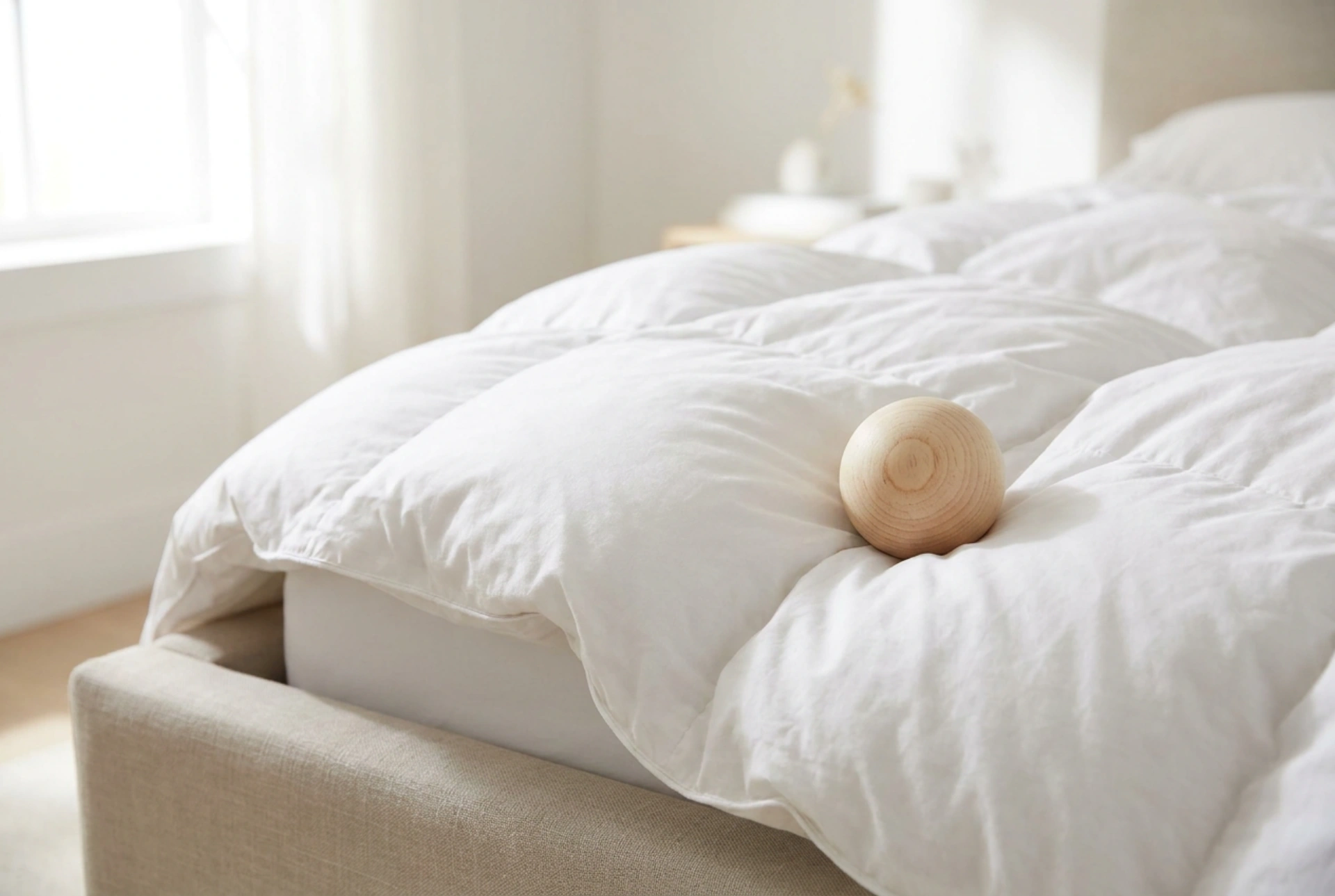


Washing a down duvet can feel like a high-stakes gamble, but understanding the physics of down feather structures makes it a highly predictable science. By managing temperature, mechanical agitation, and surfactant chemistry, you can thoroughly clean your bedding while restoring its natural loft.
The Science of Down: Why Ordinary Laundry Methods Fail
Down consists of thousands of tiny, three-dimensional protein filaments radiating from a central point. These filaments trap pockets of air, creating the insulating layer that keeps you warm. However, natural down is a keratin-based fiber covered in fine lipids (oils). Standard laundry detergents contain aggressive surfactants and proteases (enzymes designed to break down protein stains) that strip away these protective oils. Once stripped, the feathers become brittle, lose their elasticity, and clump together permanently. To preserve the structure, you must use a specialized, pH-neutral down wash or a mild liquid detergent free of enzymes, optical brighteners, and fabric softeners. Fabric softeners are particularly detrimental as they coat the delicate filaments in a slick, hydrophobic chemical layer, weighing them down and eliminating their loft-building capacity.
Pre-Wash Inspection and Machine Settings
Before placing the duvet into the washing machine, inspect the casing for any tears or weak seams. Even a tiny opening can lead to a catastrophic loss of feathers during the spin cycle. Repair any loose stitching with a needle and thread before proceeding. Down needs ample space to move; a washing machine with a drum capacity of at least 8 kg is essential. If the duvet is squeezed too tightly into the drum, water and detergent cannot penetrate the dense filling evenly, and the mechanical rinse action will be severely compromised. Select a delicate, wool, or down-specific cycle with a maximum temperature of 30°C or 40°C. Mild warmth helps dissolve body oils without damaging the feather structure. Set the spin speed to a moderate 800 to 1000 RPM. This is strong enough to extract heavy water without exerting excessive centrifugal force that could break the delicate quills.
The Power of the Rinse and Extraction Phase
One of the most critical steps in washing a down duvet is the removal of detergent residue. Down fibers are incredibly dense and act like a sponge, holding onto soap particles. Any remaining detergent will cause the feathers to stick together once dry, destroying the duvet's fluffiness. To prevent this, program your washing machine to perform at least two extra rinse cycles. The final spin cycle must be long enough to remove the bulk of the water. When you remove the wet duvet from the machine, it will look flat, clumped, and slightly grey. This is normal; the wet keratin fibers have temporarily collapsed. The restoration of loft occurs entirely during the drying phase.
The Physics of Drying: Restoring the Loft
Tumble drying is the most reliable method to restore a down duvet to its original volume. The process requires gentle heat and constant, physical disruption. Set the dryer to a low-heat setting (no higher than 60°C). High temperatures can bake the feathers, making them brittle and dry. Place the duvet in the dryer alongside three to four clean tennis balls or wool dryer balls. As the dryer drum rotates, these balls physically strike the wet clumps of down, breaking them apart and forcing air between the tiny filaments. This mechanical action is absolutely essential; without it, the down will dry in dense, hard lumps that cannot easily be separated later. Stop the dryer every 30 to 45 minutes to take the duvet out, shake it vigorously, and manually break up any remaining damp clumps before returning it to the drum. This entire process can take several hours, but patience is the key to a perfectly lofted result.
Air-Drying Technique (Without a Tumble Dryer)
If you do not have a tumble dryer, you can air-dry a down duvet, though it requires significant manual effort and a warm, dry environment. Never hang a wet down duvet vertically, as gravity will pull all the heavy, wet feathers to the bottom of the chambers, stretching the seams and causing permanent clumping. Instead, lay the duvet completely flat on a horizontal drying rack in a well-ventilated room or outdoors in the shade. Direct sunlight should be avoided to prevent fabric degradation. Every two to three hours, shake the duvet thoroughly from all four corners and gently massage the damp clumps with your hands to redistribute the filling. This process can take several days, and it is critical to ensure the duvet is 100% dry before putting it back on the bed, as any residual moisture can lead to mold and mildew growth within the feathers.