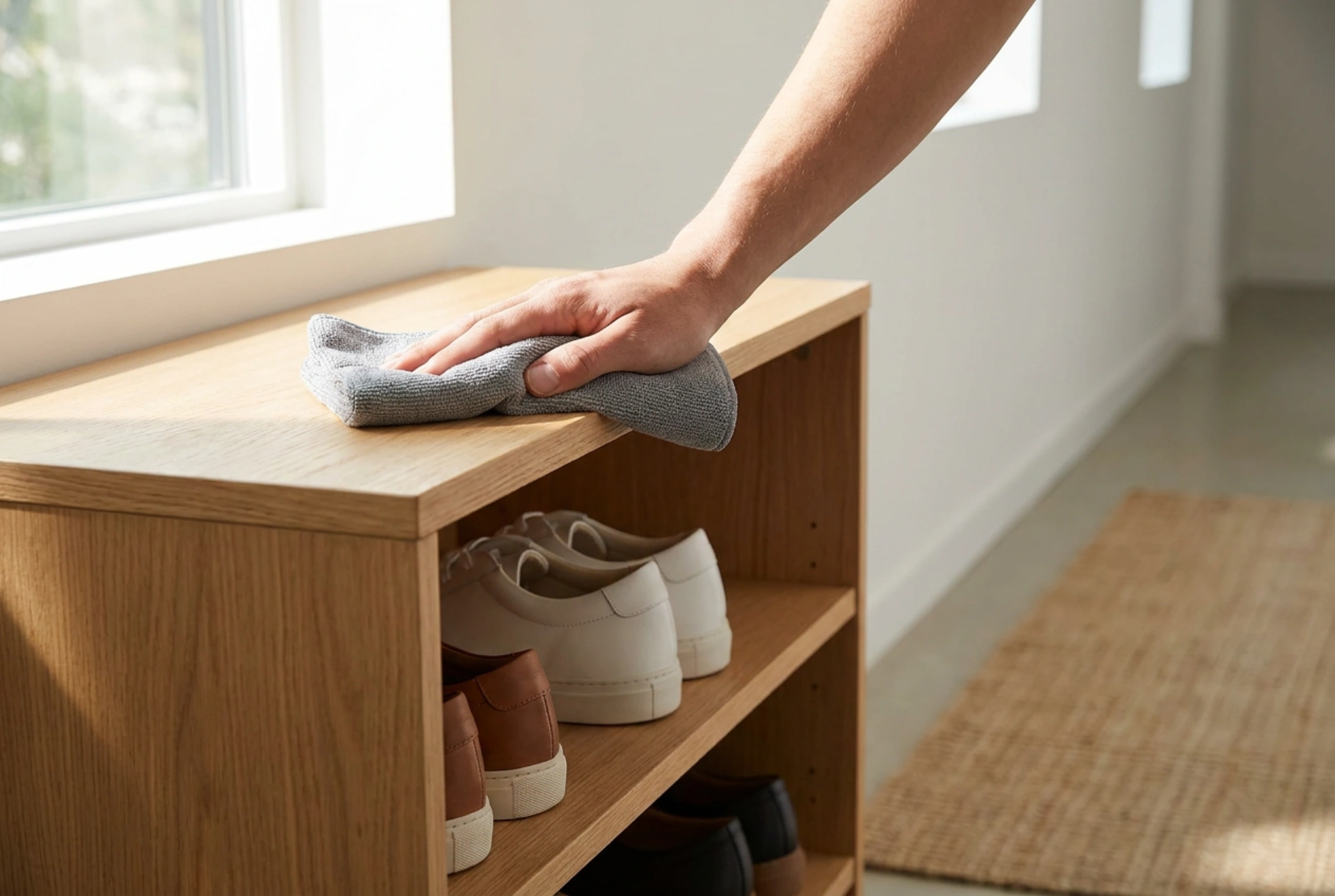


Hallway shoe racks are exposed to a harsh microclimate defined by wet footwear, abrasive grit, road salt, and constant temperature shifts. Because wood is a natural, hygroscopic material, keeping a wooden shoe rack in pristine condition requires a basic understanding of material science, surface protection, and systematic cleaning habits.
The Physics of Wood and the Threat of Wet Footwear
Wood naturally maintains an equilibrium moisture content by absorbing and releasing water vapor from its surrounding environment. When wet shoes are placed directly onto an unprotected wooden shelf, liquid water penetrates the cellular structure of the wood via capillary action. This localized moisture absorption causes the wood fibers to swell. As the wood dries out unevenly, tension develops between the wet and dry zones, leading to warping, cupping, or surface cracking.
Furthermore, winter runoff often carries dissolved road salts, such as sodium chloride or calcium chloride. When this saltwater evaporates on the wooden surface, the salt recrystallizes within the pores of the wood. This process, known as subflorescence, exerts internal physical pressure on the wood fibers and protective finishes, causing the surface lacquer or oil to flake, discolor, and degrade over time.
Selecting and Replenishing the Protective Barrier
To shield the wood from liquid water and chemical contaminants, you must maintain its protective barrier. The choice of finish dictates the maintenance technique:
- Penetrating Oils: Natural drying oils (such as tung oil or linseed oil) penetrate deep into the wood pores and polymerize through oxidation, forming a highly hydrophobic, matte barrier. To replenish an oiled finish, lightly sand the surface with 220-grit sandpaper along the direction of the grain to open the wood pores. Wipe away the dust, apply a thin layer of oil with a lint-free cloth, let it sit for twenty minutes to absorb, and thoroughly buff off any excess to prevent a sticky residue.
- Waxes: Hard wax oils or paste waxes provide an excellent sacrificial layer over oiled or bare wood. They fill microscopic voids and repel dust and water droplets. Apply wax sparingly in circular motions, then buff vigorously along the grain once dry to create a hard, protective sheen.
- Varnishes and Lacquers: Polyurethane finishes form a solid, impermeable plastic film over the wood. While highly durable, they cannot be easily spot-repaired. If the varnish cracks, moisture can get trapped underneath, causing localized wood rot. If this occurs, the entire surface must be sanded down and recoated.
Routine Cleaning Protocol: Order of Operations
Routine maintenance should always prioritize dry cleaning over wet cleaning to minimize water exposure. Follow this structured sequence:
First, remove all shoes and vacuum or wipe away loose grit, dried mud, and sand using a dry microfiber cloth. Microfiber relies on electrostatic forces to lift abrasive particles without scraping them across the wood surface, which would otherwise micro-scratch the finish.
Second, if stains or salt residues remain, use a damp—not wet—cloth. Wring the cloth out until it is barely moist. Use a highly diluted, pH-neutral surfactant solution. Avoid using alkaline cleaners, ammonia, or vinegar; alkaline substances can react with the natural tannins in woods like oak, causing permanent dark gray staining, while acids can strip away wax coatings.
Third, immediately follow the damp wipe with a clean, dry cotton cloth to absorb any residual surface moisture before it can penetrate the joints or grain of the wood.
Passive Defense and Environmental Control
The most effective care strategy is prevention. Placing heavy-duty, low-profile silicone or plastic drip trays on top of the wooden shelves during wet seasons provides a sacrificial barrier. These trays catch the bulk of the water, mud, and road salt, allowing the wood underneath to remain completely dry. Additionally, ensure proper air circulation around the rack; placing shoes too close together traps stagnant, humid air, which promotes the growth of mold and mildew on both the wood and the leather of your shoes.