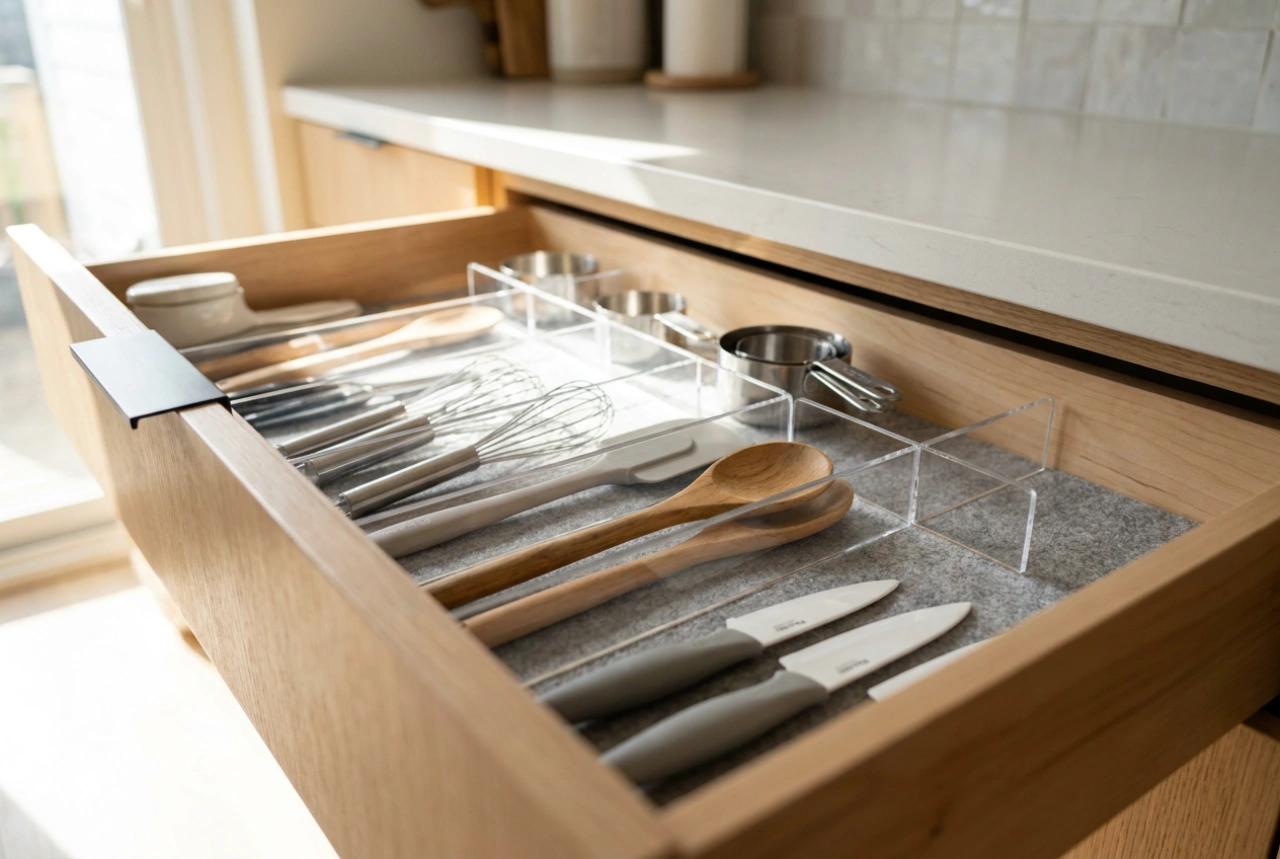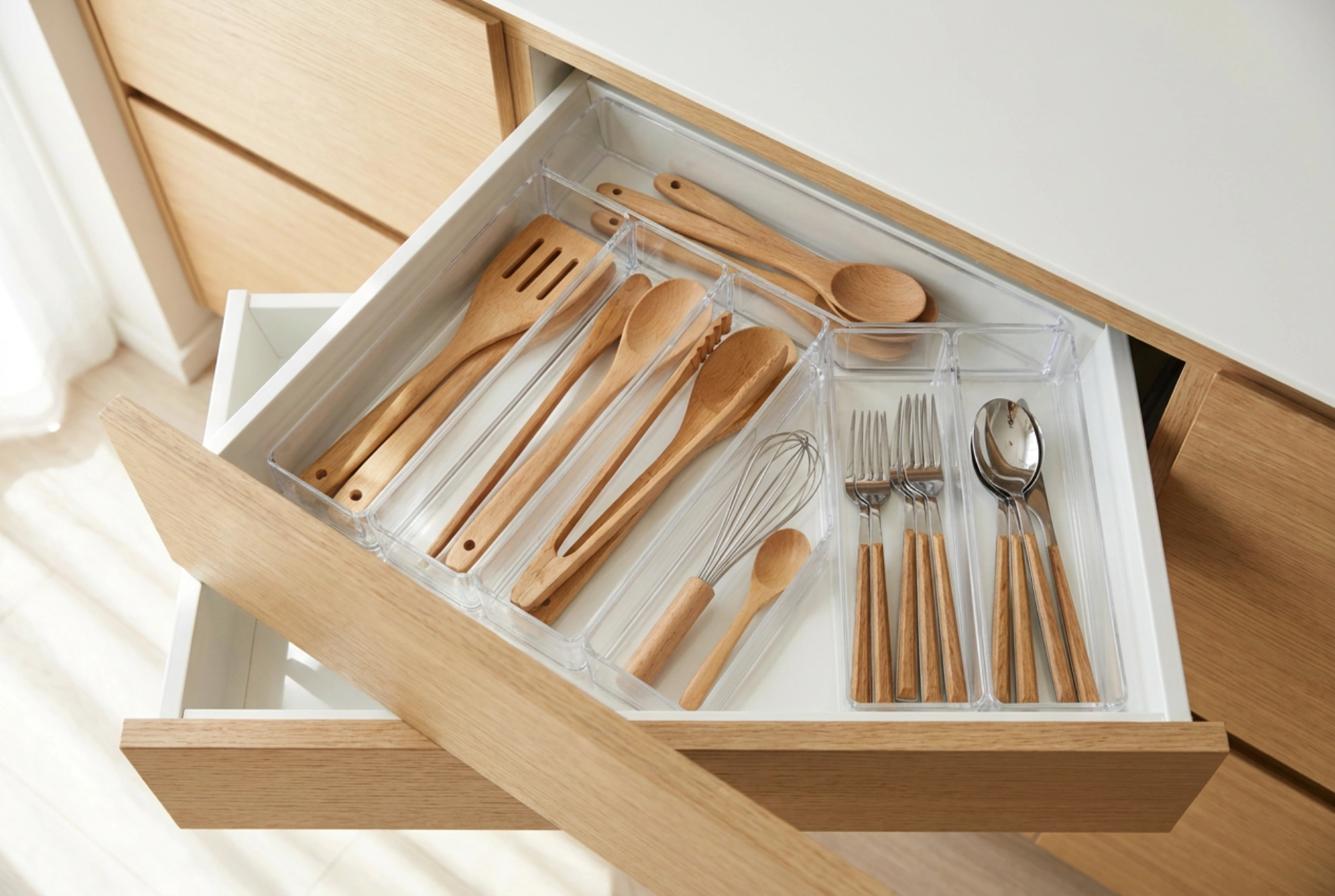


Maximising drawer efficiency relies on applying spatial geometry and material science to prevent item shifting, surface wear, and clutter. Using plastic organizers is a highly functional method to compartmentalise storage, provided you select the right polymers and apply physics-based layout principles.
The Material Science of Drawer Organizers
When selecting plastic dividers, understanding the polymer type determines their durability, flexibility, and maintenance requirements. The two most common materials used in drawer organization are Polymethyl Methacrylate (PMMA, commonly known as acrylic) and Polypropylene (PP).
Acrylic is a rigid, amorphous thermoplastic known for its exceptional optical clarity and high tensile strength. It does not flex easily, making it ideal for maintaining upright, structural boundaries in deep drawers. However, its rigidity makes it susceptible to impact shattering if heavy metal utensils are dropped into it. On the other hand, Polypropylene is a semi-crystalline thermoplastic with high fatigue resistance and flexibility. PP organizers are typically translucent or opaque and can absorb impacts without cracking, making them highly suitable for heavy, high-velocity kitchen tools or workshop utility drawers.
The Physics of Motion: Eliminating Sliding and Inertia
A common frustration with drawer inserts is their tendency to slide when the drawer is opened or closed. This movement is governed by Newton’s first law of motion: objects inside the drawer want to maintain their state of rest or motion when the drawer frame is accelerated.
To counteract this inertia, you must increase the coefficient of static friction between the bottom of the organizer and the drawer liner. Smooth plastic-on-wood or plastic-on-laminate interfaces have a very low friction coefficient, leading to sliding. To resolve this, apply small elastomeric bumpers—specifically polyurethane or silicone self-adhesive pads—to the base corners of each organizer. These elastomers have high surface tack and deform slightly under gravity, dramatically increasing lateral resistance without requiring permanent adhesives or screws that damage the cabinetry.
Spatial Division and Weight Distribution Systems
Effective organization requires a systematic approach based on frequency of use and physical dimensions. To establish an optimal layout, follow these steps:
- Analyze Drawer Kinematics: Place the heaviest items toward the back of the drawer. When a drawer is pulled quickly, the rotational force on the glides is minimized if the heaviest mass is closest to the cabinet cabinet glides, reducing wear on the runner mechanisms.
- Frequency Zoning: Divide the drawer into primary, secondary, and tertiary zones. The front third of the drawer (primary zone) should hold daily-use items. The middle third (secondary) holds weekly items, and the back third (tertiary) houses rarely used tools.
- Volume Budgeting: Ensure that the height of your plastic dividers occupies no more than 80% of the drawer’s vertical clearance. This prevents items from catching on the upper cabinet frame during operation.
Maintaining Polymer Integrity and Preventing Stress Cracking
Plastic organizers require proper chemical maintenance to prevent degradation. Acrylic is highly vulnerable to Environmental Stress Cracking (ESC). When exposed to harsh solvents, such as high-concentration isopropyl alcohol, acetone, or aggressive alkaline detergents, the polymer chains in acrylic relax and microscopic cracks (crazing) develop, ruining the clarity and structural strength.
To clean acrylic organizers, use only dilute solutions of mild anionic surfactants (dishwashing liquid) and lukewarm water (not exceeding 40°C to prevent thermal warping). Avoid abrasive scrubbing pads, which easily scratch the relatively soft surface of PMMA. Polypropylene is chemically highly inert and can withstand stronger detergents, but should still be kept away from extreme heat sources to prevent permanent deformation.