

Achieving a crystal-clear, streak-free finish on glass windows relies on physics and fluid dynamics rather than expensive chemical formulas. By mastering the fluid-glide mechanics of a professional squeegee, you can eliminate static charge and mineral deposits to secure a perfect view every time.
The Physics of the Squeegee Glide
To understand why streaks occur, one must understand how water behaves on glass. Glass surfaces, although seemingly smooth, are full of microscopic pits and valleys. When water containing dissolved minerals or soap evaporates on these uneven surfaces, it leaves behind solid residues. A squeegee works by using a sharp, vulcanised rubber blade to physically scrape and shear the water sheet off the glass before evaporation can take place.
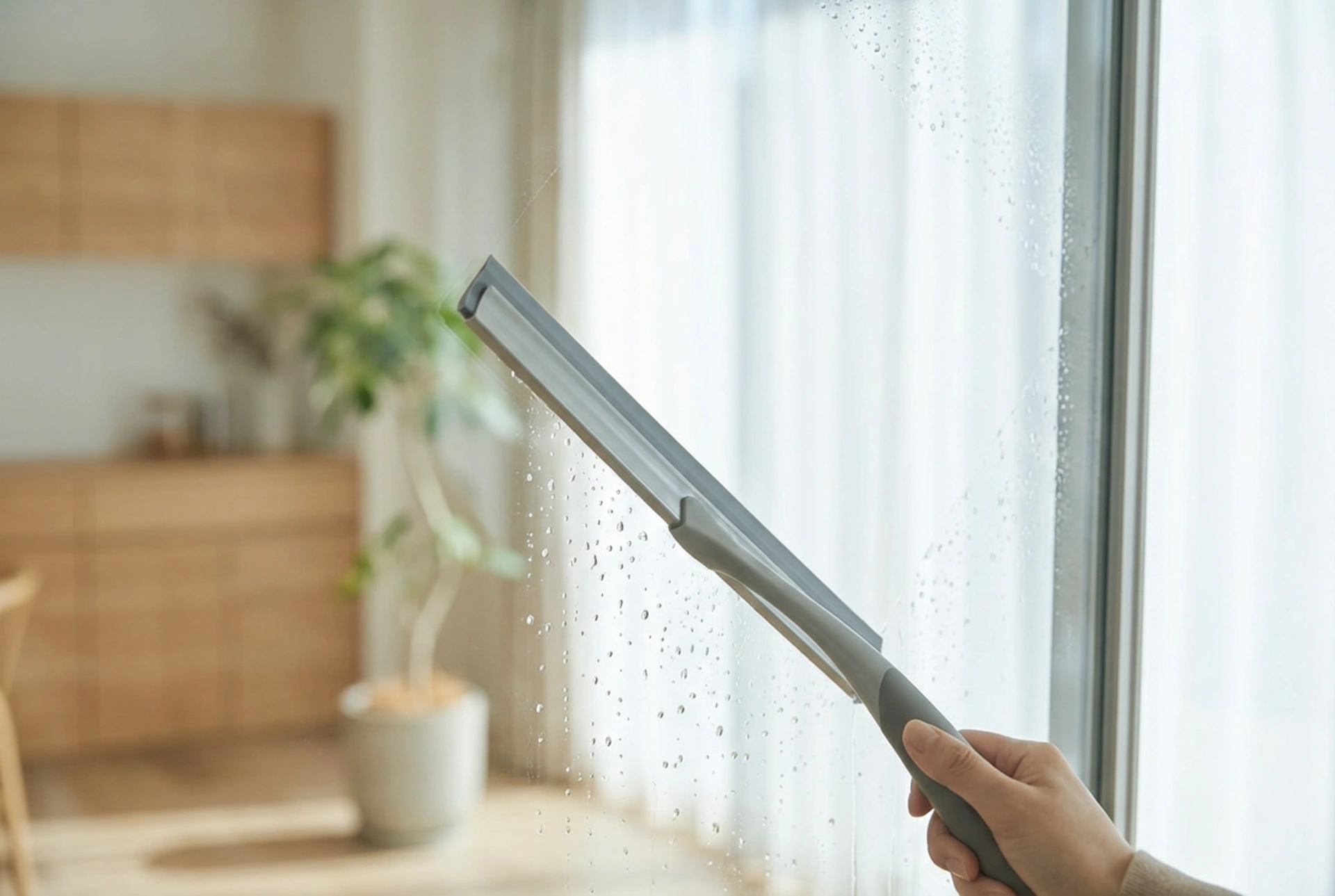
The angle of the blade is critical. You must maintain a consistent 45-degree angle between the squeegee handle and the glass pane. If the angle is too flat, the metal frame of the squeegee will scrape the glass or the rubber will slide over the water without shearing it. If the angle is too steep, the rubber blade will chatter and vibrate, leaving micro-ridges of water that dry into visible streaks. Apply light, uniform pressure; too much force compresses the rubber edge, causing friction to tear the liquid barrier and leave lines behind.
Managing Surface Tension and Lubrication
Water alone has high surface tension, causing it to bead up and run off too quickly, leaving dry patches that cause the squeegee blade to stick and skip. To prevent this, you need a surfactant solution. A few drops of standard neutral dishwashing liquid in warm water is ideal. Surfactants lower the surface tension of water, allowing it to form a continuous wet film that lubricates the squeegee's path.
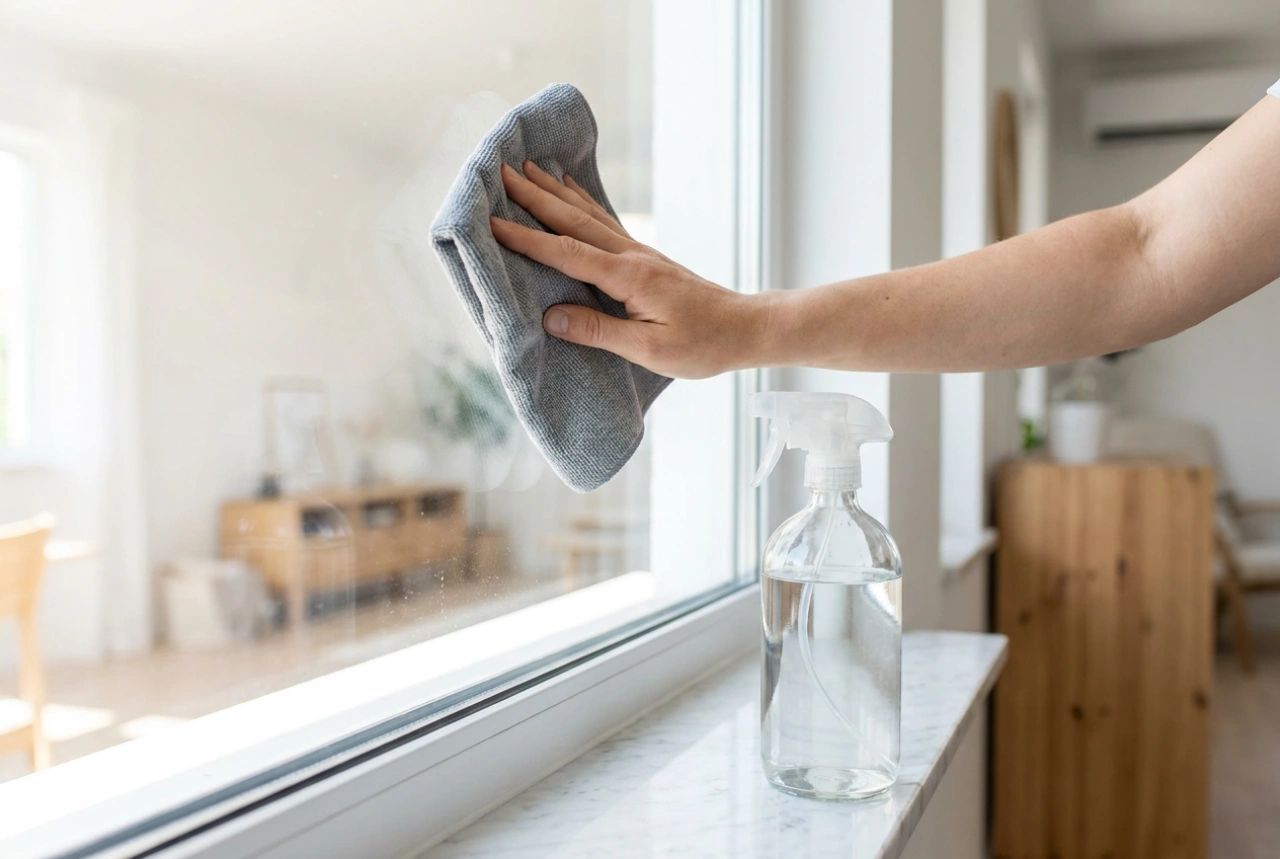
- Preparation: Use a dedicated microfiber washer sleeve to apply the solution. Work in circular motions to lift dust, pollen, and grease.
- Hydration: Ensure the entire pane is wet. If the solution dries prematurely, reapply it immediately before using the squeegee.
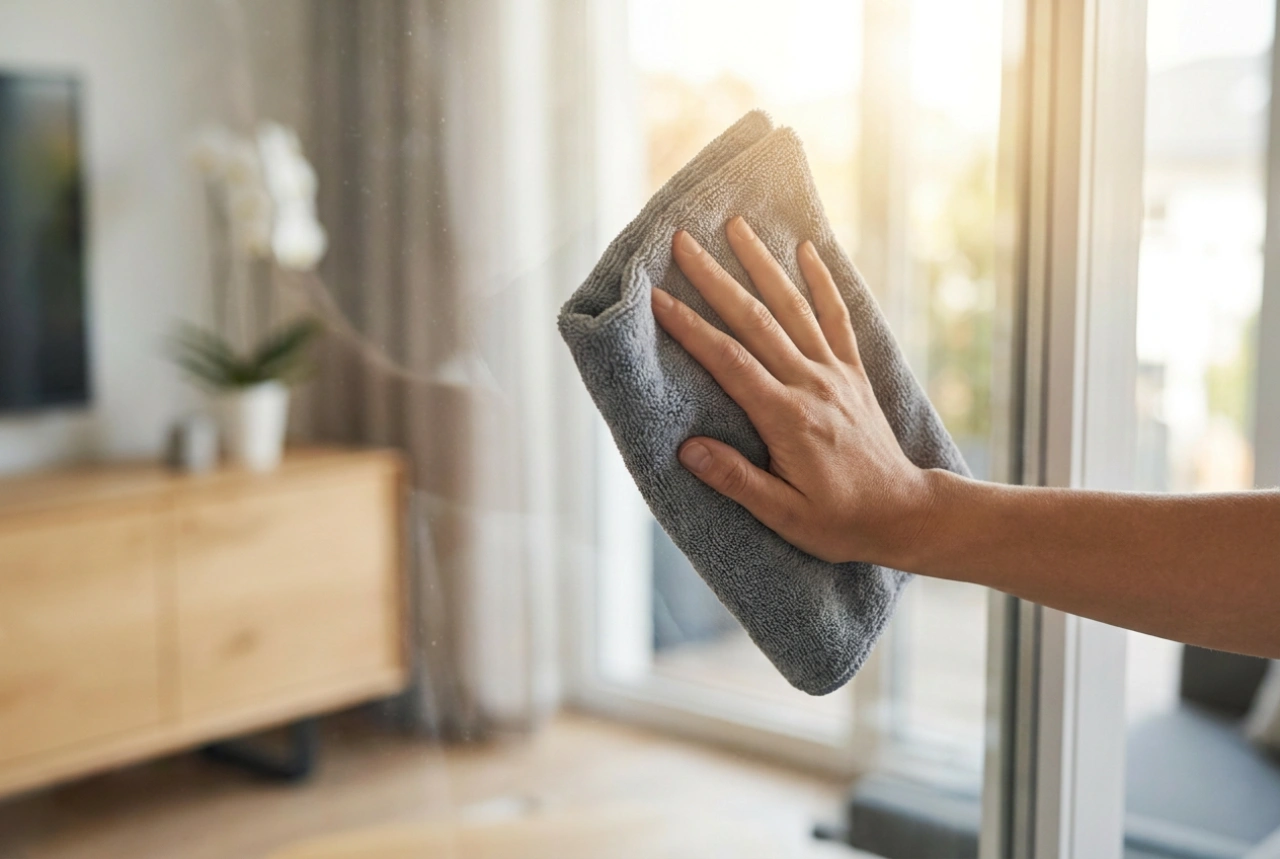
- Detailing: Keep a dry, lint-free microfiber cloth draped over your shoulder to wipe the edges and frame of the window frame where water naturally pools.
Choosing Your Technique: Straight Strokes vs. the S-Glide
Depending on your comfort level, you can choose between two reliable professional methods to clear the water film.
The Straight Stroke Method
This is the most reliable method for beginners and high, narrow windows. Start by wiping a one-inch dry strip along the top edge of the glass with a clean microfiber cloth. Place the squeegee blade in this dry zone and pull straight down to the bottom sill. Before making the next stroke, wipe the rubber blade completely dry with a lint-free cloth. Overlap the previous stroke by roughly two inches to prevent water from slipping between the passes. Repeat this across the entire window pane.
The S-Glide (Swivel) Method
The S-glide is the ultimate professional technique, keeping the blade in continuous contact with the glass to save time and eliminate drips. Start in the top corner, cutting a dry edge. Sweep the squeegee horizontally across the top, then smoothly loop it down and back in a continuous, flowing 'S' shape. By constantly rotating the squeegee angle slightly as you change direction, you keep the water wave flowing in front of the blade, preventing any moisture from slipping underneath. This method requires practice to master the wrist rotation at each turn, but it provides a flawless finish without needing to lift the blade.
The Impact of Temperature and Evaporation
Even the best squeegee technique will fail if environmental factors are ignored. You should never clean windows in direct sunlight or during hot weather. Solar radiation heats the glass pane rapidly. When the glass is warm, the thin surfactant film evaporates within seconds of application, forcing the squeegee rubber over a dry surface. This results in high friction, blade chattering, and severe mineral streaks. Work on overcast days, early in the morning, or on the shaded side of your home when the glass surface temperature is cool to the touch.
Squeegee Maintenance and Blade Care
A squeegee is only as effective as the edge of its rubber blade. Over time, friction, UV light, and environmental acids degrade the sharp, square profile of the rubber. Check the blade regularly for nicks, tears, or rounding. A damaged blade will fail to clear the water cleanly, leaving fine lines across the glass. After each use, wash the rubber with warm water, wipe it clean, and store it flat to prevent warping. Replace the rubber blade at least twice a year to maintain peak clearing efficiency.