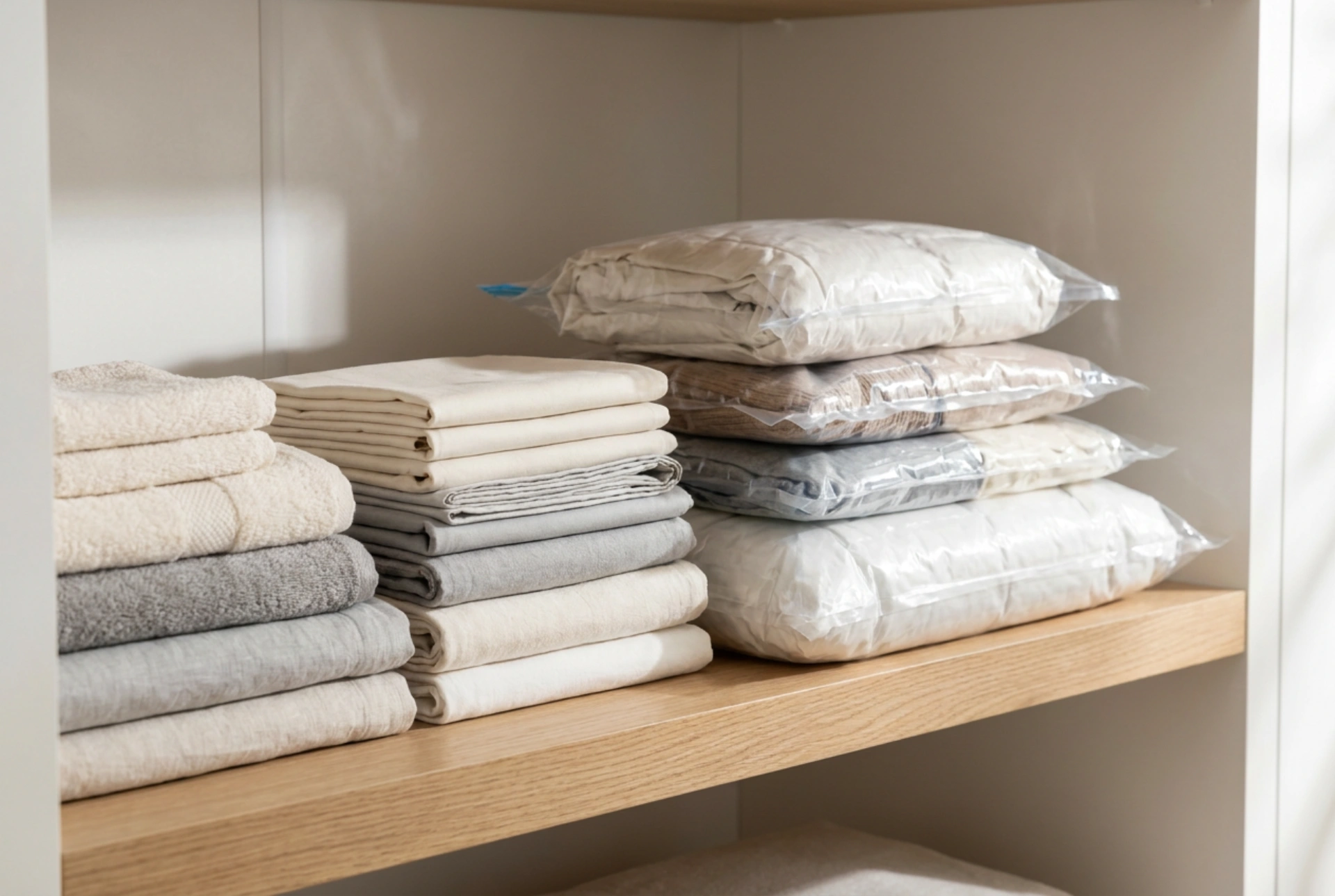


Vacuum storage bags are highly effective for reducing textile volume, but improper compression can permanently damage delicate fibres and trap moisture, leading to mould. Understanding the physics of fabric compression and the biological risks of airtight environments is essential for keeping your wardrobe pristine during off-season storage.
The Physics of Compression: Elastic vs. Plastic Deformation
When you extract air from a storage bag, atmospheric pressure exerts equal force across the sealed plastic, compressing the textiles inside. From a material science perspective, different fibres react uniquely to this mechanical stress. Synthetic polymers, such as polyester and nylon, possess high elastic recovery. This means their molecular chains can bend under pressure and return to their original state once released.
In contrast, natural protein and cellulose fibres, such as wool, silk, and cotton, are highly susceptible to plastic deformation. When subjected to prolonged, high-pressure compression, the hydrogen bonds holding the molecular chains of these natural fibres together are forced into new positions. This results in deep, stubborn creases that are incredibly difficult to iron out without damaging the fabric structure. To prevent this structural set, natural textiles should never be compressed to maximum tightness; leaving a small amount of air inside the bag acts as a physical buffer.
The Microclimate Risk: Moisture and Mould Dynamics
The most common hazard of airtight storage is the incubation of mould and mildew. Even when textiles feel dry to the touch, they naturally retain a percentage of environmental moisture—known as moisture regain. For wool, this can be up to 15% of its dry weight. When sealed in an impermeable plastic barrier, this moisture has nowhere to escape.
If the ambient temperature fluctuates, the air inside the sealed bag reaches its dew point, causing water vapour to condense onto the inner plastic surface. This liquid water, combined with lack of oxygen, creates an ideal anaerobic microenvironment for fungal spores to germinate. To mitigate this risk, follow these strict preparation steps:
- Extended Drying: After washing or tumble-drying, allow garments to air in a well-ventilated room with low relative humidity for at least 24 hours before packing.
- Silica Gel Integration: Place food-grade silica gel packets inside the bag. These act as desiccants, actively adsorbing residual water molecules from the air before they can condense.
- Clean Environment: Ensure garments are entirely free of organic residue (like skin flakes or perfume), which serve as food sources for micro-organisms.
Textiles Exempt from Vacuum Storage
While highly convenient, vacuum storage is fundamentally unsuitable for certain high-value materials due to their unique physical properties:
- Down and Feather-Filled Items: The thermal efficiency of down coats and duvets relies on loft—the three-dimensional structure of keratin fibres that traps warm air. Heavy compression snaps these delicate filaments. Once broken, the down loses its loft permanently, reducing its thermal insulation capability.
- Natural Leather and Suede: These materials are organic membranes that require ambient humidity to maintain structural flexibility. Depriving them of air causes the residual fats and oils within the leather to degrade, leading to cracking, desiccation, and irreversible stiffening.
- Structured Tailoring: Garments with internal structuring, such as shoulder pads, fused interfacings, or canvas chest pieces, should never be compressed. The pressure can warp these internal elements, permanently ruining the drape and fit of the garment.
Step-by-Step Compression Technique
To safely pack permissible textiles, the mechanical process of sealing must be handled with care. Begin by folding items flat rather than rolling them, which distributes pressure more evenly across the fabric layers. Pack the bag up to the indicated maximum fill line, leaving at least 10 centimetres of space between the clothes and the slider zip.
When applying the vacuum nozzle, do not extract all the air until the package is rock-hard. For safe, long-term preservation, aim for a volume reduction of approximately 50% to 60%. This semi-compressed state retains enough internal air pockets to prevent fibre crushing while still offering substantial space-saving benefits. Ensure the double-zipper seal is completely clean and run the sealing clip back and forth several times to guarantee an airtight lock.