

A well-planned custom sliding wardrobe is more than just storage; it is a microclimate manager that protects your off-season garments from humidity, dust, and pests. Designing this space requires a deep understanding of textile preservation, airflow dynamics, and structural ergonomics.
The Physics of Airflow and Humidity Management
The primary enemy of stored textiles is stagnant air. When wool, cotton, or silk are confined to sealed spaces without air circulation, they absorb ambient moisture from the air. Over time, this trapped moisture leads to the growth of mould spores and the slow chemical breakdown of organic fibres. To prevent this, custom wardrobe design must prioritise passive ventilation.
Avoid placing a built-in wardrobe directly against an uninsulated external wall, as the temperature differential creates a dew point, leading to condensation behind the wardrobe backing. When designing the internal carcass, leave a 5 cm gap between the back panel and the shelves. For deep drawers containing heavy winter knitwear, consider routing ventilation slots into the drawer bases. Additionally, installing small, discreet passive air vents at the bottom and top of the sliding door track frame allows natural convection to keep the internal air moving without letting in significant amounts of dust.
Ergonomic Zoning for Seamless Seasonal Rotation
Efficient wardrobe design relies on a vertical stratification strategy based on frequency of use and the physical properties of the garments. The physical layout should be divided into three distinct thermal and accessibility zones:
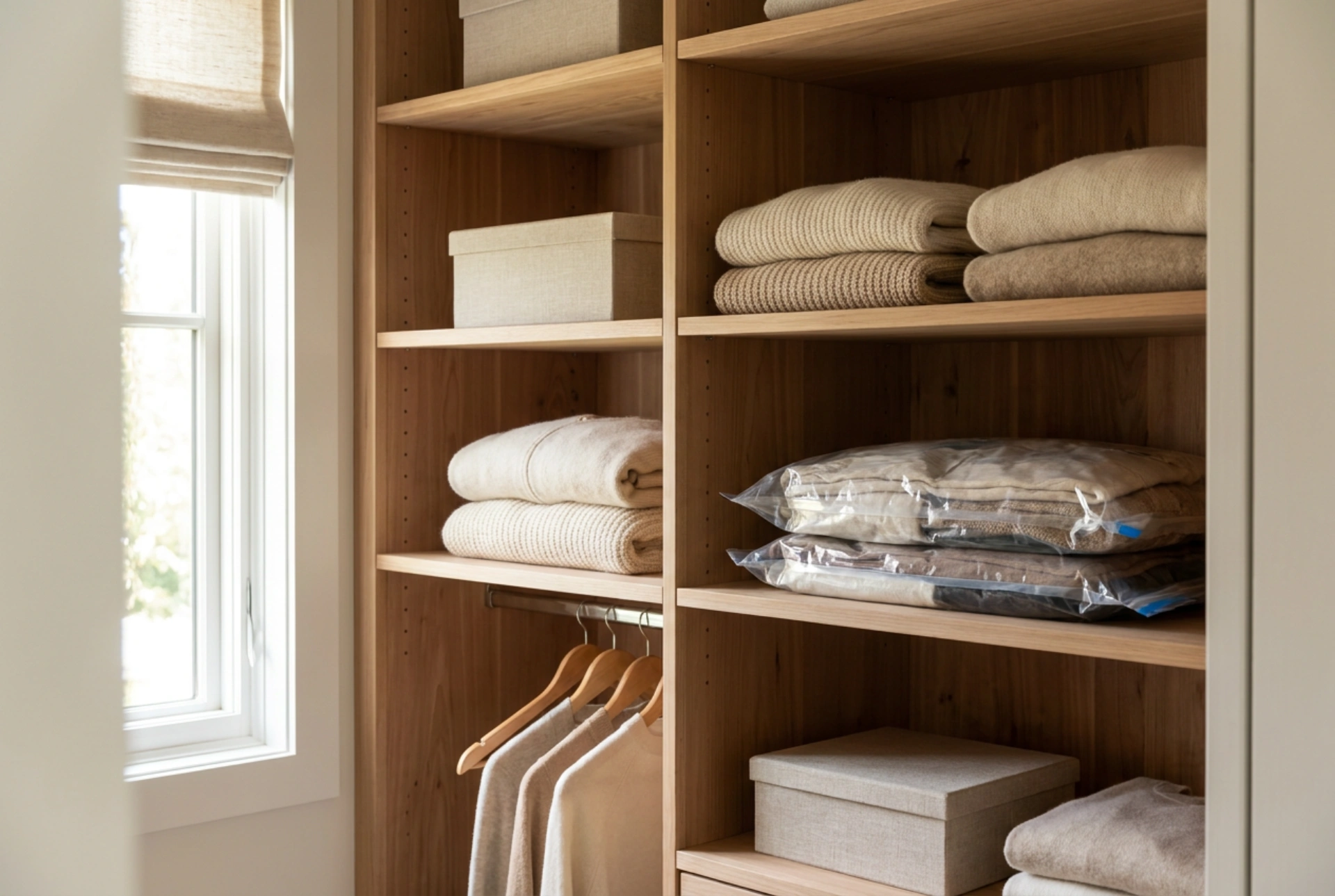
- The Upper Zone (above 200 cm): This area experiences the highest temperatures due to rising warm air. It is ideal for storing lightweight, dry, off-season items sealed in vacuum bags or breathable polypropylene storage boxes. Vacuum sealing removes oxygen, preventing aerobic degradation of fibres and protecting against insect infestation.
- The Active Zone (between 80 cm and 200 cm): This is the primary ergonomic space. It should feature adjustable shelving and modular hanging rails. During winter, heavy woollen coats and jackets occupy the hanging rods, while summer linen is folded away. In summer, the configuration reverses easily if you use adjustable-height system rails.
- The Lower Zone (below 80 cm): Cooler and more prone to dust accumulation. This zone is best reserved for footwear, heavy bedding, or airtight plastic containers housing items that are less sensitive to temperature fluctuations.
Material Science: Natural Pest Deterrents and Dust Barriers
When garments sit undisturbed for months, they become targets for pests like the common clothes moth (Tineola bisselliella). The larvae of these insects feed on keratin, a protein found in wool, silk, hair, and feathers. Designing your custom wardrobe with natural preventive materials is highly effective.
Integrating untreated cedar wood panels or drawers into the off-season sections provides a continuous release of natural volatile oils. These aromatic compounds act as a natural deterrent to moths without the use of toxic chemical mothballs. Furthermore, sliding wardrobes require high-quality mechanical dust seals. Installing self-adhesive brush strips along the overlapping profiles of the sliding doors creates a physical barrier that blocks dust, lint, and insects from entering the wardrobe interior when the doors are closed.
Structural Considerations for Heavy Winter Wear
Winter clothing is significantly heavier than summer apparel. A linear metre of winter coats can weigh up to 15 kilograms, which exerts considerable bending stress on hanging rails and shelf supports. To prevent structural sagging (known as creep in material science), limit the span of hanging rails to a maximum of 90 cm unless supported by central brackets. Opt for thick-walled steel or aluminium oval rails rather than thin circular tubes. For heavy knitwear, which should always be stored flat to prevent gravitational stretching of the knit structure, design wide, shallow shelves. Stacking knitwear too high causes the bottom layers to compress, trapping moisture and crushing the fibres; limit shelf heights to 25 cm to encourage small, breathable stacks.