

Heat pump tumble dryers offer an energy-efficient and fabric-friendly way to dry garments, but understanding how their delicate programmes interact with different textiles is key to preventing shrinkage and wear. By controlling thermodynamics and mechanical action, these appliances preserve delicate fibres at a molecular level.
The Thermodynamics of Heat Pump Drying
Unlike conventional vented or condenser dryers that rely on high-temperature heating elements to bake moisture out of clothes, heat pump dryers operate on a closed-loop thermodynamic system. The appliance uses a refrigerant cycle, similar to a refrigerator or air conditioner running in reverse. Moist, warm air from the drum is drawn through an evaporator, which rapidly cools the air, causing the water vapour to condense and drain away. The dry, cool air is then passed through a condenser, where it is reheated and blown back into the drum.
Because the heat is continuously recycled rather than exhausted, the system operates at significantly lower temperatures—typically around 50°C, compared to the 70°C to 80°C of traditional dryers. This lower thermal load is crucial for fabric preservation. High temperatures can exceed the glass transition temperature of synthetic polymers and degrade the protein structures in natural fibres, leading to warping, stiffness, and structural failure.
Deciphering Delicate Programmes: Drum Physics and Sensors
While low temperature is a fundamental benefit of heat pump technology, delicate programmes rely heavily on advanced mechanical drum physics and precise moisture sensing. In a standard drying cycle, the drum rotates continuously, lifting and dropping fabrics to maximise airflow. For delicate fabrics, this mechanical agitation can cause friction, surface pilling, and fibre breakage.
Delicate programmes employ specific drum rotation algorithms. The drum may spin in alternating directions or use a 'cradle' action, where the rotation is slow and intermittent, allowing garments to slide gently rather than tumble violently. Additionally, modern heat pump dryers utilise conductivity sensors (conductive strips located near the lint filter). These sensors measure the electrical resistance of the wet laundry; as the clothes dry, resistance increases. The machine calculates the exact moment the target moisture level is reached and terminates the cycle instantly, preventing the destructive over-drying phase where static charge builds up and fibres become brittle.
Fabric-Specific Reactions to Heat Pump Cycles
Different materials react uniquely to temperature and mechanical action, making the selection of specialised delicate programmes essential:
- Wool: Wool fibres are covered in microscopic scales made of keratin. When subjected to moisture, heat, and friction, these scales open and lock together—a process known as felting, which leads to irreversible shrinkage. Heat pump wool programmes often use extremely low drum speeds, or even require a drying rack that keeps the garment stationary while warm air circulates around it, completely eliminating mechanical friction.
- Elastane and Synthetics: Elastane (polyurethane) provides stretch to sportswear and undergarments, but it is highly sensitive to heat. High temperatures cause the polymer chains to relax permanently, destroying the elasticity. The low-heat environment of a heat pump delicate cycle keeps temperatures well below the degradation threshold of polyurethane.
- Silk and Fine Synthetics: Silk fibres lose up to 20% of their strength when wet, making them highly susceptible to tearing under physical stress. The combination of gentle air velocity and minimal tumbling protects these fragile proteins during the drying process.
A Systematic Approach to Drying Delicates
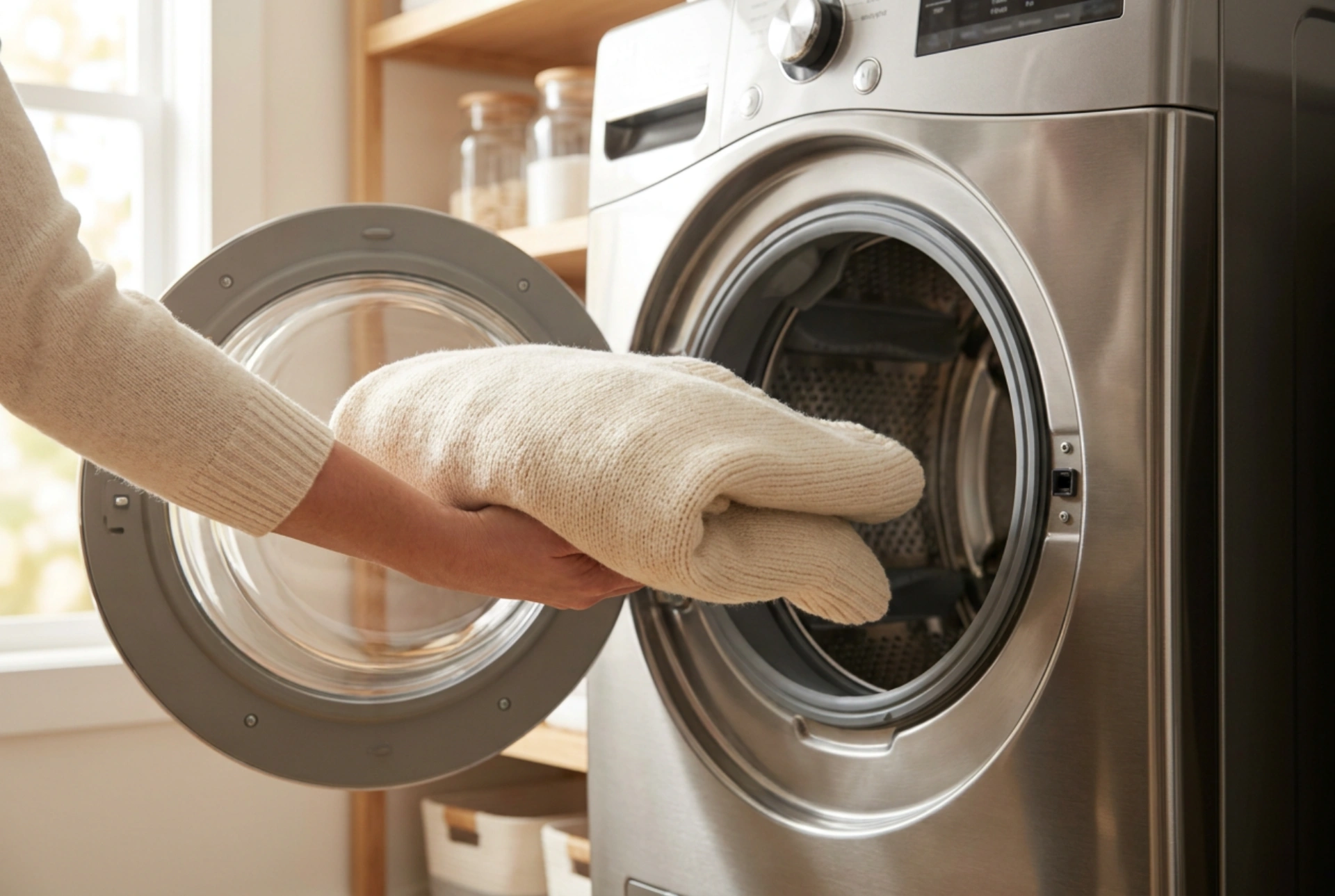
To achieve optimal results and extend the lifespan of your garments, follow a structured preparation and loading process. First, sort laundry strictly by fabric weight and moisture retention capacity; drying a heavy cotton towel alongside a delicate nylon blouse will cause the sensor to miscalculate, leaving the nylon exposed to prolonged tumbling. Next, zip up all fasteners and turn garments inside out to protect the outer faces from friction against the drum wall. Finally, place ultra-delicate items inside a mesh laundry bag to act as a physical shield against mechanical abrasion, and select the specific delicate programme immediately after washing to prevent damp fabrics from creasing in the drum.