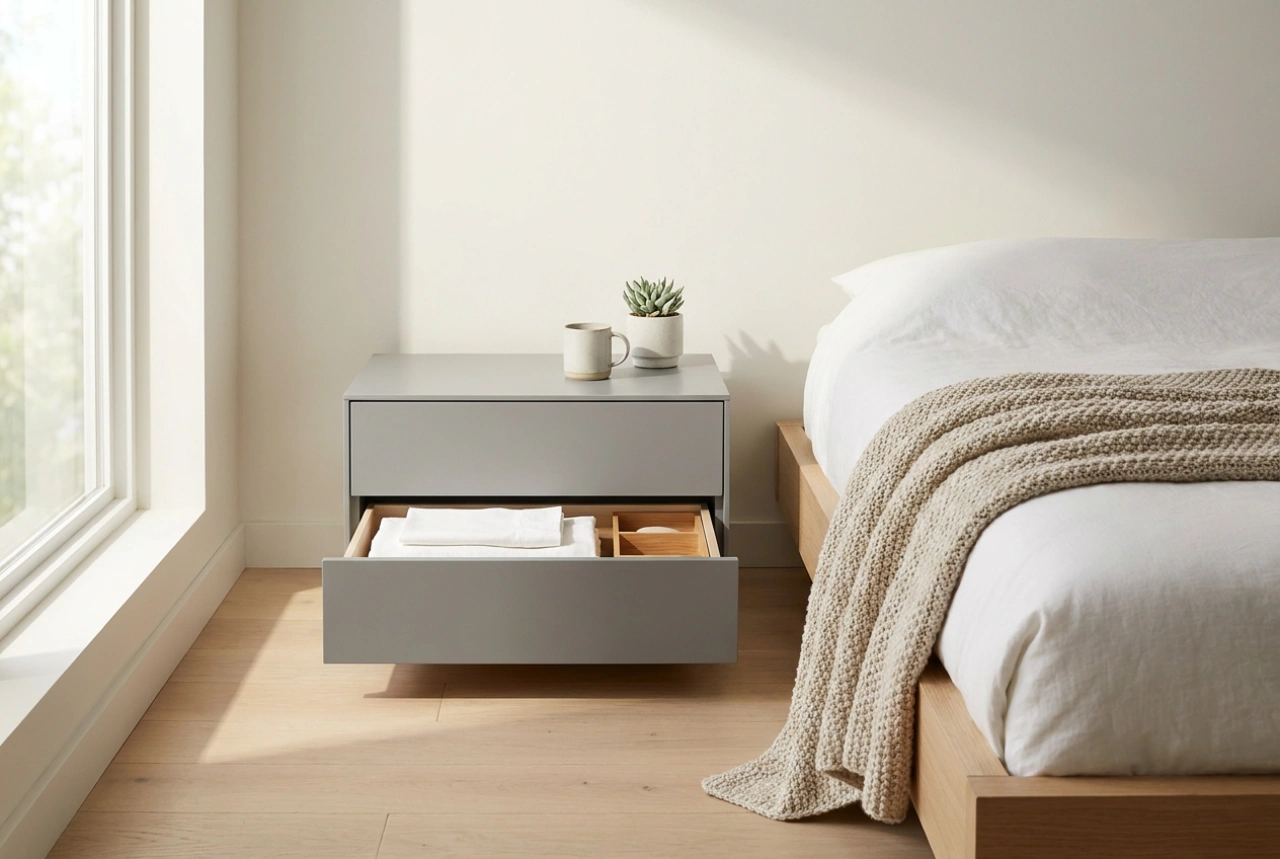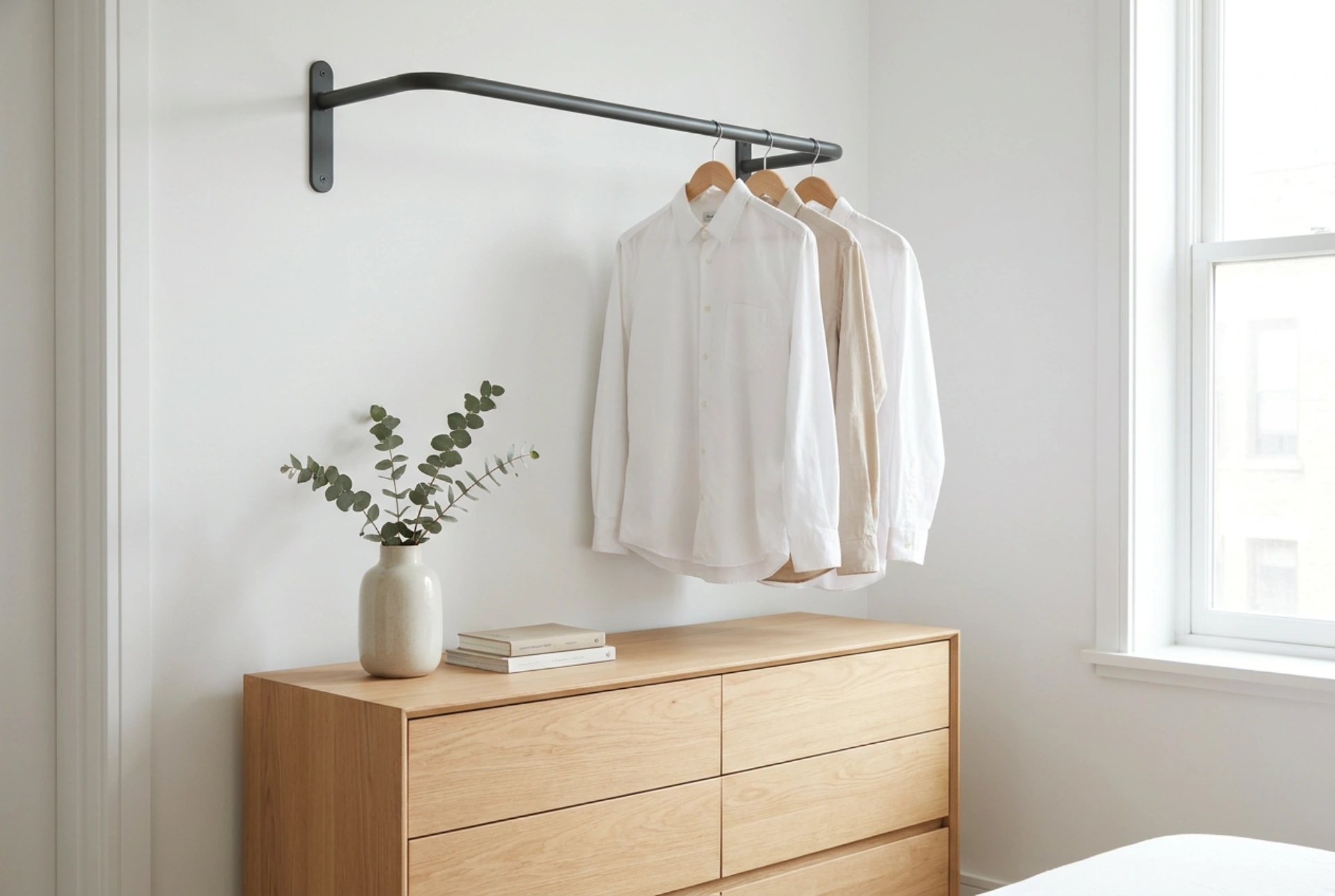


Combining a low chest of drawers with an overhead clothes rail is a highly efficient way to maximise vertical storage in small bedrooms while keeping the space visually open.
The Science of Vertical Spatial Ergonomics
In small bedrooms, traditional bulky wardrobes restrict light penetration and disrupt natural airflow. By pairing a low, deep chest of drawers with an elevated hanging rail, you utilise the unused vertical wall space without enclosing it in a heavy wooden carcass. This layout allows ambient light to pass through, making the room feel larger, and facilitates better air circulation. Stagnant air inside closed wardrobes can trap humidity, leading to musty odours or micro-mould development on natural fibres. An open-rail system encourages continuous convection, ensuring that fabrics like wool, cotton, and linen remain aerated and dry.
Structural Mechanics: Installing the Wall-Mounted Rail
The success of a wall-mounted clothes rail depends entirely on understanding mechanical shear force and load distribution. A single metre of hanging clothes can easily weigh between 15 to 30 kilograms, depending on the fabric density (such as heavy winter coats versus light summer cottons). Therefore, proper anchorage is critical.
Determining Wall Composition
Before drilling, identify whether your wall is solid brick, concrete, or plasterboard (drywall). For solid walls, use heavy-duty nylon expansion wall plugs. For plasterboard, you must locate the vertical timber studs using a stud finder and anchor the rail directly into them using wood screws. If anchoring into hollow plasterboard without studs is unavoidable, use metal spring toggle bolts or self-drilling metal plasterboard anchors, which spread the load over a wider surface area behind the board. Never use standard plastic plugs in hollow walls, as the downward shear force will inevitably pull them out.
Calculating Height and Clearance
To ensure optimal usability, position the rail at least 100 to 120 centimetres above the top surface of the chest of drawers. This provides enough clearance for shirts, jackets, and trousers folded over hangers to hang freely without pooling dust or wrinkling. Ensure there is at least 5 to 10 centimetres of clearance between the wall and the hanger shoulders to prevent clothes from rubbing against the wall surface, which can transfer paint chalk or trap moisture.
Textile Preservation and Environmental Chemistry in Open Wardrobes
While open storage promotes ventilation, it exposes garments to two environmental factors: dust and ultraviolet (UV) light. Dust consists of skin flakes, fabric fibres, and microscopic soil particles. To prevent dust accumulation on seasonal garments, use breathable cotton garment bags rather than airtight plastic covers, which trap residual moisture and encourage anaerobic bacterial growth.
UV light from windows triggers photo-oxidation in textile dyes, causing uneven fading over time. To protect your clothing, position the mini-wardrobe away from direct sunlight paths, or install UV-blocking window films. Additionally, choose hangers made of broad-shouldered untreated cedar wood or beech. Cedar wood naturally releases aromatic hydrocarbons that repel clothing moths, while the broad shoulders prevent the stretching and deforming of shoulder seams caused by thin wire hangers.
Optimising the Drawers: Systematic Layering
The chest of drawers beneath the rail serves as the foundation for high-density storage. To prevent textile damage, organise garments by weight and frequency of use. Heavy items like jeans and thick knitwear should be stored in the bottom drawers to lower the unit's centre of gravity, preventing tipping hazards. Use the vertical folding technique (file folding) rather than stacking clothes in high piles. Stacking compresses the lower garments, restricting airflow and causing deep creases that weaken fabric fibres over time. Vertical folding allows you to see every item instantly and slide them out without disturbing the surrounding pieces.