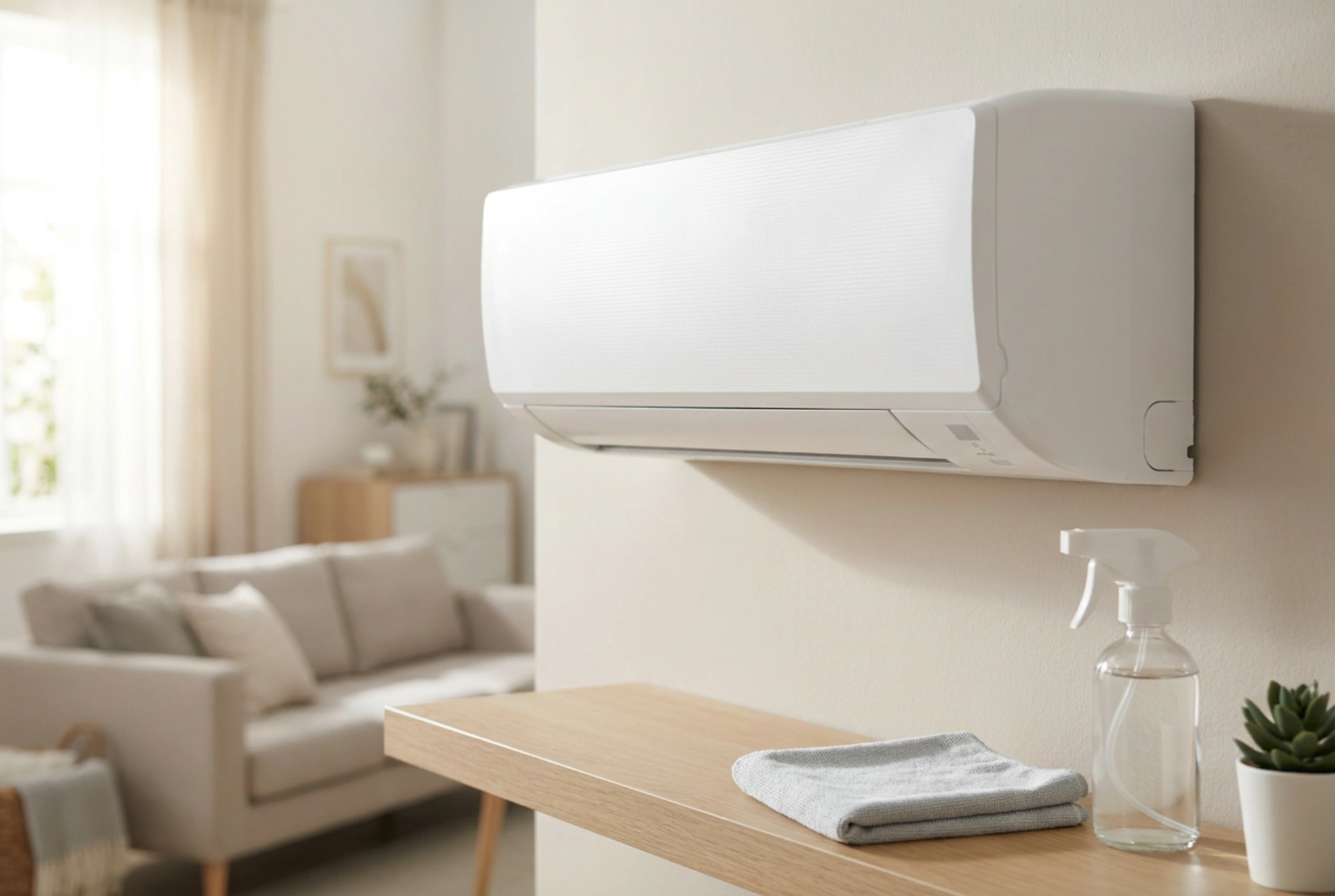


Regular maintenance of a domestic air conditioning unit ensures optimal heat exchange efficiency and prevents the proliferation of airborne pathogens. This guide explains how to safely deep-clean the indoor split system using fundamental mechanical and chemical principles.
The Mechanics of Air Filtration and Thermal Transfer
An indoor air conditioning unit operates by recirculating room air over a series of copper tubes wrapped in aluminum fins, known as the evaporator coils. As the warm indoor air passes through these cold coils, thermal energy is absorbed, and moisture from the air condenses on the cold metal surface. However, this process also draws in microscopic dust, pollen, and organic matter.
When these particles bypass the initial mesh filters, they settle on the aluminum fins. Dust has a very low thermal conductivity, meaning it acts as an insulator (following Fourier's Law of thermal conduction). Even a thin layer of dust significantly reduces the rate of heat transfer, forcing the compressor to run longer and consume more electrical energy to achieve the desired room temperature. Furthermore, the combination of constant moisture and organic dust creates an ideal microenvironment for mold spores and bacteria to form a resilient biological film.
Phase 1: Isolation and Outer Shell Maintenance
Before initiating any physical maintenance, you must isolate the unit from its electrical source. Unplug the system or switch off the dedicated circuit breaker in your electrical panel. This step is critical to prevent electrical shocks and protect the sensitive electronic control boards from accidental moisture exposure.
Begin by wiping down the exterior plastic casing. Use a soft microfiber cloth dampened with warm water and a neutral pH surfactant, such as a basic dishwashing liquid. Surfactants lower the surface tension of water, allowing it to penetrate and lift grease and statically bound dust without scratching or degrading the polymer shell of the unit.
Phase 2: Deep Cleaning the Mesh Filters
The primary defense against airborne particulates is the reusable plastic mesh filters located directly beneath the front cover. Open the panel and carefully slide these filters out. To avoid dispersing trapped dust back into the living space, proceed with systematic cleaning techniques.
- Vacuuming: Use a vacuum cleaner equipped with a soft brush nozzle to remove loose dust from the side of the filter that faces outward.
- Washing: Submerge the filters in lukewarm water (below 40°C) mixed with a mild degreaser. Avoid hot water, as high temperatures can warp or shrink the synthetic polymer mesh, altering its filtration density.
- Drying: Shake off excess water and allow the filters to air-dry completely in a shaded, dust-free environment. Never reinstall damp filters, as moisture trapped in the dark casing immediately initiates fungal germination.
Phase 3: Evaporator Coil Disinfection
The aluminum fins are highly delicate and bend under minimal pressure. Therefore, mechanical scrubbing should be avoided. Instead, rely on chemical cleaning agents designed to liquefy organic accumulation.
Apply a specialized, non-rinse foaming coil cleaner. The foam is engineered to expand into the tight gaps between the aluminum fins, loosening dust and emulsifying oils. As the foam breaks down, it liquefies. This liquid, carrying the suspended dirt, flows down the channels of the coil by gravity into the condensation collection tray and exits through the primary condensate drain pipe. This process cleans the hard-to-reach areas without mechanical friction, preserving the structural integrity of the delicate aluminum fins.
Phase 4: Detailing the Blower Wheel and Louvers
The cross-flow fan, or blower wheel, is a cylindrical drum that rotates to pull air through the coils and push it into the room. Because it handles cold, humidified air, it is highly susceptible to mold colonization, visible as black spots on the fan blades.
To clean this component, manually rotate the cylinder and gently wipe the blades using a narrow brush or a microfiber cloth dampened with a 70% isopropyl alcohol solution. A 70% concentration of alcohol is scientifically superior to a 100% concentration for disinfection; the water content in the 70% solution slows down evaporation and allows the alcohol to penetrate the cellular walls of fungi and bacteria, denaturing their proteins from the inside. Wipe the directional louvers with the same solution to ensure all air output paths are sanitized.