

Designing an efficient wardrobe layout requires balancing human ergonomics with the physical properties of different textiles. By structuring your storage based on frequency of use, material weight, and accessibility, you can prolong the lifespan of your garments while streamlining your daily routine.
The Science of Vertical Zoning: Ergonomics and Gravity
The human body moves naturally within specific comfort zones, and a wardrobe layout should mirror these biomechanical limits. The vertical space of any wardrobe can be divided into three distinct zones based on physical reach and effort. The primary zone, spanning from hip to eye level, is the most accessible area and should host daily essentials. Storing high-use items here minimizes repetitive bending and reaching, reducing physical strain over time.
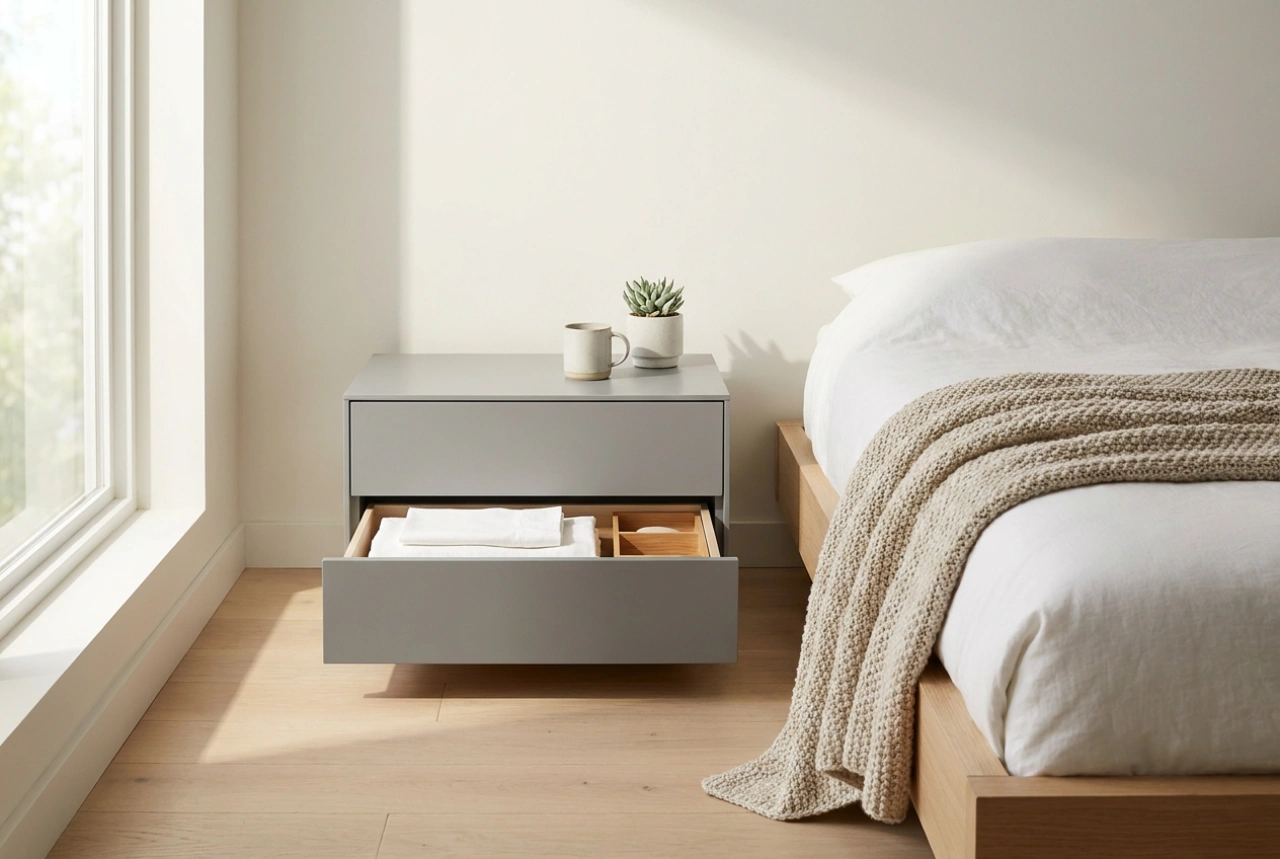
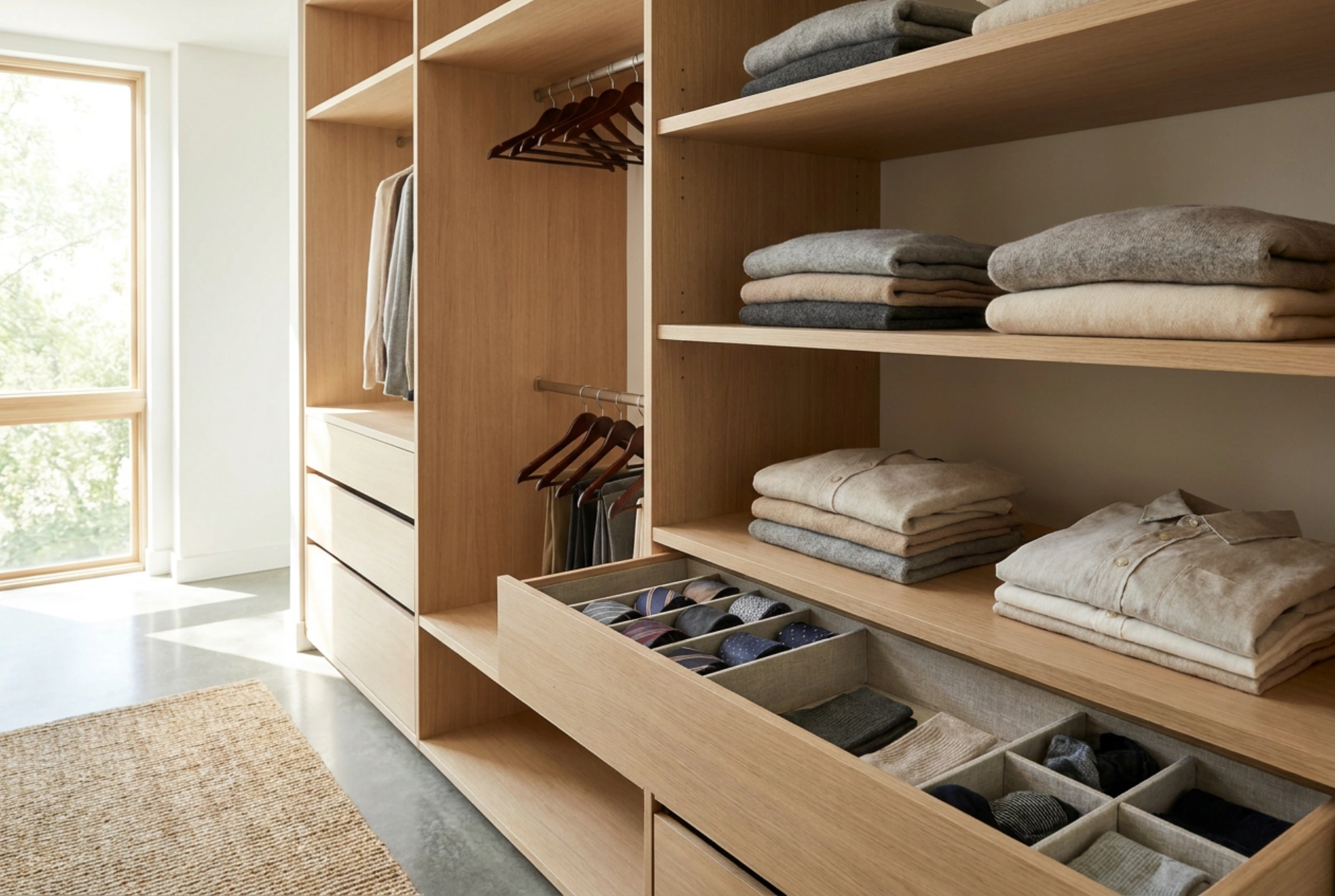
The lower zone, from the hips down to the floor, is ideal for drawers and pull-out trays. Gravitational force makes viewing items from above far more efficient than looking at deep, low shelves. Pull-out mechanisms bring the contents into your vertical line of sight, preventing items from becoming lost in dark corners. Conversely, the upper zone, which is above eye level, is subject to the reach limit. This area should be reserved for lightweight, seasonal items or bulkier textiles that are rarely accessed, keeping the overall center of gravity of the furniture stable.
Drawers vs. Shelves: Choosing Based on Textile Mechanics
Different fabrics react uniquely to mechanical stress, compression, and gravity. Understanding these properties determines whether an item belongs in a drawer or on an open shelf:
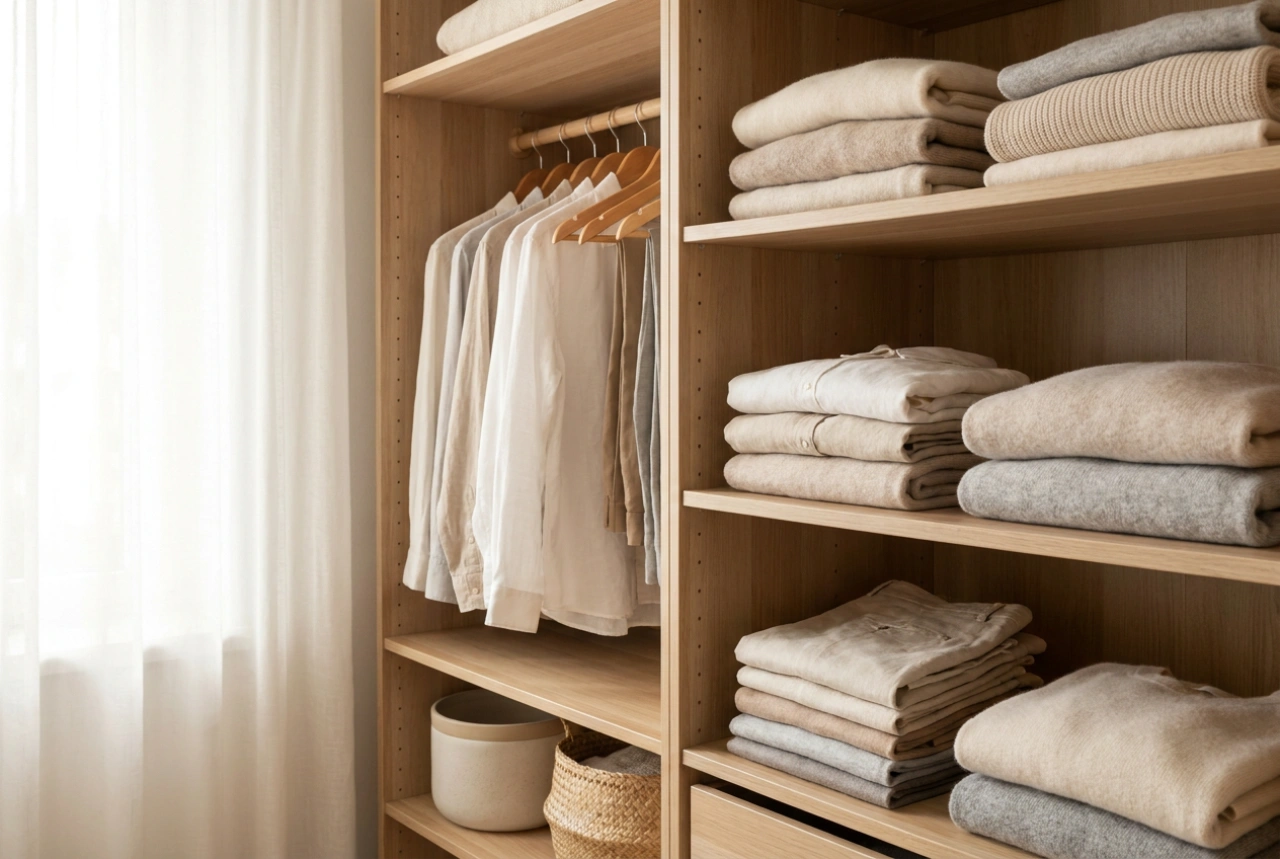
- Knitwear and Heavy Woolens: Heavy knits, such as cashmere and merino wool, have low tensile strength when suspended. Hanging them causes gravity to pull the fibers downward, permanently stretching the shoulder seams and altering the garment's shape. These items must be folded and stored flat on open shelves. Loose folding prevents the fibers from being crushed under weight, preserving the insulating loft of the yarn.
- Woven Fabrics and Structured Garments: T-shirts, activewear, and undergarments benefit from drawer storage. Utilizing a vertical folding technique, where garments stand upright next to each other rather than stacked, eliminates the downward compression force. In traditional vertical stacks, the weight of upper garments compresses the lower ones, trapping moisture and creating stubborn mechanical creases.
- Heavy Denims and Canvas: These dense, high-durability fabrics can withstand significant compression. They are ideal for lower wooden shelves where their weight actually helps keep the stack stable and compact.
Microclimate Control and Fiber Preservation
A critical, often overlooked aspect of wardrobe design is the preservation of fibers through microclimate control. Closed drawers restrict airflow, creating localized microclimates where humidity can build up, especially if garments are stored before they are completely dry after laundering. High humidity accelerates the degradation of natural fibers through hydrolytic reactions and encourages the growth of microscopic mold spores.
To mitigate this, drawers should be fitted with breathable textile dividers rather than solid plastic compartments. These dividers encourage air movement while preventing different fabric types from rubbing against each other. Friction between disparate fibers, such as polyester sliding against delicate silk, generates electrostatic charges that attract atmospheric dust and cause surface pilling. Shelves should also have a slight gap at the rear to allow ambient room air to circulate throughout the wardrobe cavity.
Step-by-Step Layout Strategy for Maximum Efficiency
To implement an optimized wardrobe layout, follow a structured order of operations based on weight, frequency, and material vulnerability:
- Step 1: Assign the Eye-Level Zone. Place folded daily wear, such as cotton t-shirts and frequently worn trousers, in shallow drawers or on eye-level shelves where they are visible at a single glance.
- Step 2: Position Heavy Knits Middle-Low. Place wool sweaters on open shelves just below the primary zone. This keeps them highly visible but prevents them from crushing lighter items.
- Step 3: Utilize Deep Drawers for Bulk. Store pajamas, sportswear, and loungewear in deep, lower drawers using vertical dividers to maintain structural order.
- Step 4: Dedicate the Top Shelf to Seasonal Rotation. Store off-season garments in breathable fabric boxes on the highest shelves, ensuring they are protected from dust while remaining out of the daily workflow.