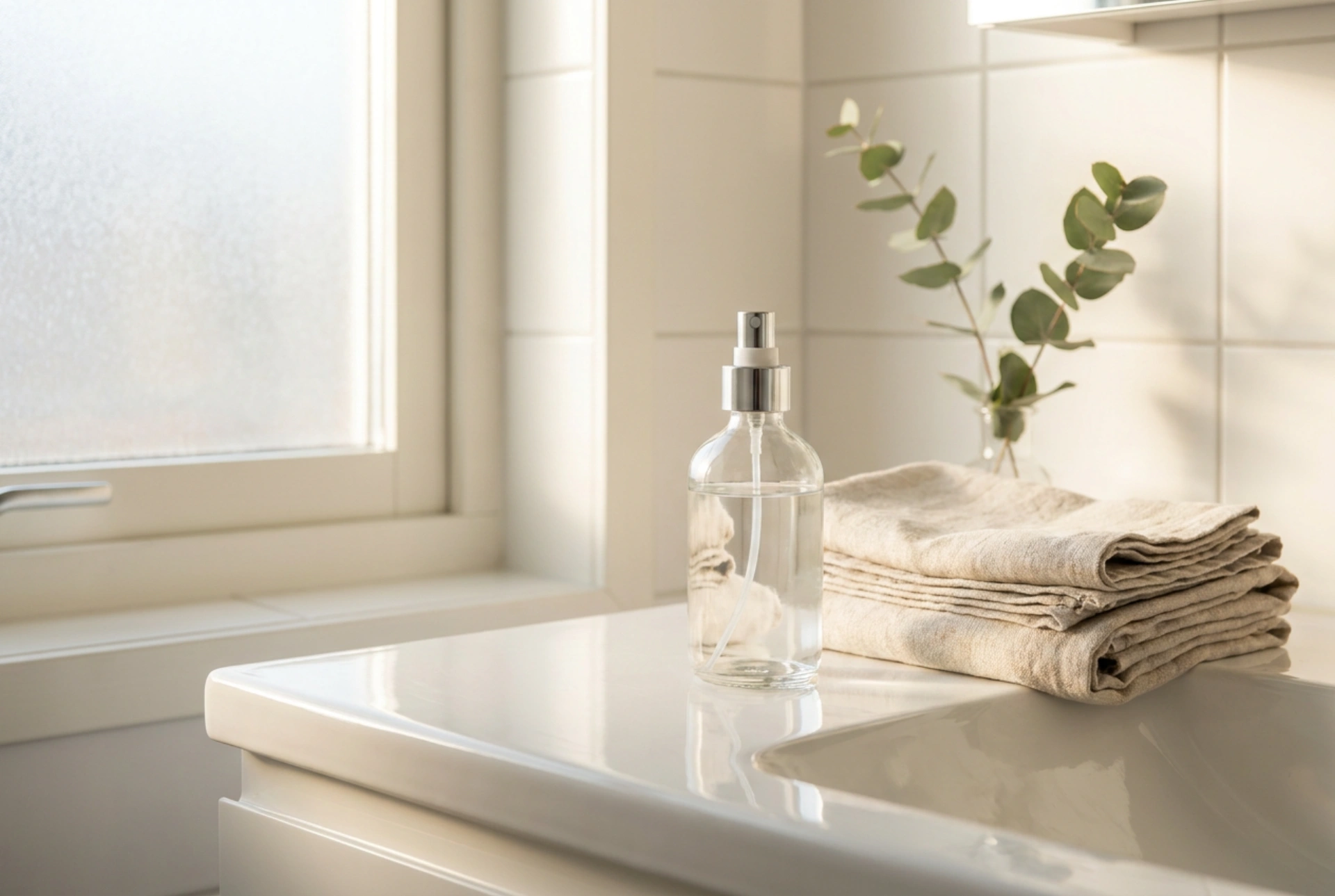


Simply spraying an air freshener into a freshly cleaned bathroom often leads to a fleeting scent that quickly clashes with residual chemical vapors. To lock in a truly clean, ambient aroma, you must understand the interaction between humidity, airflow, and molecular binding on different surfaces.
The Science of Scent Binding and Timing
Applying an air freshener immediately after scrubbing a bathroom is a common mistake. Wet surfaces and active cleaning agents—such as chlorinated compounds or acidic descalers—are still actively off-gassing. Introducing synthetic or natural fragrance molecules into an environment saturated with volatile organic compounds from detergents can trigger chemical reactions, distorting the intended scent and causing a heavy, suffocating atmosphere.
Furthermore, relative humidity plays a critical role in fragrance dispersion. High humidity levels, common after washing floors or running hot water, cause water droplets suspended in the air to bind with the fragrance molecules. This added mass forces the fragrance to settle rapidly onto the cold tile floor rather than remaining suspended at olfactory height. For optimal results, you must wait until all surfaces are fully dry and the room's humidity has stabilized to normal household levels, typically around forty to fifty percent.
Strategic Placement: Surface Tension and Porosity
To maximize the longevity of a bathroom freshener, avoid spraying it aimlessly into the center of the room. Air currents will quickly sweep the particles toward the exhaust fan or out the door. Instead, target the physical properties of the materials within the bathroom to create slow-release reservoirs.
- Porous Textiles: Uncoated fabrics such as cotton towels, linen shower curtains, or the undersides of bath mats act as natural scent carriers. The microscopic fibers of these textiles increase the surface area available for the fragrance oil to cling to, slowing down the rate of evaporation through capillary action.
- Non-Porous Hard Surfaces: Avoid spraying fresheners directly onto glazed ceramic tiles, glass, or polished chrome. Because these surfaces lack porosity, the carrier liquid cannot penetrate. It will simply form a sticky, dust-attracting residue that dulls the finish and offers no long-term scent release.
- Convective Air Currents: Apply the mist near natural air pathways—such as the frame of a doorway or near a heat source. As air moves through the room, it carries the slowly evaporating fragrance molecules with it, distributing them evenly without overwhelming the space.
Temperature and Volatility of Fragrance Compounds
Fragrance molecules evaporate at different rates based on their molecular weight and the ambient temperature. Light top notes, such as citrus or herbal compounds, are highly volatile and evaporate almost instantly in a warm room. Heavy base notes, such as woody or musky compounds, require a higher thermal energy to volatilise but persist much longer in the environment.
To establish a balanced profile, ensure the bathroom is cool when applying the freshener. A cooler environment slows down the initial evaporation phase of the top notes, allowing them to blend harmoniously with the heavier mid and base notes as the room gradually warms back up to standard living temperature. If using passive evaporators like reed diffusers, position them at waist height; placing them too high subjects them to the rising warm air pocket near the ceiling, causing them to dry out prematurely.
The Post-Cleaning Fragrance Protocol
To transition your bathroom from a sterile, chemically cleaned zone to a sensory-balanced space, follow this structured, science-based sequence:
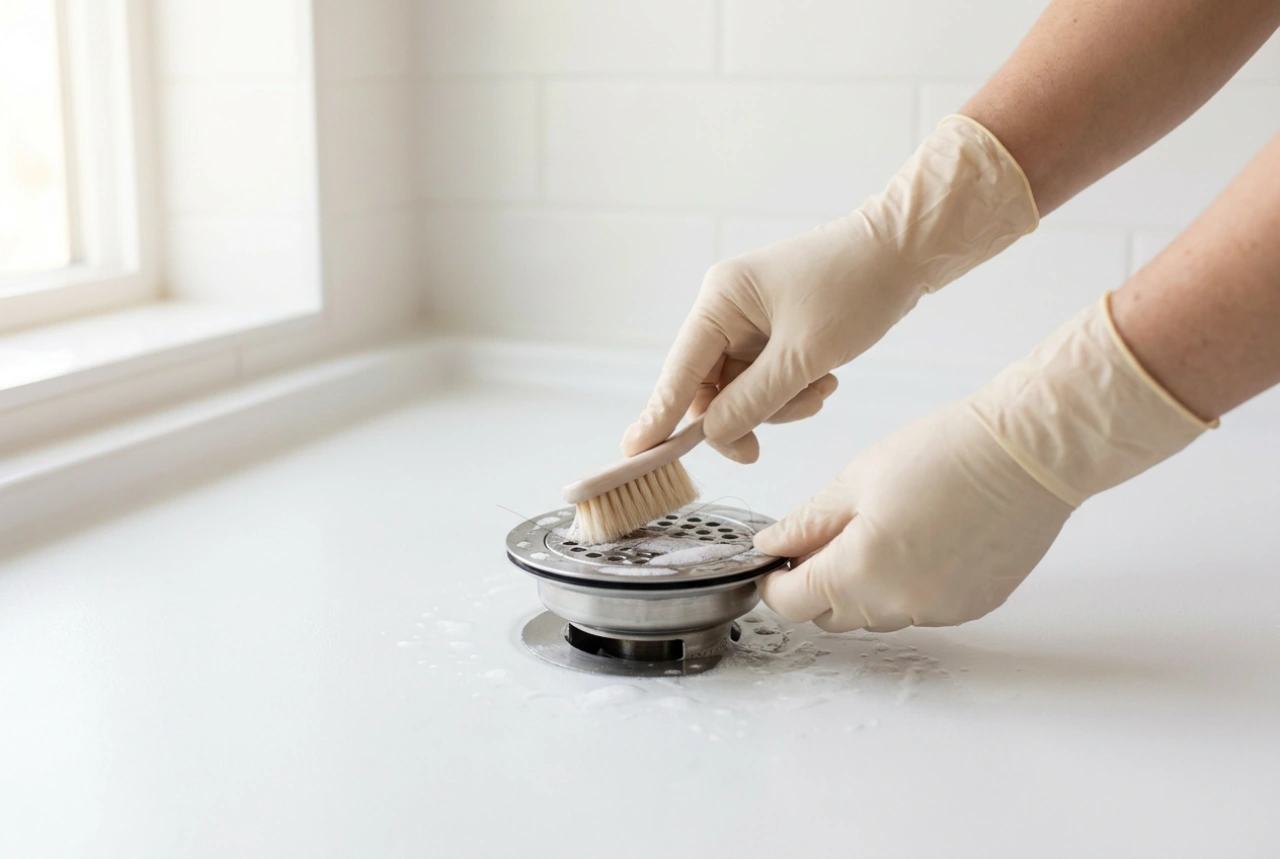
First, complete all mechanical cleaning and rinsing. Open windows or run the exhaust fan for at least fifteen minutes to evacuate damp air and chemical fumes. Once the surfaces are completely dry, close the window to stabilize the indoor climate. Hold your spray bottle approximately thirty centimeters away from target textiles to ensure a fine, even mist. This prevents localized saturation, which can damage fabric fibers or leave watermarks. Finally, introduce any passive scent-release devices at the midpoint of the room's height to utilize gentle daily air currents.