

Selecting the right plastic storage container for long-term or occasional storage requires understanding material science, sealing mechanisms, and environmental factors rather than just aesthetic appeal. The correct choice prevents polymer degradation, moisture accumulation, and material breakdown of your stored items over months or years.
1. Decoding the Polymer: Why Plastic Type Matters
Not all plastics are engineered equally. When choosing a storage box for items that will remain undisturbed for long periods, identifying the resin identification code (the triangle symbol) is critical. Most high-quality storage containers are made from Polypropylene (PP) or High-Density Polyethylene (HDPE).
- Polypropylene (PP - Code 5): This is the gold standard for home storage. PP possesses high chemical resistance, a high melting point (around 160 degrees Celsius), and excellent fatigue resistance. It is highly elastic, meaning it can withstand bending and weight stress without cracking. This makes it ideal for heavy-duty stacking in variable temperature environments like attics or garages.
- High-Density Polyethylene (HDPE - Code 2): Extremely durable and impact-resistant, HDPE is often used for heavy, opaque utility totes. It offers superior resistance to low temperatures, meaning it will not become brittle in freezing winter conditions.
- Polystyrene (PS - Code 6) and PET (Code 1): Often used for ultra-clear, brittle containers. While aesthetically pleasing because of their high optical clarity, they have low impact resistance. Over time, under the pressure of stacked loads or temperature shifts, these plastics are prone to micro-cracking and structural failure.
2. Physics of the Seal: Moisture Control and Air Exchange
The microclimate inside a closed box is governed by thermodynamics. When ambient temperatures fluctuate, the air inside a sealed container expands and contracts. This creates a pressure differential that can draw in external moisture if the seal is imperfect, leading to condensation cycles.
For items sensitive to moisture, such as seasonal wool garments, books, or papers, an airtight container with a high-quality silicone or thermoplastic elastomer (TPE) gasket is essential. This gasket acts as a barrier against moisture ingress. However, there is a chemical caveat: if you seal items that already contain residual moisture into an airtight container, that moisture cannot escape. Under temperature rises, this moisture evaporates and then condenses on the container walls, creating a high-humidity environment ripe for mold. To prevent this, place silica gel packets (desiccants) inside the box to actively adsorb ambient moisture molecules.
For non-sensitive items, or in highly stable indoor environments like a climate-controlled wardrobe, non-gasketed lids with simple snap-locks are preferable. They allow minimal, passive air exchange, preventing the build-up of stagnant air and off-gassing from certain synthetic textiles.
3. Structural Engineering: Load Distribution and Stacking
When storing items sporadically, they are often stacked to maximize vertical space. This introduces mechanical stress. To prevent the collapse of lower containers, look at the physical geometry of the box.
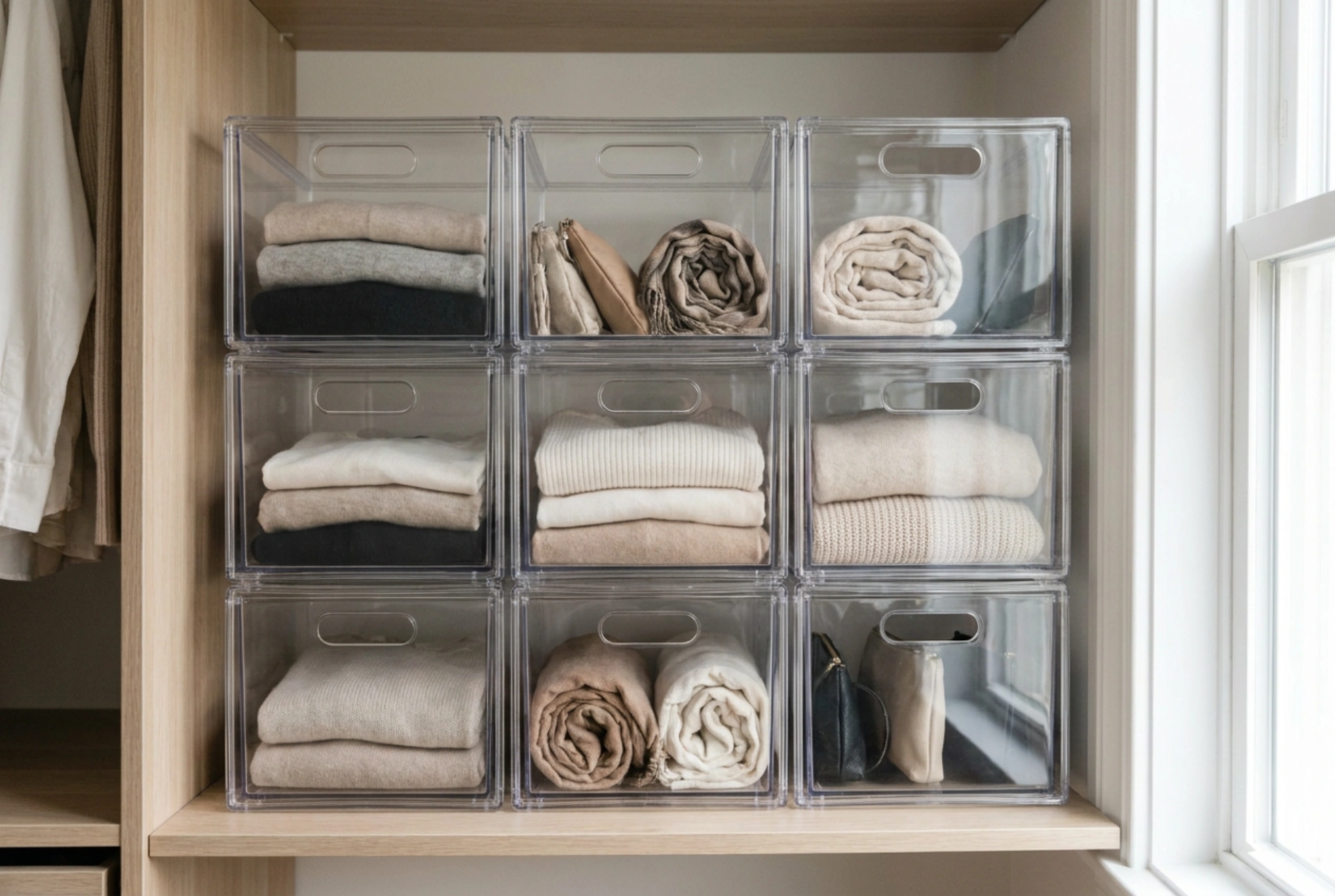
Inspect the base and the lid. High-quality stacking containers feature a recessed lid design that nests the base of the container above it. This prevents lateral sliding. Furthermore, look for reinforced ribs along the corners and the underside of the rim. Ribbed structures distribute vertical force downward through the walls of the container rather than concentrating weight on the center of the lid, which causes bowing and eventual cracking. Straight-walled containers maximize interior volume, whereas tapered walls (designed for nesting when empty) reduce usable space and can lead to uneven weight distribution when stacked.
4. Light Transmission and Photo-Oxidation
Where you store your containers dictates whether you should choose transparent or opaque plastics. Ultraviolet (UV) light triggers photo-oxidation in both the plastic container and the items inside. UV radiation breaks down polymer chains, causing transparent plastic to become yellow, brittle, and prone to shattering. Simultaneously, UV light fades dyes in fabrics and degrades organic materials.
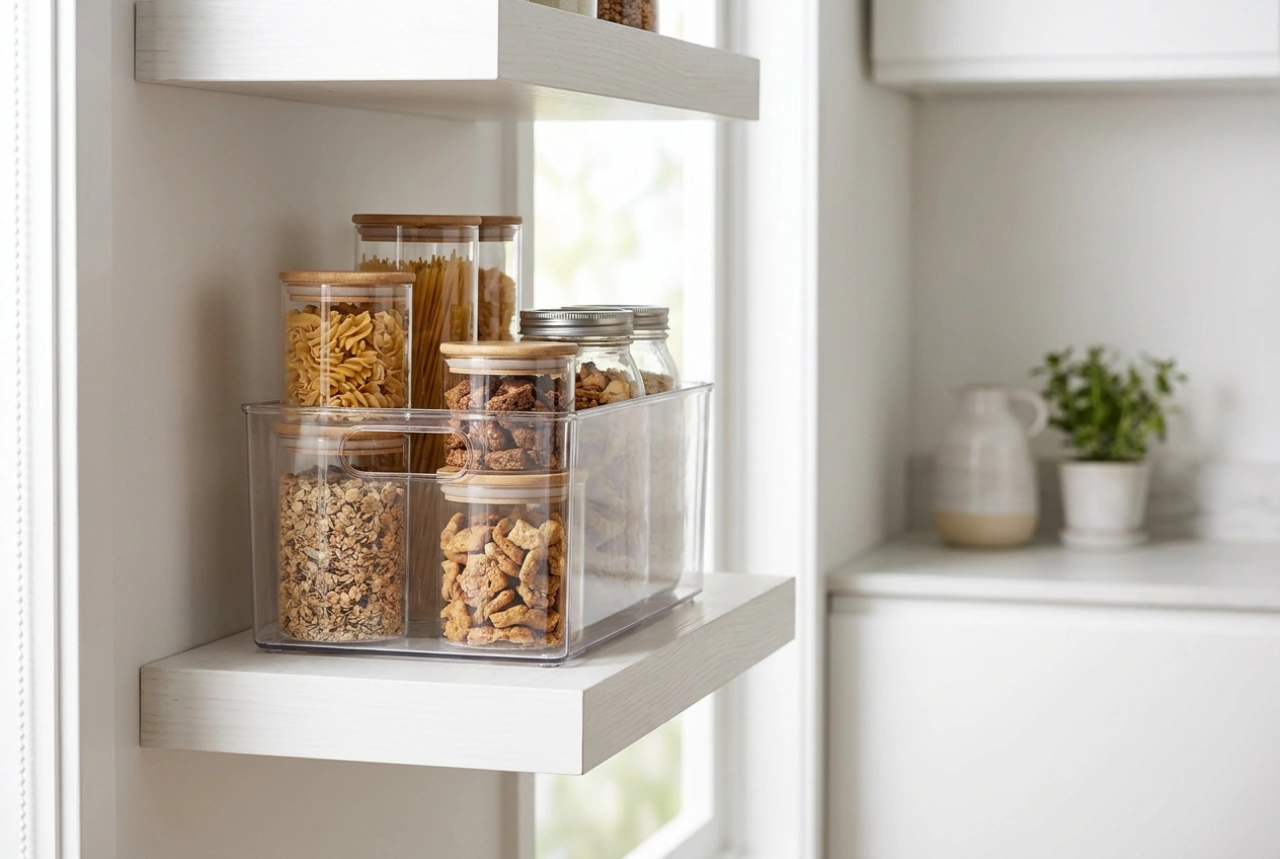
If your storage area is exposed to natural light, such as a spare room, loft space with skylights, or open shelving near a window, choose opaque, pigmented containers. Carbon black or highly pigmented colored plastics block light transmission entirely, protecting the contents from UV-induced degradation. Use transparent bins only in dark environments, such as deep closets or enclosed pantries, where visual identification of contents is necessary but light exposure is non-existent.