

Achieving streak-free, crystal-clear windows depends entirely on understanding how different chemical solvents interact with atmospheric residues, mineral deposits, and the glass surface itself.
The Chemistry of Glass Contamination
Glass is inherently hydrophilic, meaning it readily attracts water and, along with it, water-soluble pollutants. However, outdoor windows are also subjected to hydrophobic soils, such as automotive exhaust soot, tree sap, and pollen, while indoor panes collect cooking grease, skin oils, and dust. To remove this dual layer of contamination without leaving residue, a cleaning solution must lower the surface tension of water to wet the glass evenly, dissolve both polar (mineral) and non-polar (greasy) soils, and evaporate at a controlled rate before streaks can form.
Homemade Formulations: Acidic and Solvent Approaches
DIY window cleaners typically rely on household chemistry, utilising acetic acid (white vinegar) or isopropyl alcohol diluted in water. Both approaches have distinct mechanisms:
- The Acetic Acid Solution: Diluted white vinegar (usually a 1:4 or 1:1 ratio with distilled water) lowers the pH of the cleaning solution. This acidic environment is exceptionally effective at dissolving alkaline mineral scales, such as calcium carbonate deposits left by hard water or rain. However, vinegar does not emulsify grease efficiently and can leave a temporary, sharp odour.
- The Isopropyl Alcohol Solution: Isopropyl alcohol acts as a fast-evaporating solvent. It disrupts the cohesive forces of oily lipids on the glass, dissolving them instantly. When mixed with distilled water, it accelerates the evaporation rate of the entire solution, preventing water spots. A common ratio is 70% isopropyl alcohol mixed with distilled water in a 1:1 ratio.
Using distilled water in any homemade solution is crucial. Tap water contains dissolved minerals like calcium and magnesium, which do not evaporate and instead remain on the glass as unsightly white streaks.
Commercial Cleaners: Surfactants and Alkaline Solvents
Ready-made commercial glass cleaners are engineered to balance wetting action, soil suspension, and evaporation speed using synthetic formulations. They primarily consist of:
- Synthetic Surfactants: These molecules have a hydrophilic (water-loving) head and a lipophilic (fat-loving) tail. They surround greasy particles, lifting them off the glass surface and suspending them in the liquid so they can be wiped away.
- Ammonium Hydroxide (Ammonia): Many heavy-duty commercial cleaners use ammonia to raise the pH. Alkaline solutions excel at breaking down complex organic molecules, such as dried bug splatter and heavy grease. Ammonia also evaporates rapidly, reducing drying time. However, ammonia-based cleaners should never be used on tinted window films, as they can chemically degrade the adhesive and the film itself.
The Mechanics of Cleaning: Tools and Technique
Even the most advanced chemical formulation will fail without proper physical removal techniques. The goal is to lift and lock the suspended soil away from the glass surface rather than smearing it.
Microfibre Cloths vs. Squeegees
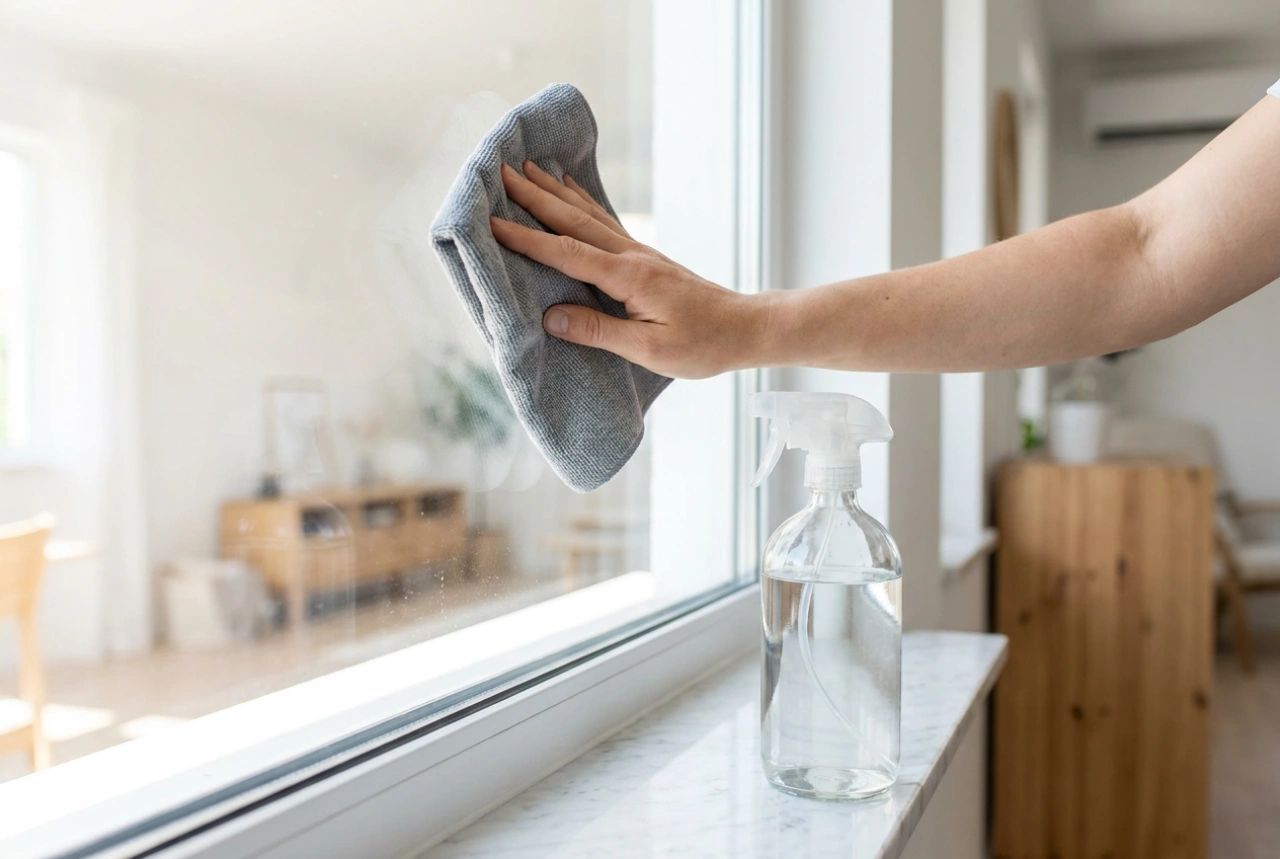
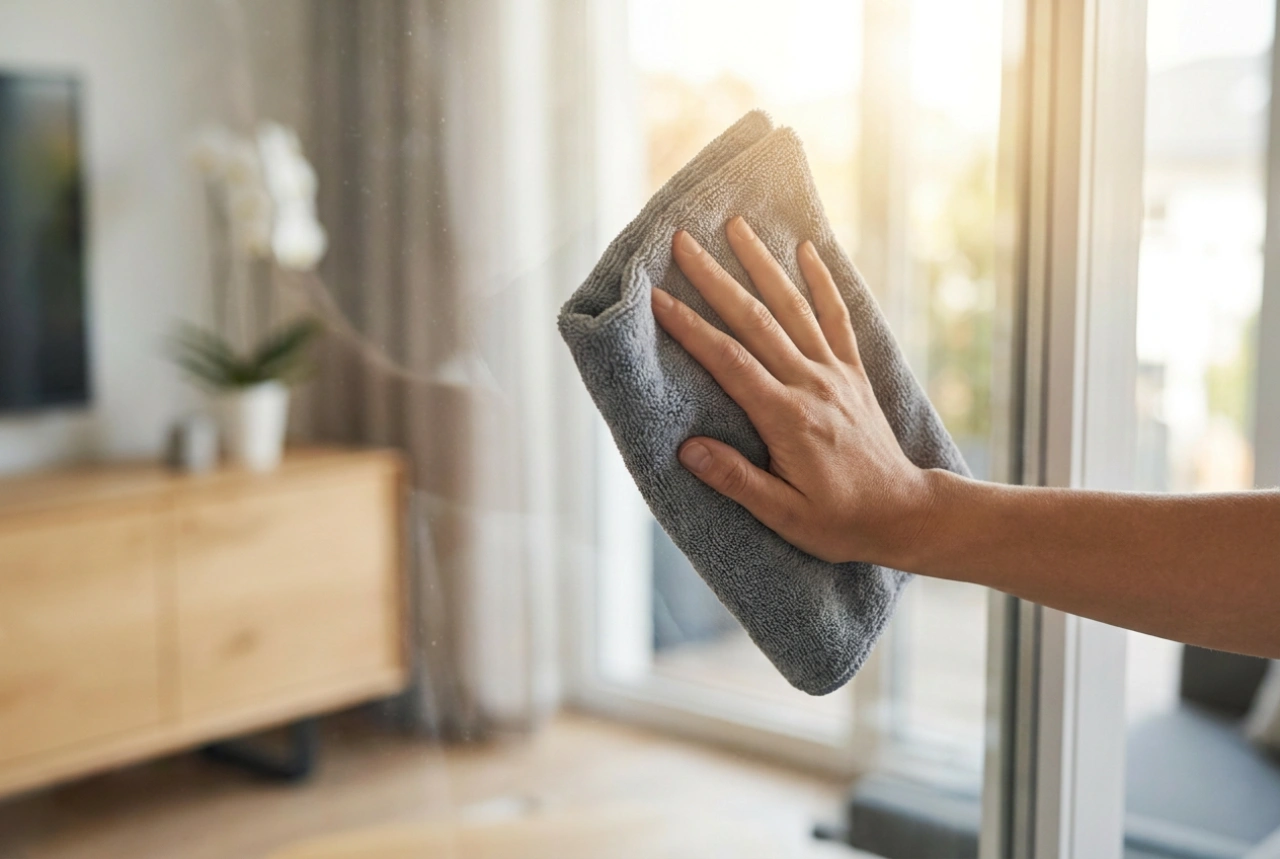
Microfibre cloths are engineered with split polyester and polyamide fibres. This structure increases the surface area significantly, creating microscopic hooks that trap particles and absorb liquid through capillary action. When using cloths, the two-step method is most effective: apply the liquid and wipe with one microfibre cloth to loosen and lift soil, then immediately buff the surface with a dry, clean microfibre cloth to remove any remaining microscopic droplets before they air-dry.
For larger panes, a high-quality rubber squeegee is superior. The squeegee blade shears the liquid film off the glass mechanically. To prevent streaks with a squeegee, maintain a consistent 45-degree angle, apply uniform, light pressure, and wipe the rubber blade dry with a clean cloth after every single pass to avoid transferring soil back onto the glass.