

Under-bed wheeled storage bins are highly efficient for maximizing space, but without a systematic approach, they quickly become dusty, unorganized dumping grounds. Managing this hidden zone requires an understanding of floor-level microclimates, mechanical friction, and material science to prevent dust accumulation and textile degradation.
The Physics of the Under-Bed Microclimate: Controlling Dust and Moisture
The floor level beneath a bed is a natural sink for household dust, which consists of dead skin cells, fabric fibres, and pet dander. Because air currents slow down in confined spaces, these particles settle rapidly under the bed frame. Additionally, plastic storage bins made of polypropylene or polyethylene easily develop a static electric charge, which actively pulls these dust particles toward their surfaces.
To counteract this, clean the exterior of your bins with a diluted solution of surfactant (such as mild dish soap) to discharge static electricity before sliding them under. Furthermore, temperature differentials between the floor and the rest of the room can create localized humidity pockets, particularly on ground floors or near exterior walls. Stagnant air combined with high relative humidity is a catalyst for mould growth. Never store textiles that retain even a slight amount of moisture from laundering. Placing desiccant packets, such as silica gel, inside the containers will adsorb ambient moisture and maintain a stable dry climate that protects natural fibres from mildew.
Mechanical Stress and Floor Protection: Weight and Wheel Dynamics
Under-bed storage is often misused for heavy items like books, documents, or tools. However, placing concentrated weight in a plastic bin causes the structural base to sag, creating a friction point that can scratch hardwood, laminate, or vinyl floors. It also places excessive shear stress on the wheel mounts, leading to structural failure of the caster joints.
For optimal weight distribution, reserve wheeled bins for high-volume, low-density items such as spare linens, seasonal clothing, and extra pillows. If you must store heavier items, place them directly over the wheel axles rather than in the centre of the bin to maintain structural integrity. The choice of wheel material is also critical: hard nylon wheels are suited for carpeted floors as they cut through the pile to roll smoothly, whereas soft polyurethane or rubber-coated wheels are essential for hard floors to absorb vibrations, prevent skidding, and eliminate the risk of surface scratching. Opt for fixed, unidirectional wheels rather than swivel casters; fixed wheels restrict the bin’s motion to a straight track, preventing the container from colliding with bed legs.
Optimizing Volume: The Science of Folding and Compression
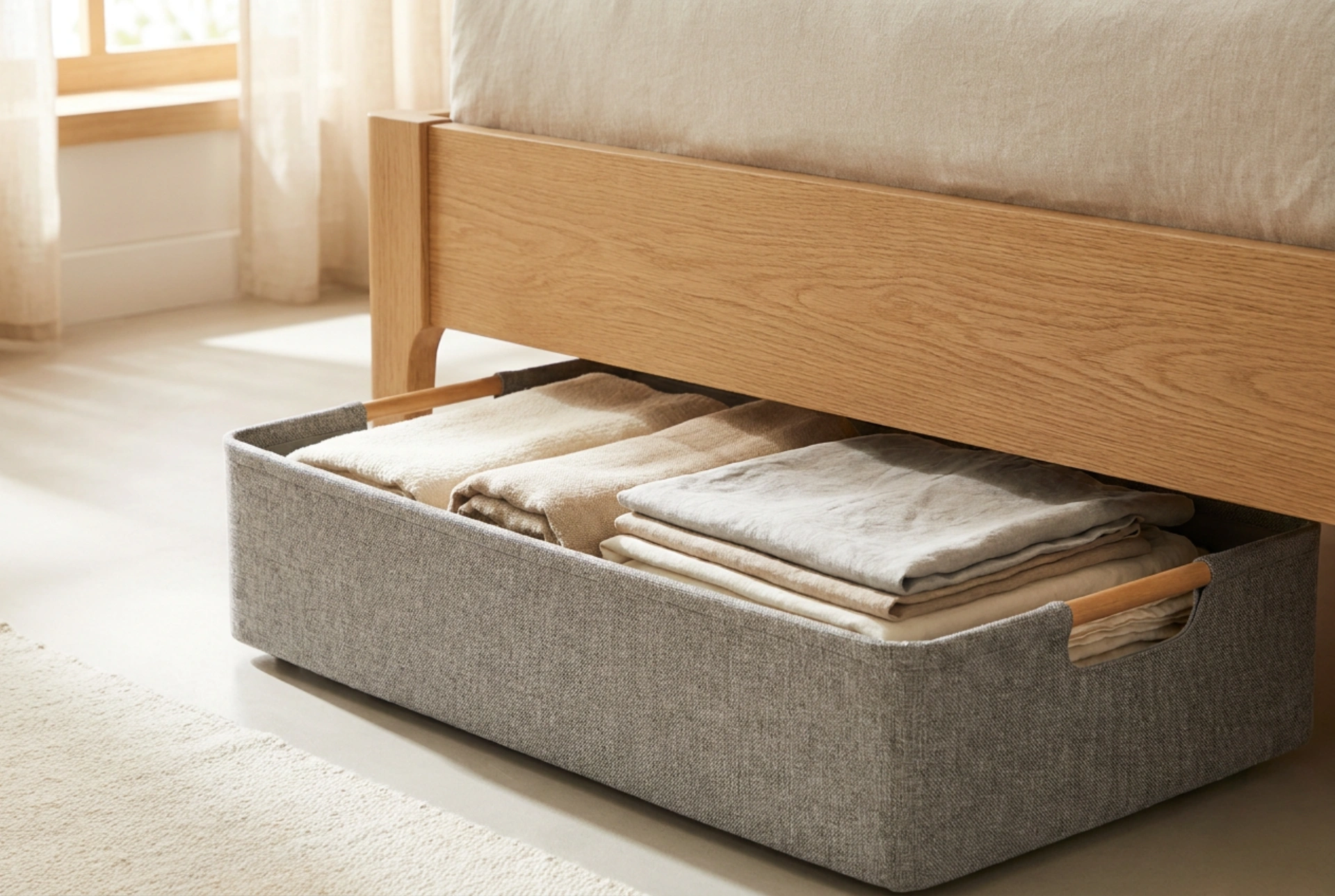
Simply tossing textiles into a deep storage bin creates large air pockets, reducing spatial efficiency by up to forty percent. It also subjects the bottom layers to gravitational compression, resulting in deep creases that can weaken natural fibres over time. To maximize space and maintain fabric health, implement the vertical filing method. Fold garments into self-supporting rectangular packages and place them upright in the bin. This ensures that every item is visible from above, eliminating the need to rummage through layers and disrupt the organization.
For highly compressible items such as down comforters or winter parkas, vacuum-assisted compression bags are highly effective. By evacuating the air trapped between the fibres, you can reduce the physical volume of the item by up to seventy-five percent. However, avoid over-compressing natural down feathers for more than six months, as extreme, prolonged compression can fracture the delicate keratin structures of the feathers, permanently reducing their loft and insulating properties. For long-term storage of natural wool or cashmere, use breathable canvas dividers within the plastic bin and include cedar blocks to naturally repel pests without the use of harsh synthetic chemical repellents.
Zoning and Operational Flow for Daily Access
An organized under-bed system relies on an efficient retrieval flow. Divide your storage bins into distinct zones based on the frequency of access. The area directly under the centre of the bed is the most difficult to reach and should be reserved for deep seasonal storage, such as winter duvets in summer or holiday decorations. Keep the outer edges near the perimeter of the bed frame for items used weekly, such as extra towels or active sports gear.
Use internal modular dividers to prevent items from shifting when the bin is rolled back and forth. Small canvas boxes or adjustable plastic inserts prevent the momentum of sliding from turning a neat array of clothing into a cluttered heap. Finally, place clear, physical labels on the outward-facing panel of each bin. Knowing exactly what is inside each container without having to pull it out and open the lid reduces physical effort and maintains the long-term order of your bedroom space.