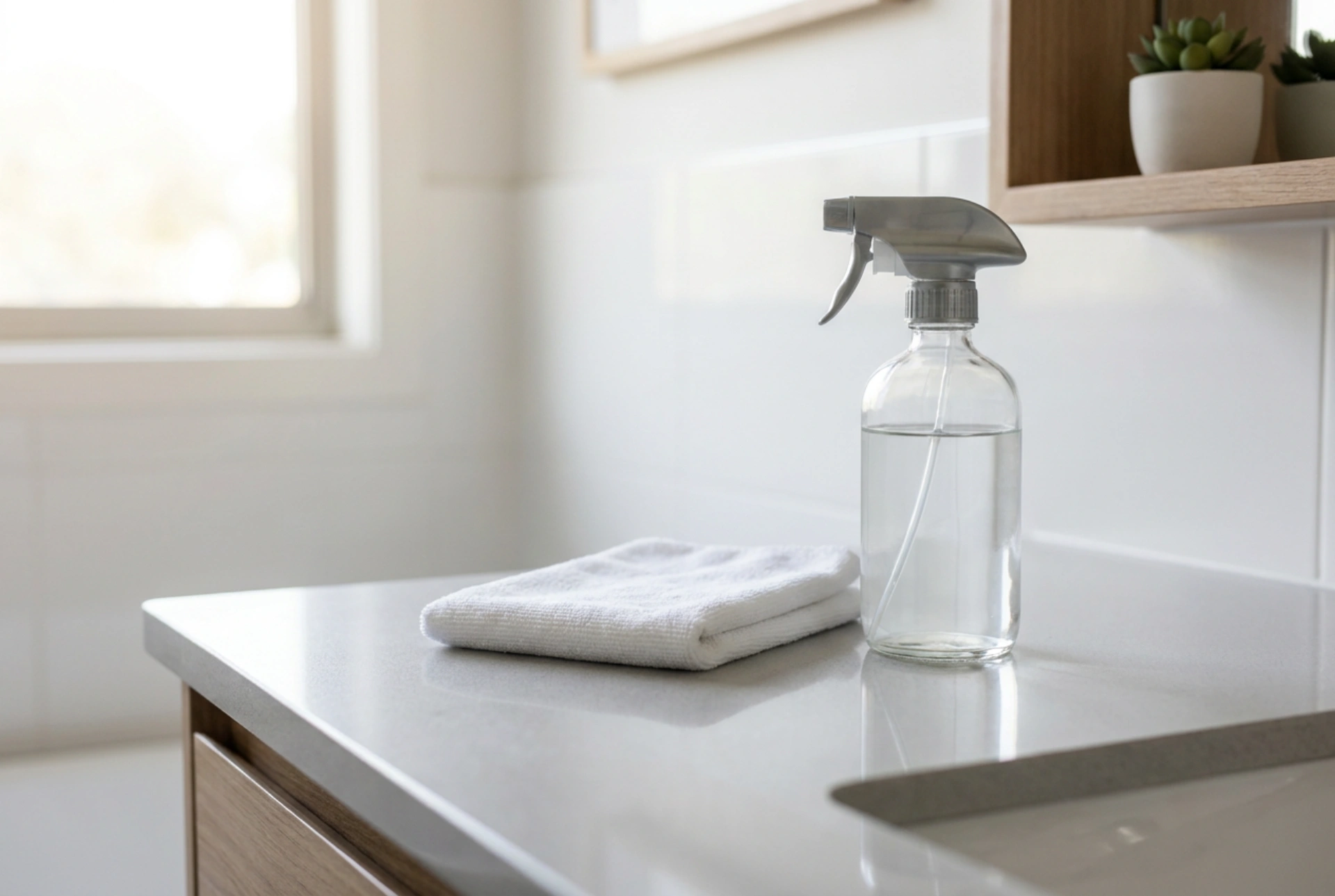


Removing stubborn limescale and dull soap scum from bathroom surfaces requires understanding the underlying chemistry rather than relying on aggressive scrubbing. By utilizing specific organic acids and proper mechanical action, you can dissolve these mineral deposits efficiently without damaging delicate fixtures.
The Chemistry of Bathroom Grime: Limescale vs. Soap Scum
To effectively clean a bathroom, you must first identify the substances you are trying to dissolve. Limescale and soap scum are chemically distinct, yet they often bind together to form a highly resilient barrier on tiles, glass, and metal fixtures.
Limescale consists primarily of calcium carbonate (CaCO3) and magnesium carbonate. These minerals precipitate out of hard water when it evaporates, leaving behind a hard, crystalline structure that bonds tightly to surfaces. Because calcium carbonate is alkaline, it can only be dissolved by acidic solutions. The acid reacts with the carbonate ions, converting them into soluble salts, water, and carbon dioxide gas.
Soap scum, on the other hand, is a complex mixture of calcium or magnesium stearate. It forms when the minerals in hard water react with the fatty acids present in traditional soaps. This chemical reaction creates an insoluble, sticky, and hydrophobic film that repels water and clings to surfaces. Dissolving soap scum requires a combination of an acid to break the calcium-fatty acid bond and a surfactant to emulsify the released fatty substances so they can be rinsed away.
Choosing the Right Acid: Citric Acid vs. Acetic Acid
For household cleaning, two organic acids are highly effective, readily available, and safe for most bathroom materials: citric acid and acetic acid (found in white vinegar).
- Citric Acid: Sold as a dry crystalline powder, citric acid is highly effective for heavy limescale. A standard solution can be made by dissolving 20 to 50 grams of citric acid powder in 500 ml of warm water. Citric acid is odorless and acts as a chelating agent, meaning it binds to metal ions like calcium, making them highly soluble and easy to wipe away.
- Acetic Acid (White Vinegar): Standard white vinegar contains about 5% to 9% acetic acid. It is excellent for light to moderate maintenance cleaning. While highly effective, it has a volatile pungent odor and is slightly less effective at chelating metals than citric acid, but its liquid form makes it highly convenient for quick applications.
The Impact of Temperature and Dwell Time
In chemical reactions, temperature and time are critical variables. Increasing the temperature of your acidic solution accelerates the kinetic energy of the molecules, significantly speeding up the rate at which the acid breaks down calcium carbonate. Applying a warm citric acid solution (around 40°C to 50°C) to scale deposits will dissolve them much faster than using a cold solution.
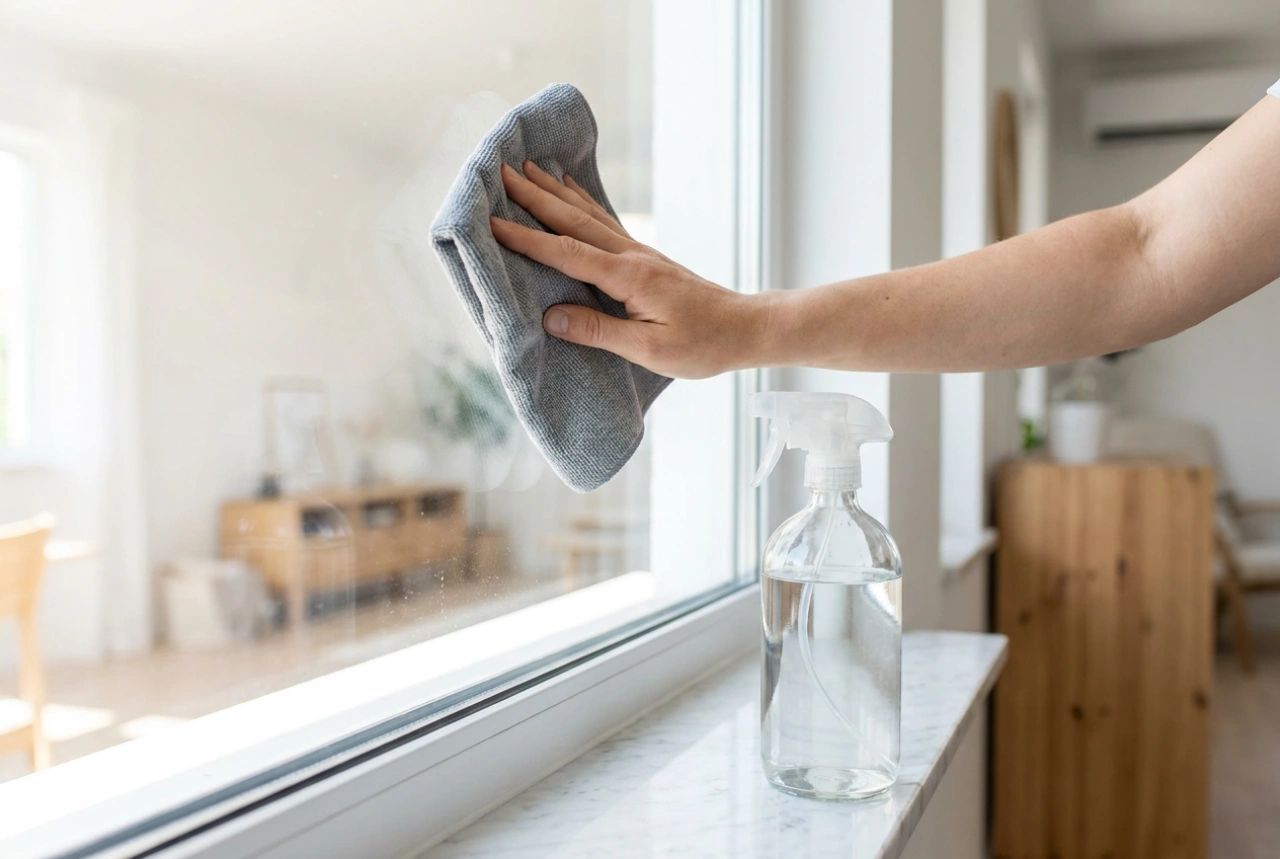
Equally important is dwell time. Hard mineral deposits cannot be dissolved instantly. The acid needs time to penetrate the crystalline matrix of the limescale. For vertical surfaces like shower screens or faucets, spraying the solution is often insufficient because gravity pulls the liquid down. To maximize dwell time, saturate a microfiber cloth or paper towels in the acidic solution and drape them directly over the affected areas. Let the wet compress sit for 15 to 30 minutes, allowing the chemical reaction to proceed uninterrupted before rinsing.
Surface Compatibility and Safety Precautions
While acids are highly effective at dissolving minerals, they can also damage certain bathroom materials if used incorrectly. Knowing where to apply these solutions is vital for maintaining your bathroom's integrity.
- Ceramics and Glass: These materials are highly resistant to acids, making them safe for concentrated citric or acetic acid treatments. Glass shower doors benefit greatly from regular acid applications to prevent permanent silica etching.
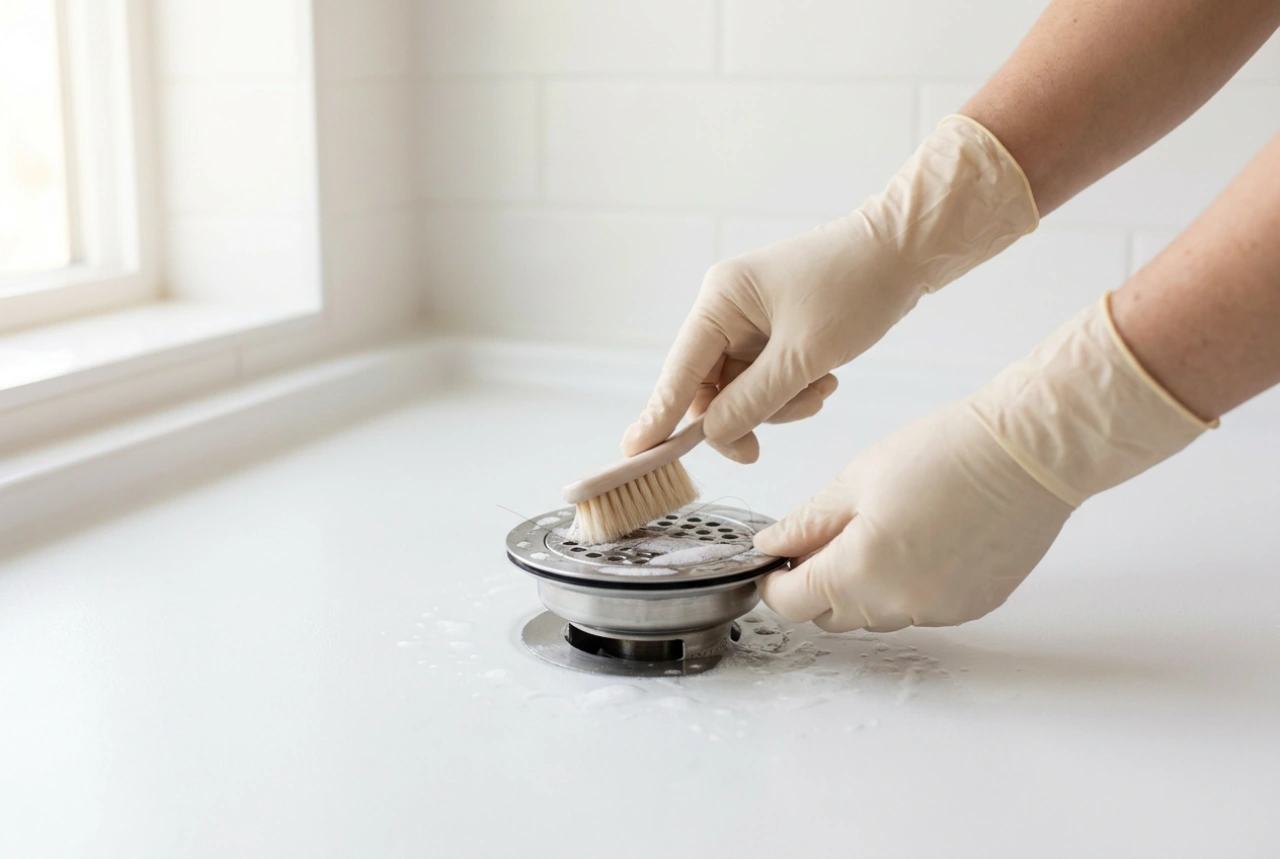
- Chrome and Stainless Steel: Chrome-plated fixtures can tolerate mild acids for short periods. However, prolonged exposure can cause pitting or discoloration. Always rinse acid solutions off metal fixtures thoroughly with cold water within 5 to 10 minutes of application.
- Natural Stone: Materials like marble, limestone, travertine, and concrete are highly sensitive to acids. Because these stones are composed of calcium carbonate, any acidic cleaner will immediately etch the surface, leaving permanent dull spots. For natural stone, use only pH-neutral cleaners and rely on immediate drying to prevent mineral buildup.
A Methodical Cleaning Routine
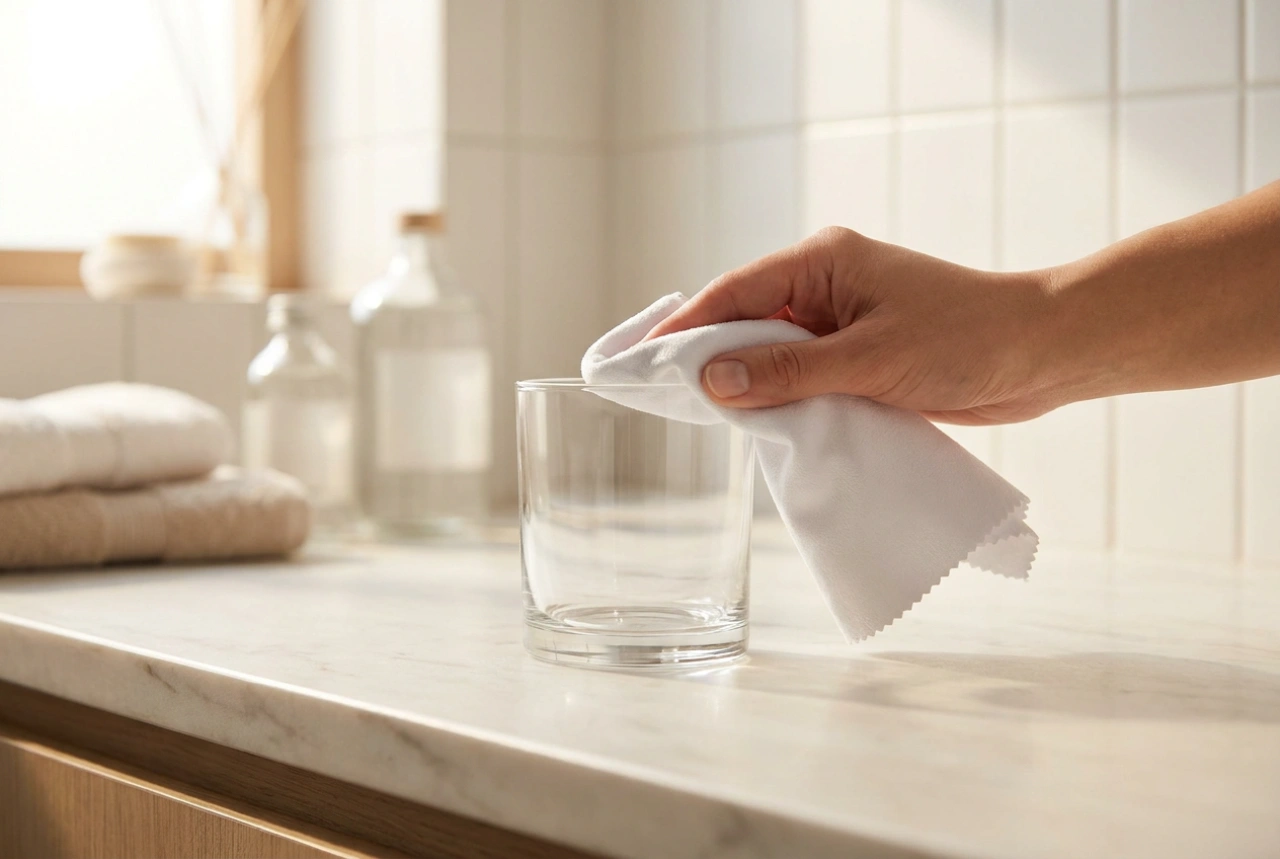
To clean efficiently, follow a systematic order of operations. Start by spraying warm citric acid solution over the affected areas. Apply saturated cloths to heavily scaled zones. Allow 15 minutes of dwell time. Use a non-scratch microfiber cloth to gently agitate the surface; the microscopic wedge-shaped fibers will mechanically lift the loosened particles. Finally, rinse thoroughly with clean water to remove all dissolved salts and acidic residues, and dry immediately with a clean chamois or dry microfiber cloth to prevent new water spots from forming.