

Efficient sweeping is more than just moving a broom across a room; it is an exercise in applied physics and material science. By understanding how different bristle types interact with various surface materials and debris, you can significantly reduce cleaning time and prevent microscopic dust from resettling on your furniture.
The Physics of Bristles: Soft vs. Stiff Materials
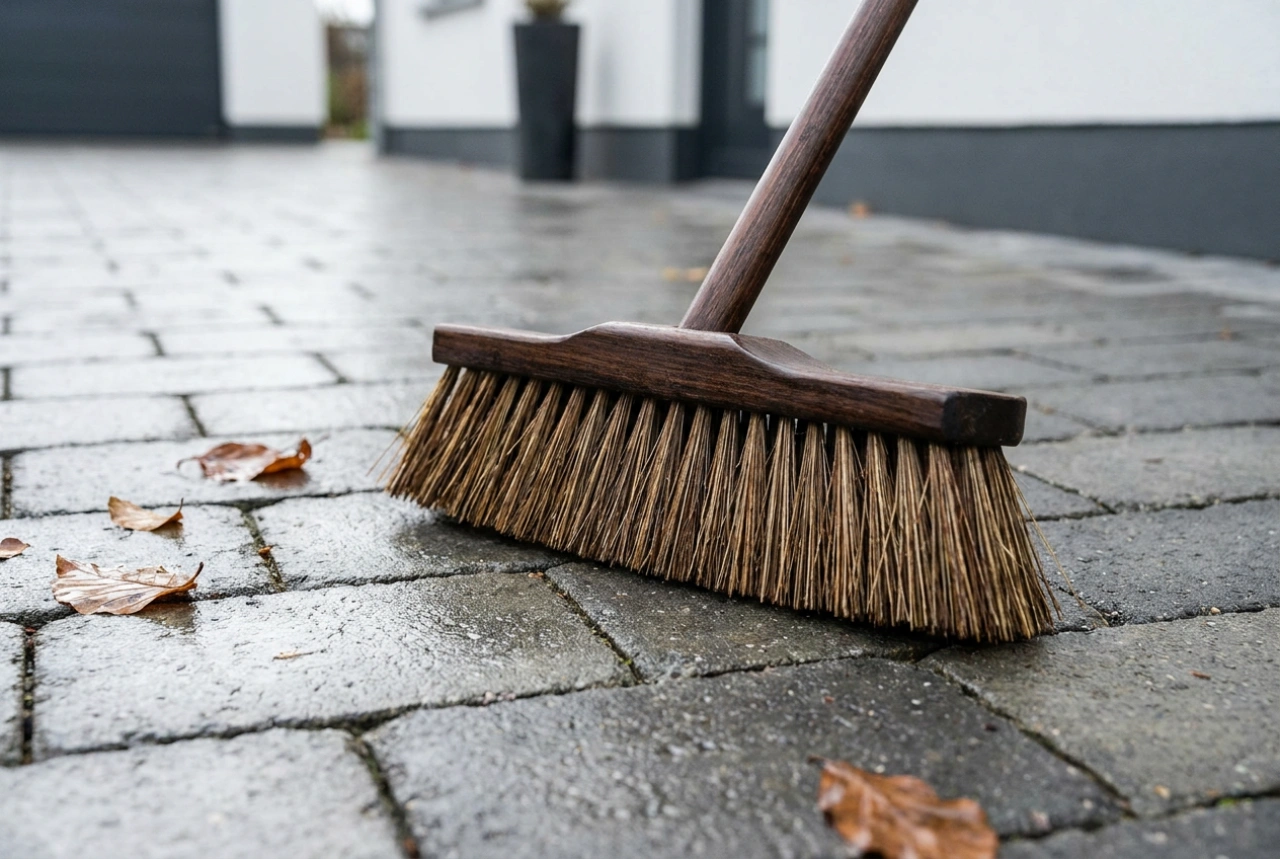
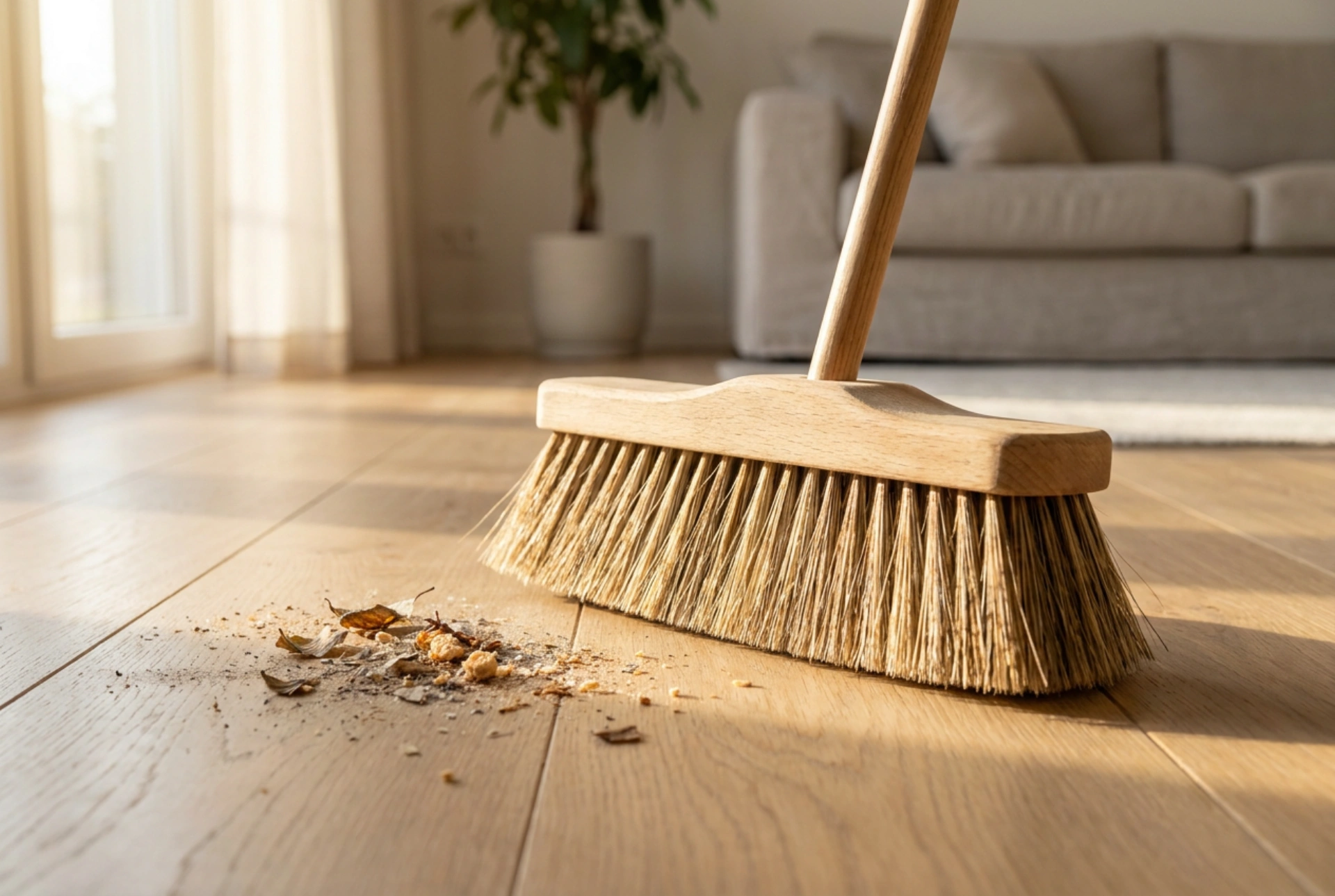
The effectiveness of a sweeping brush relies heavily on its bristle composition and density. Soft, flagged synthetic bristles (where the tips are split to create a feathered texture) maximize surface area contact. This design leverages electrostatic forces to attract and trap microscopic dust particles rather than merely scattering them. Conversely, stiff, unflagged bristles (often made of natural bassine or thick nylon) are designed to transfer maximum kinetic energy to heavy, coarse debris like dried mud, sand, or outdoor grit. Using a stiff brush on fine indoor dust will simply launch particles into the air, while a soft brush will bend uselessly under the weight of heavier, rough materials.
Controlling Fine Dust and Airborne Particles
Fine dust presents a unique challenge because its low mass makes it highly susceptible to air currents generated by the sweeping motion itself. To minimize this, use a low-velocity, pulling motion rather than a rapid flicking action. A flick at the end of a stroke creates a micro-vortex that lofts dust into the breathing zone. When dealing with highly volatile fine dust, keeping the brush head close to the floor and utilizing short, overlapping strokes keeps the debris rolling along the floor surface. If the dust is particularly dry, a light mist of water on the tips of the bristles—not the floor—can increase surface tension, causing dust particles to clump together and stick to the broom instead of dispersing into the room.
Managing Heavy, Coarse, or Wet Debris
For dense materials such as soil, gravel, or spilled kitchen ingredients like sugar and salt, the primary obstacle is friction. Here, the technique must shift from pulling to pushing. Position yourself behind the broom, angling the handle forward to apply downward pressure. This mechanical leverage forces the stiff bristles deep into the floor's texture, dislodging settled grains. When dealing with semi-wet or sticky debris, avoid dry sweeping altogether, as this smears the substance and ruins the broom bristles. Instead, use a pulling motion with a rubber-bladed squeegee or a highly rigid synthetic brush to scrape and gather the material into a concentrated pile before lifting.
The Challenge of Hair and Pet Fur
Hair and animal dander carry a natural electrostatic charge, which causes them to cling stubbornly to fibers, carpets, and smooth flooring alike. Traditional synthetic sweeping brushes can become quickly clogged with hair due to this static attraction, making them inefficient. To combat this, utilize a rubber or silicone-bristled broom. The high friction of rubber creates a strong electrostatic pull that lifts hair from the floor without letting it weave into the bristles. If using a standard soft broom, work in short, downward-pressing strokes to roll the hair into manageable cylinders. Regularly clean the bristles using a comb or a dedicated cleaning tool to prevent the buildup from reducing sweeping efficiency.
Order of Operations for Maximum Efficiency
- Work from the Perimeter: Start by sweeping along baseboards and corners, pulling debris toward the center of the room.
- Overlap Your Strokes: Ensure each sweep overlaps the previous path by at least 20% to prevent leaving thin lines of dust behind.
- The Dustpan Pivot: When collecting the pile, tilt the dustpan slightly backward so its rubber lip sits completely flush with the floor, eliminating the common gap where fine dust slips underneath.