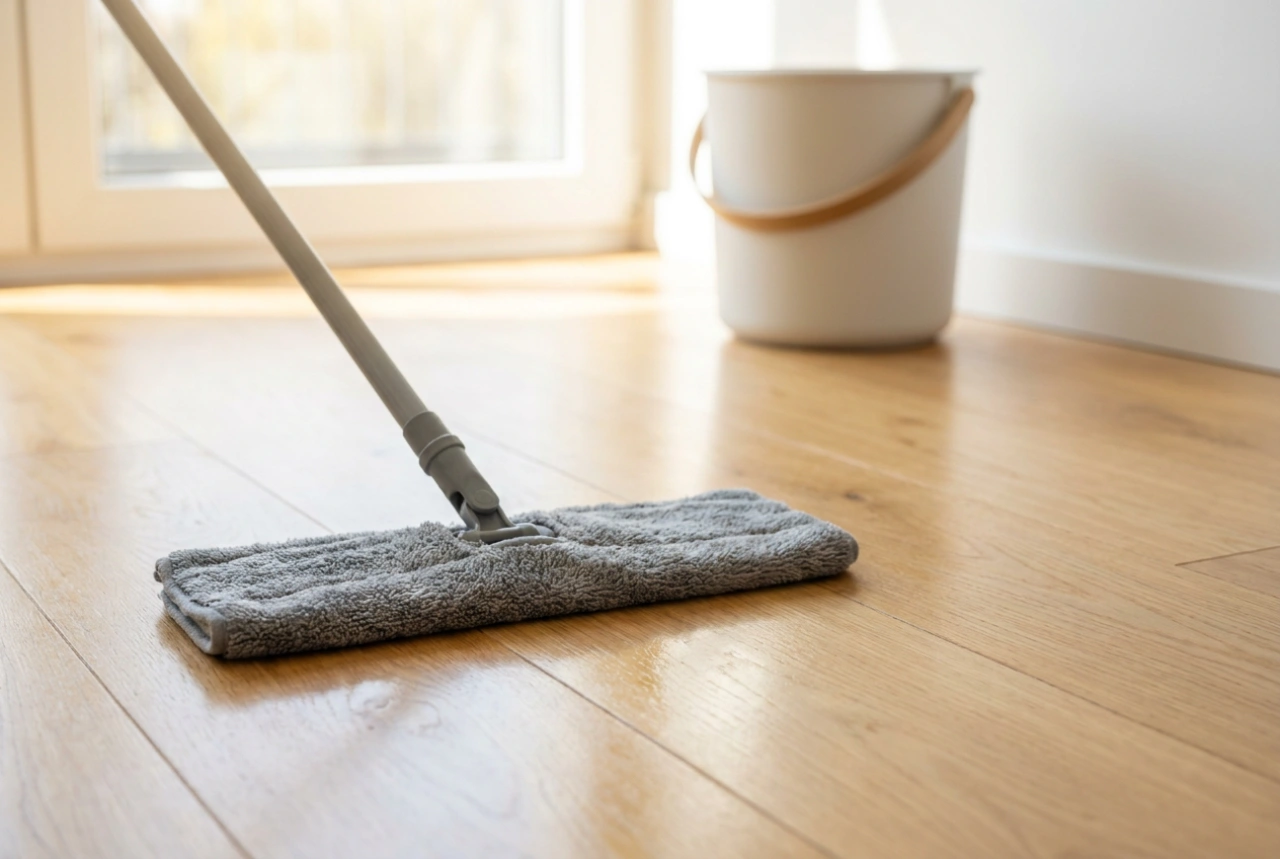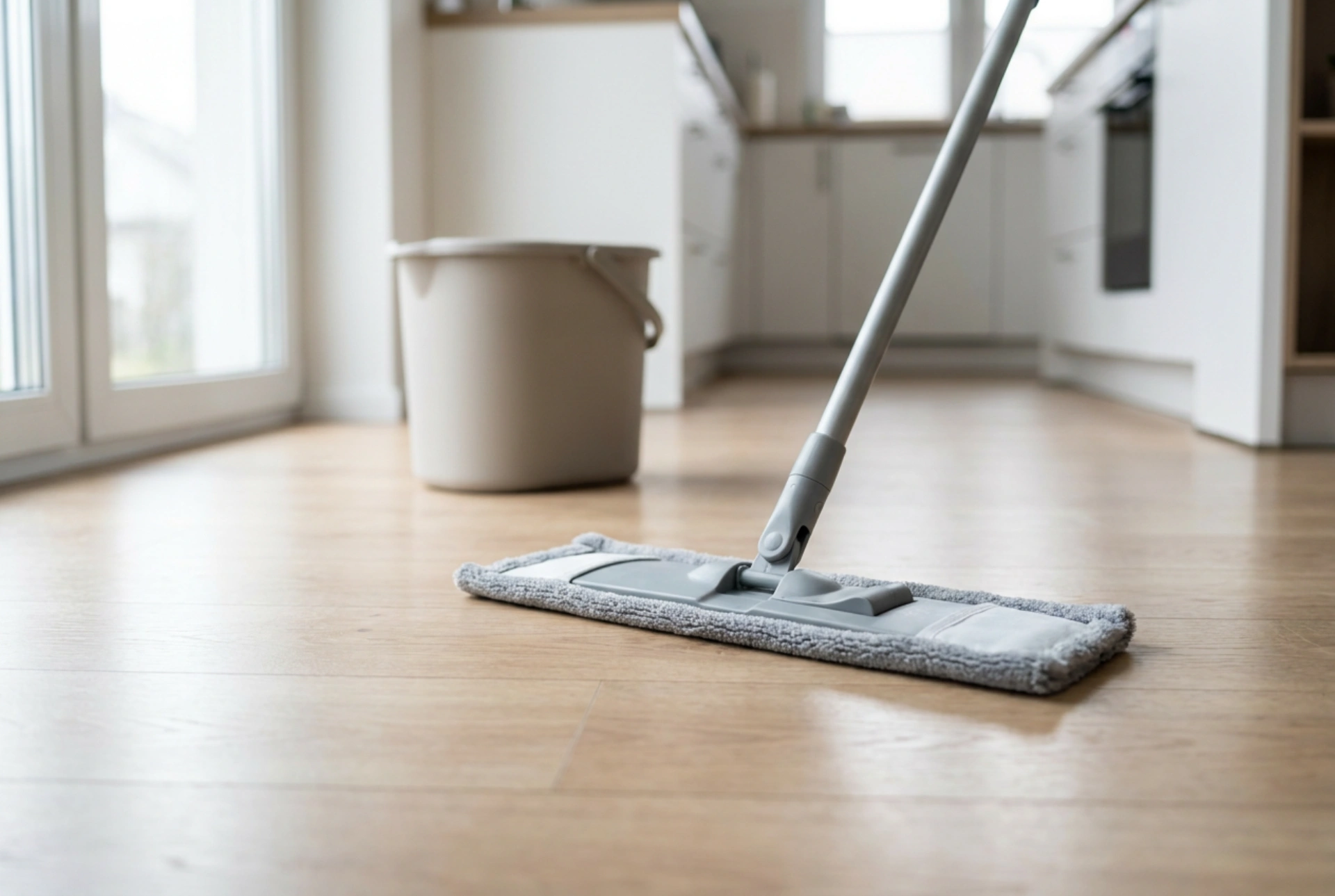


Maintaining pristine laminate panels and ceramic tiles requires a precise balance of mechanical action, moisture control, and chemical interaction. A flat mop coupled with a targeted dual-chamber bucket provides the ideal system to clean these surfaces rapidly without causing water damage or leaving streak-inducing residues.
The Mechanics of Flat Mops: Surface Area and Capillary Action
Traditional string mops distribute pressure unevenly, leaving pools of water and missing microscopic crevices. In contrast, flat mops utilise a wide, rigid frame that distributes downward force uniformly across the entire surface of the cleaning pad. This structural design ensures that every square centimetre of the floor receives equal friction, which is essential for dislodging adhered soil particles.
The efficiency of a flat mop relies heavily on the material science of its cleaning pad, typically composed of microfibre. Microfibres are synthetic polyester and polyamide threads split to a fraction of the width of a human hair. This splitting process creates a vast network of star-shaped channels that exploit capillary action. Instead of merely pushing dirt around, these microscopic channels draw liquid and suspended dust deep into the core of the fibre, trapping contaminants securely until the pad is rinsed.
Moisture Control: Protecting Laminate and Joints
Laminate flooring consists of highly compressed wood fibres topped with a photographic layer and a clear wear coat. While the surface is water-resistant, the joints between the panels are highly vulnerable. If excess water penetrates these joints, the underlying wood fibres absorb the moisture, swell, and cause irreversible warping or buckling of the floor edges.
A dual-chamber bucket system with a mechanical wringer is crucial for regulating moisture. The wringing mechanism uses mechanical compression or centrifugal force to expel excess water from the microfibre pad, leaving it slightly damp rather than saturated. The ideal moisture level for laminate is "damp-dry," where the moisture evaporates from the surface within sixty seconds of application. This rapid evaporation prevents liquid water from sitting in the seams, safeguarding the structural integrity of the floor.
The Chemistry of Cleaning: Tiles vs. Laminate
Ceramic and porcelain tiles feature a glazed, non-porous surface that can withstand higher moisture levels but is prone to showing mineral deposits and surfactant film. Understanding the chemistry of cleaning agents is vital for streak-free results on both surface types:
- Laminate: Requires a neutral pH cleaner (pH 7) or a highly diluted solution of isopropyl alcohol and distilled water. Isopropyl alcohol reduces the surface tension of the water, promoting rapid evaporation and preventing water spots. Strong alkaline or acidic cleaners must be avoided, as they can degrade the protective acrylic wear layer over time.
- Tiles: Can tolerate mild alkaline solutions which effectively emulsify organic grease and oils. However, grout lines are often porous and can trap dirty water. Using a flat mop with a clean, thoroughly wrung microfibre pad prevents dirty water from pooling in the grout lines, keeping them clean and preventing discolouration.
Water temperature also plays a critical physical role. Warm water (around 40°C) decreases the viscosity of greasy soils, making them easier to emulsify and lift. However, excessively hot water should be avoided on laminate, as it can soften the adhesives used in the joints and accelerate water penetration.
Optimised Technique and Order of Operations
To maximise efficiency and prevent re-contamination, a systematic approach must be followed. Always vacuum or dry-sweep the area first to remove loose, abrasive grit that could scratch the protective laminate glaze or tile sealant during wet mopping.
When mopping, employ the "figure-eight" or "S-sweep" movement pattern. Dragging the mop back and forth in straight lines simply shifts debris from one side to the other. The S-sweep pattern ensures that the leading edge of the mop always faces forward, collecting loose debris and directing it into a single pile at the end of the run. Work from the far corner of the room towards the exit, overlapping each pass by approximately ten per cent to guarantee complete coverage without leaving untreated stripes.