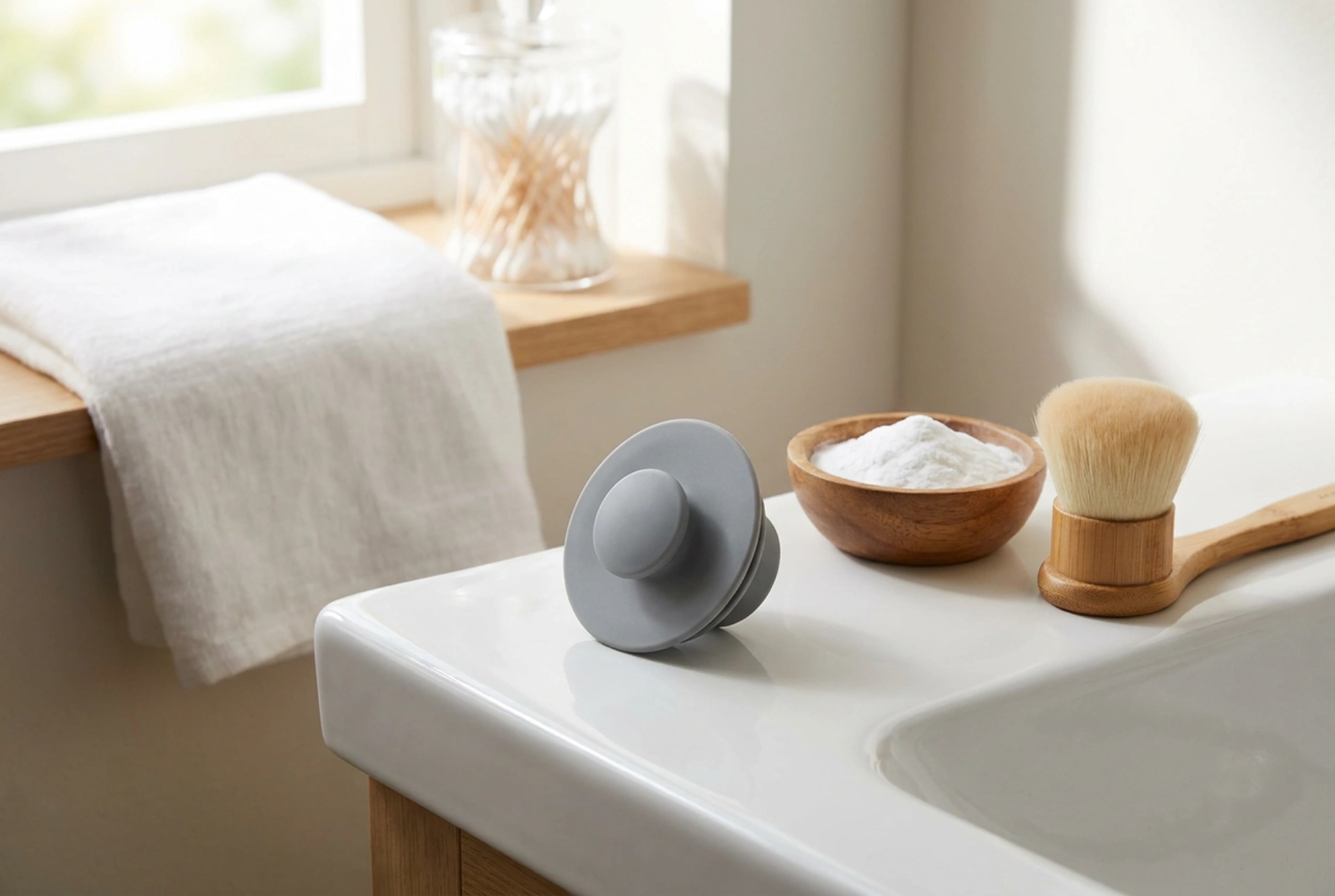


Rubber bath plugs easily absorb unpleasant smells due to their porous molecular structure and constant exposure to organic waste, but systematic chemical neutralisation can keep them completely odourless. Understanding how elastomer materials interact with fatty acids, mineral deposits, and microbial biofilms is the key to maintaining a hygienic bathroom environment without damaging the material.
The Chemistry of Odour Absorption in Elastomer Plugs
Natural rubber and synthetic elastomers, such as silicone, possess a micro-porous surface structure. While these materials appear perfectly solid and smooth to the naked eye, at a microscopic level, they contain polymer chains with free spaces that can trap microscopic particles. During a bath, the water carries a mixture of body oils, dead skin cells, soap residue, and hair products. This mixture forms a hydrophobic film over the plug.
Over time, bacteria and fungi colonise this organic layer, creating a complex structure known as a biofilm. As these microorganisms metabolise the fats and proteins trapped in the biofilm, they release volatile organic compounds (VOCs) such as hydrogen sulphide and volatile fatty acids. Because these odour molecules are lipophilic (fat-loving), they migrate from the surface biofilm directly into the porous matrix of the rubber. Once embedded within the polymer chains, simple rinsing with water will not remove them, resulting in a persistent, musty smell.
The Two-Step Neutralisation Protocol
To eliminate both the odours and the matrix that holds them, you must use a sequence of alkaline and acidic agents. This dual approach targets different types of residues that cannot be dissolved by a single universal cleaner.
Step 1: Alkaline Degreasing with Sodium Bicarbonate
The first step focuses on breaking down the organic fats and proteins. Sodium bicarbonate (baking soda) is a mild alkali with a pH of approximately 8.3. When applied to the wet plug, it initiates a process called saponification, turning insoluble fatty acids into water-soluble salts.
- Create a thick paste by mixing three parts sodium bicarbonate with one part warm water.
- Coat the entire surface of the rubber plug, paying close attention to the underside flanges and seal rings.
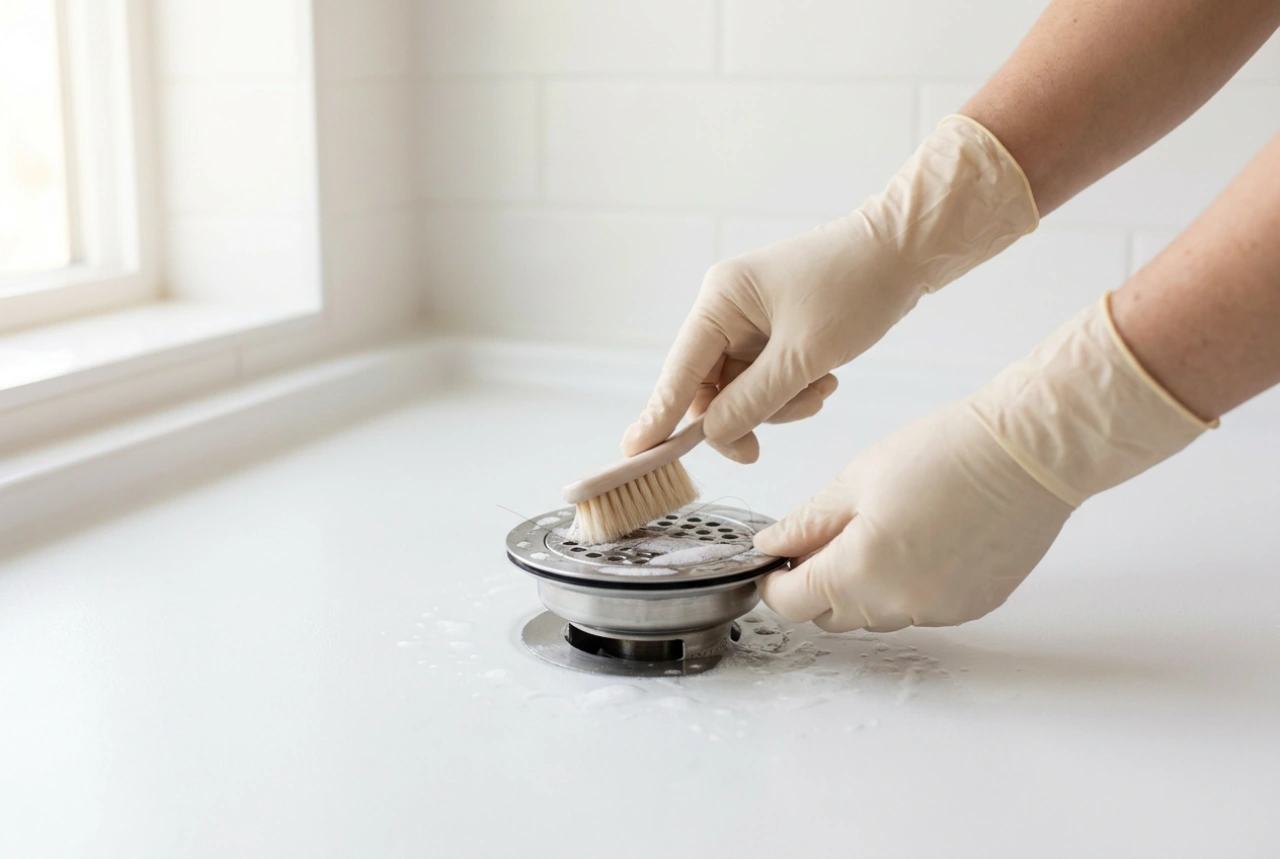
- Allow the paste to sit for 10 minutes to penetrate the organic layer, then scrub gently with a soft-bristled brush using circular motions.
Step 2: Acidic Descaling with Citric Acid
Limescale (calcium carbonate) from hard water acts as a protective shield for bacteria, securing the biofilm to the rubber. Acidic agents dissolve these mineral structures. Citric acid is highly effective and gentle on synthetic rubbers.
- Dissolve 20 grams of citric acid powder in 200 ml of warm water (approx. 40°C).
- Submerge the pre-washed plug in the solution for 15 minutes. The acid reacts with calcium carbonate, releasing carbon dioxide and breaking the mineral bond, allowing the remaining biofilm to wash away easily.
- Rinse the plug thoroughly with clean, cold running water.
Deep Deodorisation via Active Oxygen
If the odour has already penetrated deep into the rubber polymer, surface cleaning will not suffice. You need an oxidising agent that can penetrate the material and break down the volatile organic compounds at a molecular level. Sodium percarbonate (often sold as oxygen bleach) is the ideal agent for this purpose.
When dissolved in water above 50°C, sodium percarbonate decomposes into sodium carbonate and hydrogen peroxide. The resulting active oxygen breaks the chemical bonds of the odour-causing molecules, neutralising them completely. Unlike chlorine-based bleaches, oxygen bleach does not degrade the elastic properties of natural or synthetic rubber, preventing the material from becoming sticky, brittle, or cracked.
To perform a deep deodorisation, dissolve one tablespoon of sodium percarbonate in 500 ml of water heated to 60°C. Fully submerge the rubber plug and leave it for 30 minutes. You will observe active bubbling as oxygen is released. After the time has elapsed, rinse the plug with cold water to close the microscopic pores of the elastomer.
Mechanical Care and Storage Habits
The tools and physical movements used during cleaning directly impact how quickly the plug will absorb smells in the future. Never use abrasive metal scourers, stiff wire brushes, or harsh scouring powders. These physical agents create micro-scratches on the rubber surface, significantly increasing its surface area and creating ideal pockets for future bacterial colonisation.
Moisture is the primary driver of microbial growth. Once the cleaning process is complete, dry the plug thoroughly with a clean, lint-free microfibre cloth. Store the plug outside the bath when not in use, preferably on a dry, well-ventilated shelf. This simple habit deprives remaining microorganisms of the moisture required to multiply, keeping your bath plug fresh for much longer.