

Storing pushpins safely prevents accidental puncture wounds and protects the sharp steel points from dulling or rusting over time. Implementing the right storage system balances quick accessibility with physical protection for your fingers and the pins themselves.
The Physics of Pin Safety and Material Integrity
Pushpins and map pins are designed with a hardened steel shank tapered to a fine point, coupled with a plastic, wooden, or brass head. The sharp point concentrates force, allowing the pin to penetrate cork easily with minimal effort. However, this high concentration of force means the tip is highly susceptible to structural damage. When pins are stored loosely in a drawer or a soft container, they collide. These micro-collisions cause the sharp tips to bend, dull, or chip, rendering them ineffective and increasing the force required to insert them next time.
Furthermore, steel is highly prone to oxidation when exposed to atmospheric moisture. When the protective brass or nickel plating on a pin is scratched due to poor storage, the underlying steel is exposed to oxygen and humidity. This triggers the formation of iron oxide (rust), which degrades the metal, compromises the structural integrity of the pin, and poses a minor safety hazard if it punctures skin.
Choosing the Right Storage Vessel: Materials and Mechanics
To safely contain sharp points, the storage vessel must be constructed from a material that cannot be easily pierced. Avoid thin-walled plastics or fabric pouches, which fail under pressure when pins are shifted.
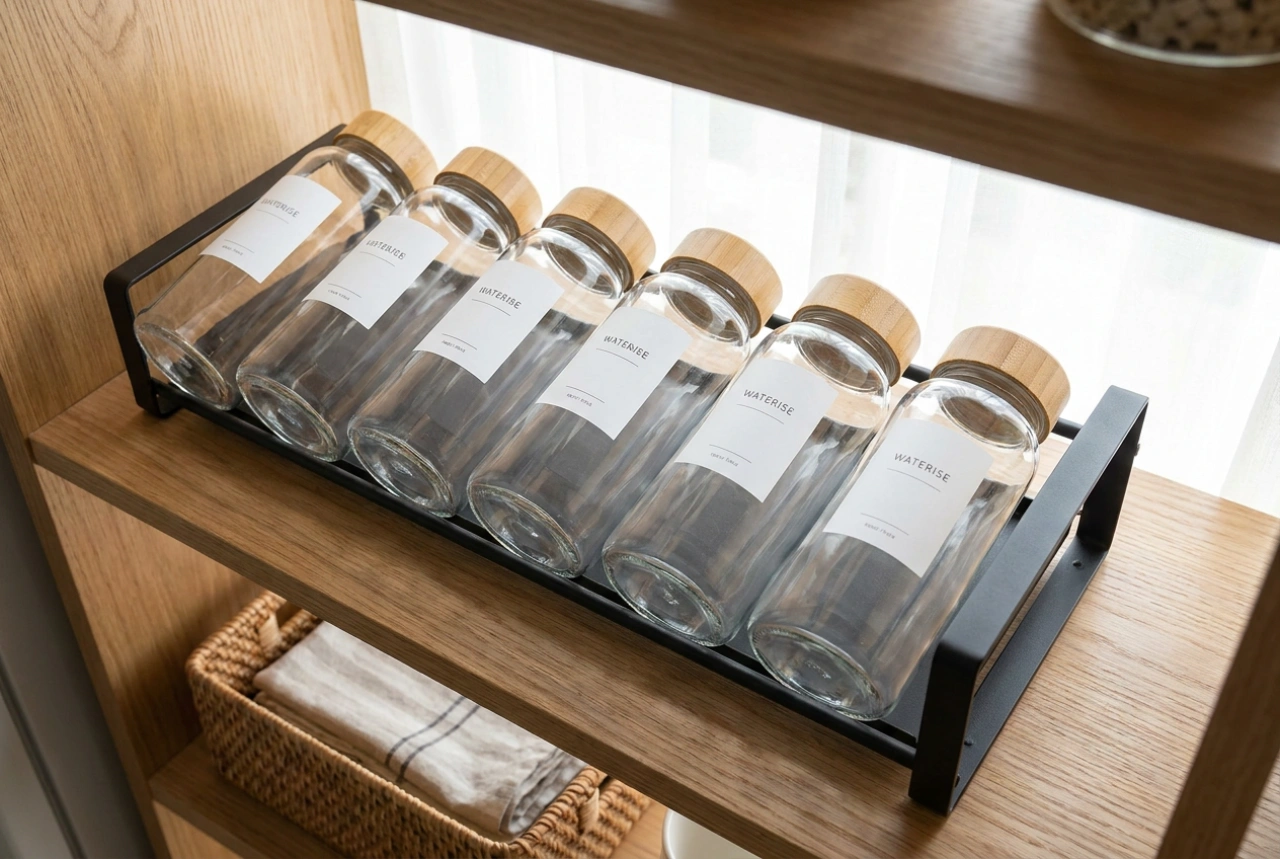
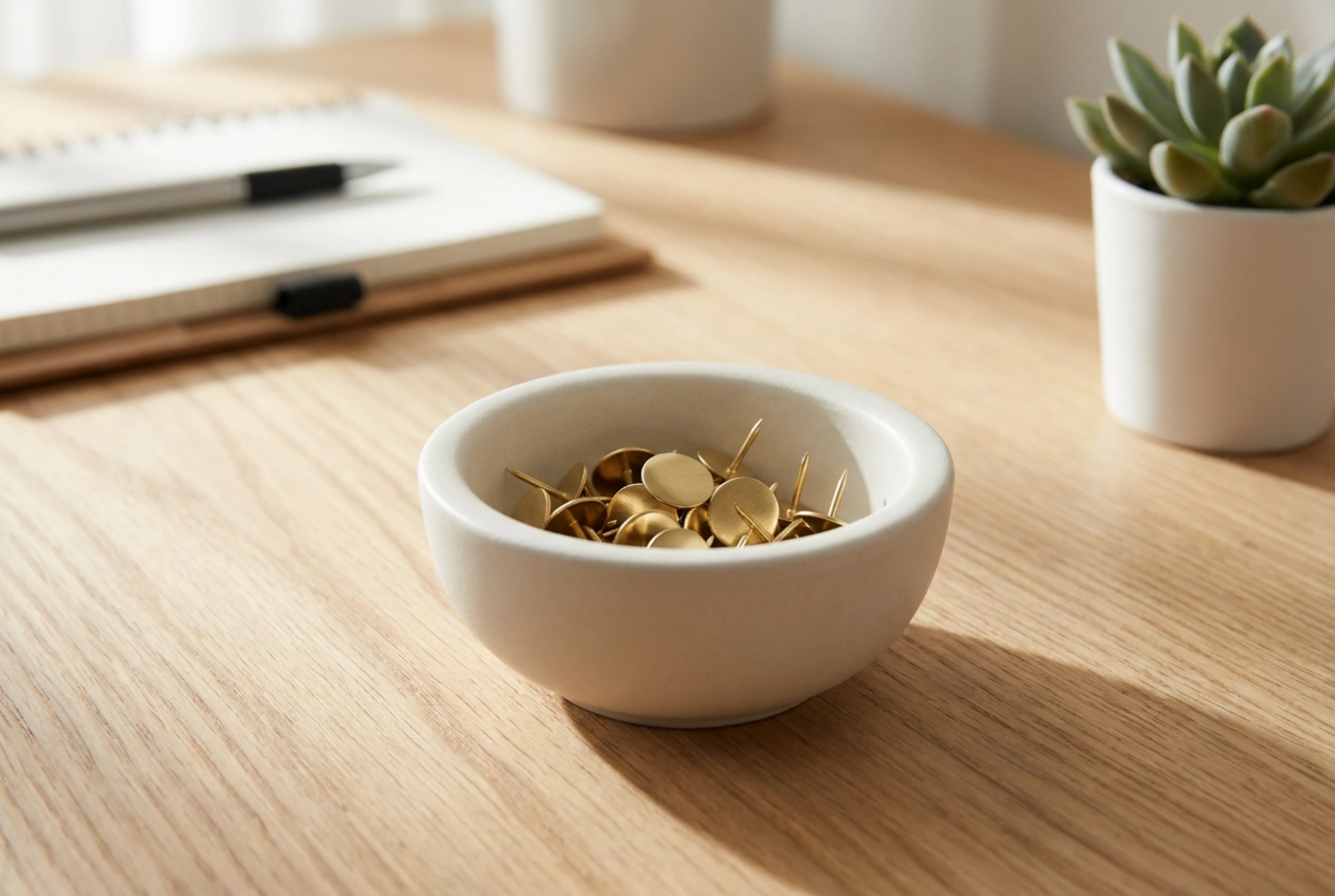
- Ceramic and Glass: Heavy, rigid materials like glazed ceramic or borosilicate glass are excellent choices. They provide a solid barrier that cannot be punctured. Additionally, their weight prevents the container from tipping over on a busy desk.
- Dense Foam or Cork Blocks: Inserting the pins directly into a sacrificial piece of high-density ethylene-vinyl acetate (EVA) foam or a small block of natural cork keeps the sharp tips completely shielded. This method eliminates movement entirely, preventing both physical damage and accidental contact.
- Magnetic Catch-Alls: Steel is ferromagnetic. Using a shallow dish with a weak integrated magnet at the base keeps the pins oriented flat against the bottom of the dish. This prevents them from pointing upward, minimizing the risk of a finger pricking. Note that the magnet should be weak enough to allow easy retrieval without magnetising the pins permanently, which would cause them to clump together.
Optimising Your Workspace Workflow
To maintain an organised and safe workspace, establish a clear routine for handling and storing your pushpins. When removing pins from a corkboard, never sweep them off the board with your hand. Instead, pull them out individually using a straight, perpendicular motion to prevent bending the shaft.
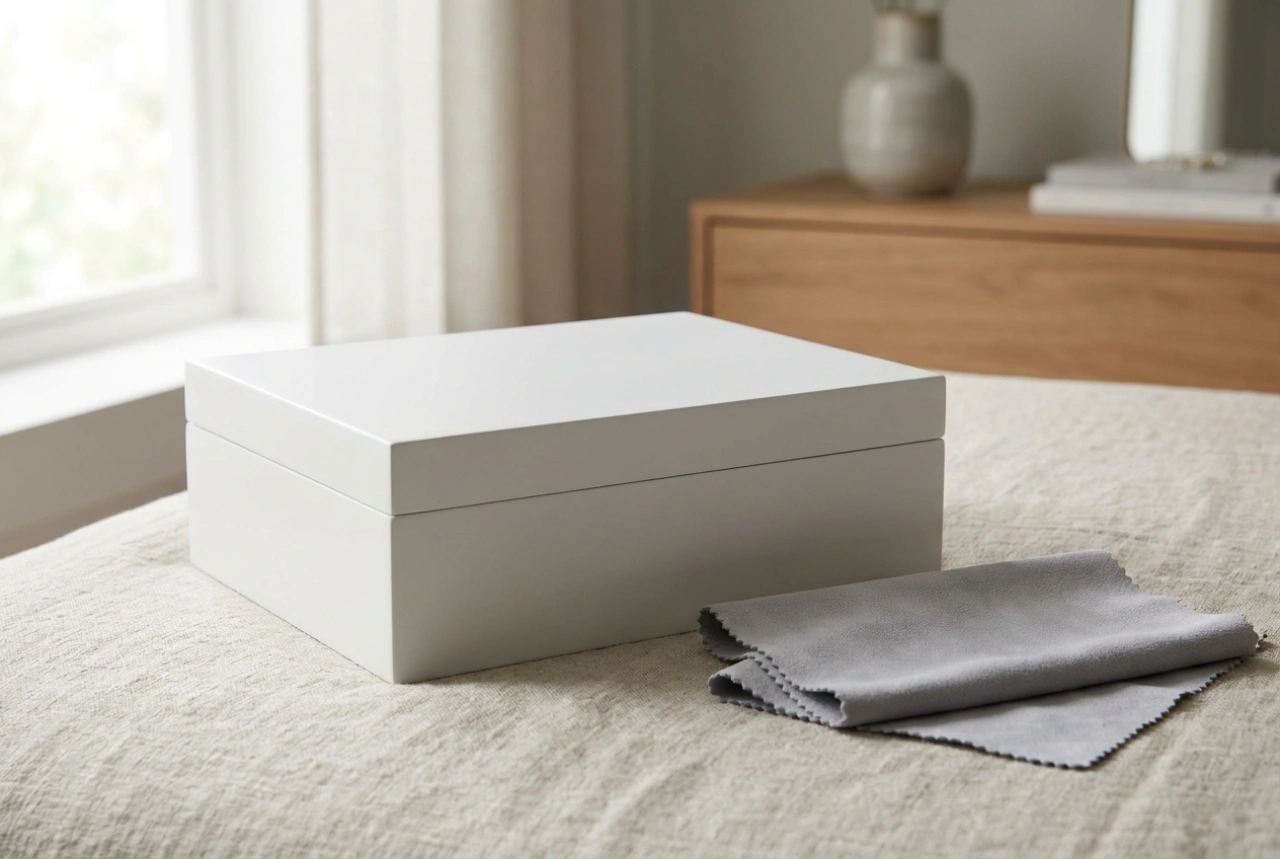
If you prefer an open-dish system, place the container on the non-dominant side of your desk to reduce the likelihood of accidental contact while reaching for other tools. For desk drawers, always use a container with a secure, tight-fitting lid—such as a screw-top aluminium tin or a wooden box with a magnetic latch—to ensure the pins do not scatter if the drawer is opened or closed vigorously.
Preventing Rust and Degradation
To protect the steel shanks from moisture-induced rust, store your pins in a dry microclimate. If you live in a humid environment or keep your workspace in a basement, place a small sachet of silica gel inside your pin container. Silica gel acts as a desiccant, adsorbing ambient moisture and keeping the relative humidity inside the container below the threshold required for steel oxidation to occur. Additionally, ensure the pins are completely dry before putting them away, especially if they have been handled with damp hands.
Quick Checklist for Safe Pushpin Storage
- Use puncture-proof containers: Opt for ceramic, heavy glass, metal tins, or thick wooden boxes.
- Stabilise the tips: Push pins into a small cork block or dense foam strip inside a drawer to keep points protected.
- Control moisture: Add a small silica gel packet to closed containers to prevent rust.
- Keep out of reach: Store containers away from desk edges and out of the path of high-frequency movements.