

Choosing between wet laundering and dry cleaning is a decision rooted in material science and organic chemistry rather than simple convenience. Understanding how polar and non-polar solvents interact with different textile fibres is key to preserving garment structure, colour, and longevity.
The Chemistry of Wet Cleaning: Water as a Polar Solvent
Water is a highly polar solvent. Its molecules possess a strong dipole moment, allowing them to form hydrogen bonds with other polar substances. This makes water exceptionally efficient at dissolving hydrophilic soils, such as salts, sugars, and proteins. However, water also has a high surface tension, which prevents it from easily penetrating tightly woven fabrics on its own. To overcome this, surfactants are introduced. Surfactant molecules contain both a hydrophilic (water-attracting) head and a hydrophobic (water-repelling) tail. When added to water, they align at the surface to reduce surface tension and assemble into spherical aggregates called micelles. These micelles encapsulate hydrophobic oily soils, lifting them from the fabric and suspending them in the wash water.
While water is a powerful medium, its polar nature causes structural changes in certain fibres. Hydrophilic natural fibres, such as cotton, linen, wool, and silk, absorb water readily. This absorption causes the fibres to swell, temporarily altering their physical dimensions and weakening their internal hydrogen bonds. For structural garments like tailored jackets, this swelling can lead to irreversible distortion, bubbling of fused interlinings, and severe shrinkage.
Dry Cleaning: The Action of Non-Polar Solvents
Contrary to its name, dry cleaning is not dry; rather, it utilizes liquid solvents other than water. The most common solvents used in professional care are non-polar organic compounds, such as hydrocarbon solvents or modified alcohols. Because these solvents are non-polar, they do not dissolve or interact with the hydrogen bonds inside natural fibres. Consequently, the fibres do not swell, weaken, or lose their shape during the process.
The primary strength of non-polar solvents lies in their ability to dissolve lipophilic (fat-soluble) substances through van der Waals forces. Oils, greases, waxes, and sebum easily dissolve in these solvents without requiring high temperatures or aggressive mechanical action. This makes dry cleaning highly effective for delicate fabrics like silk and wool, which would otherwise degrade or felt under the mechanical stress and swelling associated with wet cleaning.
Mechanical Stress, Temperature, and Fibre Distortion
The mechanical action of laundry equipment plays a significant role in fabric degradation. When natural fibres swell in water, their tensile strength often drops. For example, silk loses up to twenty percent of its strength when wet. Under the mechanical agitation of a standard washing machine drum, these weakened fibres rub against one another. This friction causes surface abrasion, fibre breakage, and, in the case of wool, felting.
Wool fibres are covered in microscopic, overlapping scales. In a wet, warm, and agitated environment, these scales expand and lock together irreversibly—a physical process known as felting, which leads to permanent shrinkage. Dry cleaning solvents do not cause the scales to flare, and the lower density of these solvents reduces the physical impact of mechanical agitation inside the cleaning drum, preserving the textile's original hand and drape.
A Material-Based Framework for Selection
To decide which cleaning method to employ, analyze the structural composition of the garment:
- Cotton and Linen: Highly crystalline cellulosic fibres. They actually become stronger when wet and can withstand polar solvents, high temperatures, and robust mechanical agitation. Wet cleaning is ideal for removing sweat and food stains from these materials.
- Wool and Cashmere: Protein fibres with a delicate cuticle scale structure. They are highly susceptible to felting and must be dry cleaned or treated with extremely gentle, low-agitation, cold-water wool cycles using pH-neutral detergents.
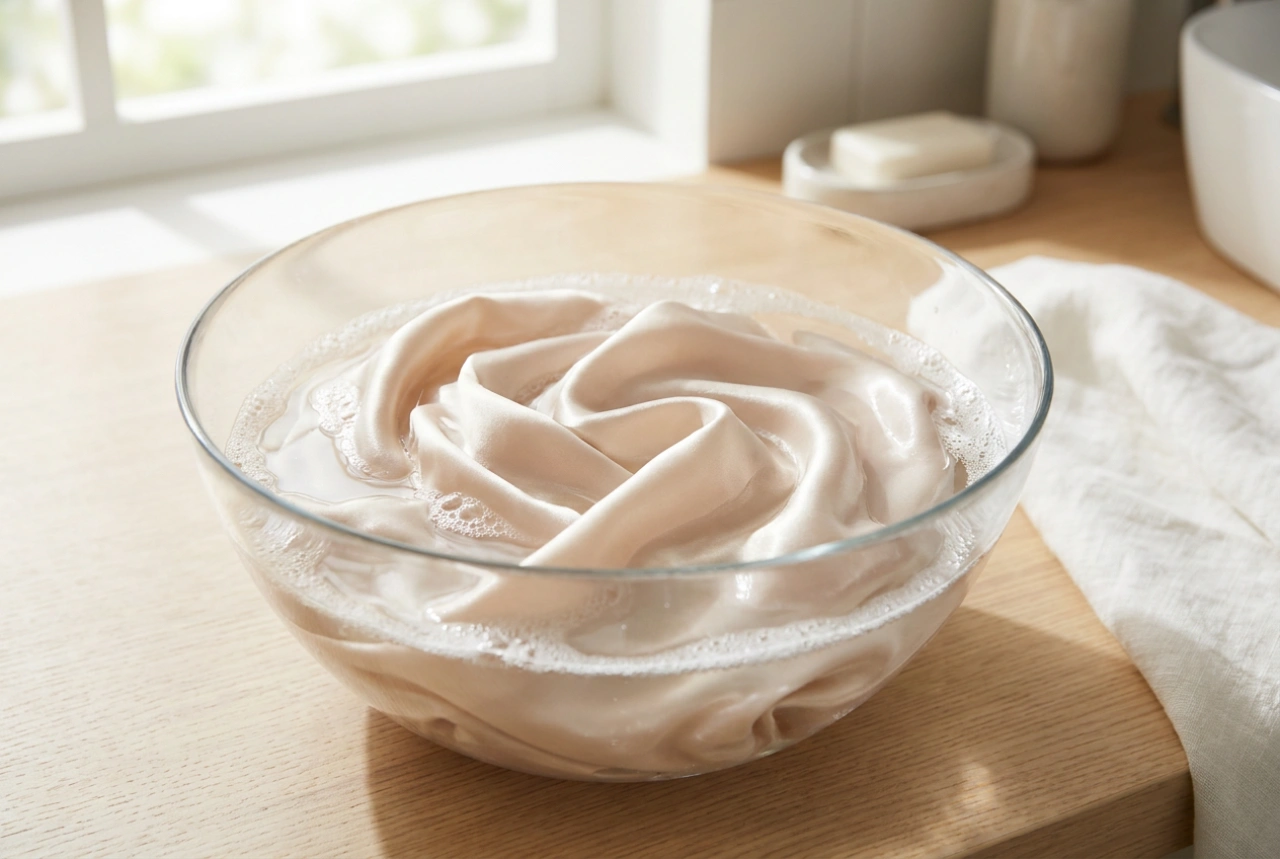
- Silk: A smooth protein filament that is sensitive to high pH levels and mechanical abrasion. Water can cause water-spotting and loss of lustre. Professional dry cleaning or very delicate, hand-wetting techniques are required.
- Structured and Lined Garments: Suits, coats, and pleated skirts often contain internal components like canvases, shoulder pads, and adhesives. Even if the outer fabric is washable, water can dissolve the internal adhesives or cause differential shrinkage between the lining and outer fabric. These items always require dry cleaning.