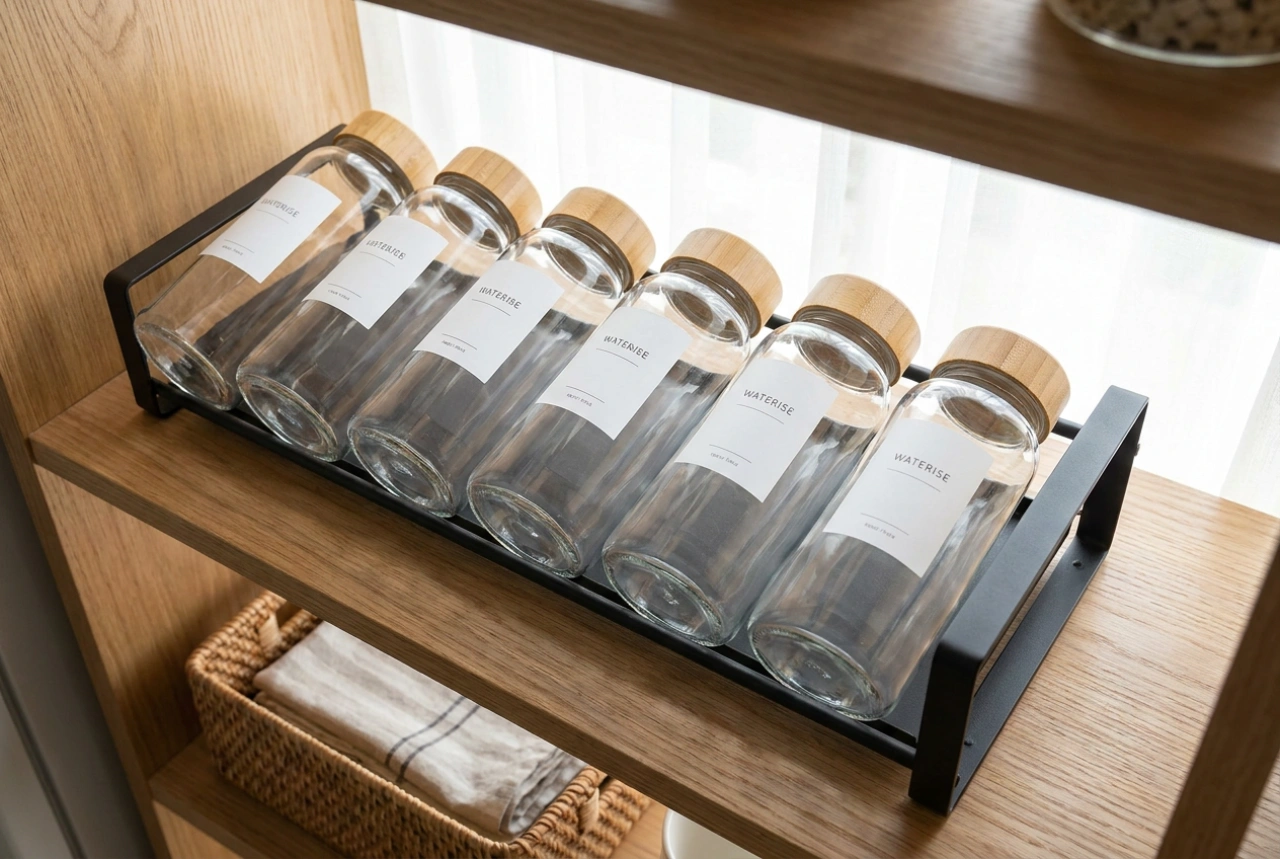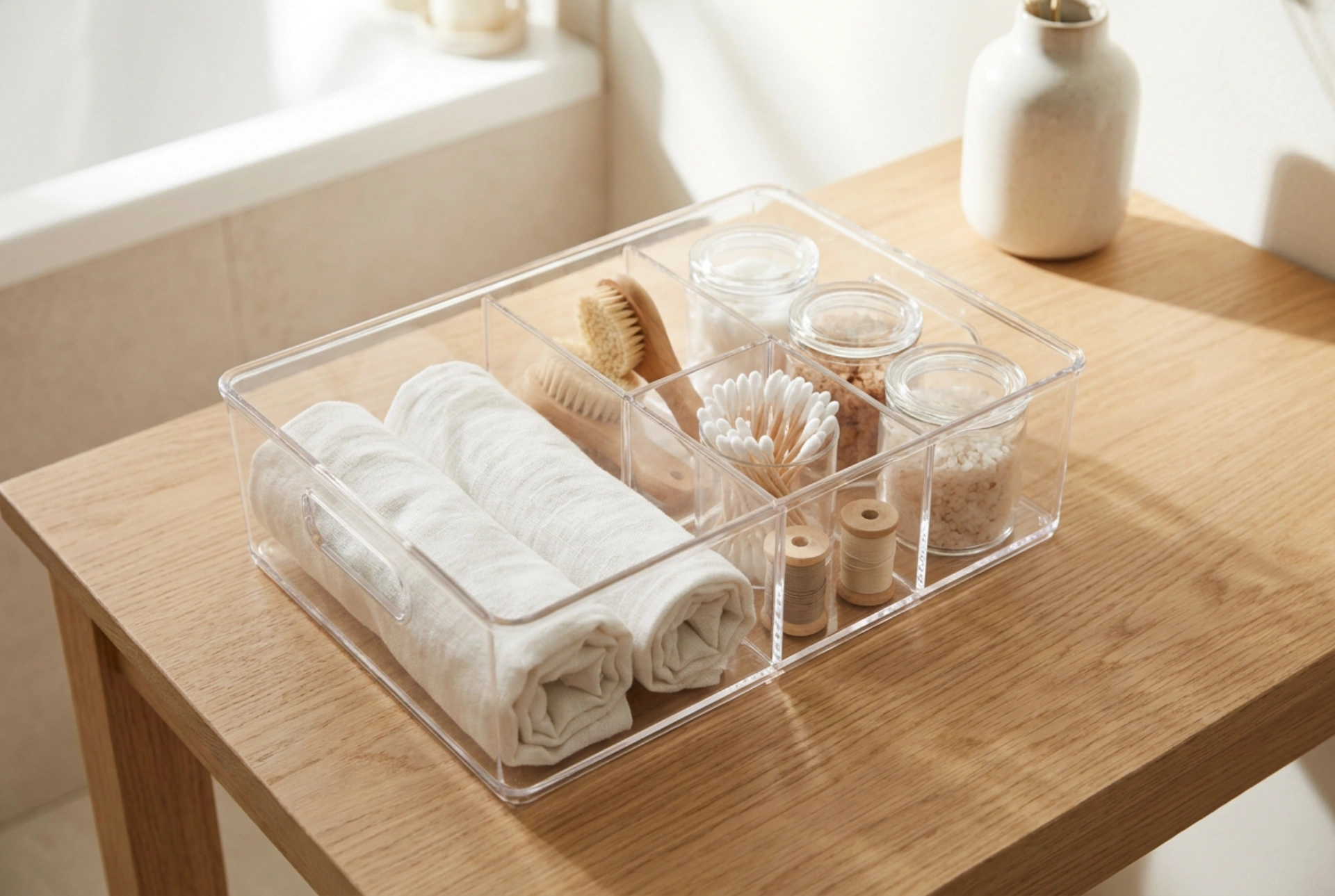


Clear plastic storage bins with lids leverage material physics and visual design to transform chaotic drawers into highly efficient, dust-free organisational systems. By understanding how transparent plastics interact with light and how airtight seals protect delicate components, you can optimise your home storage with scientific precision.
The Material Science of Polypropylene and Visual Efficiency
Most high-quality domestic storage containers are moulded from polypropylene (PP) or polyethylene terephthalate (PET). Polypropylene is highly valued for its flexural strength, chemical resistance, and excellent fatigue resistance, allowing integrated plastic hinges on lids to withstand thousands of opening and closing cycles. From an organisational perspective, the molecular structure of polypropylene can be engineered for high transparency.
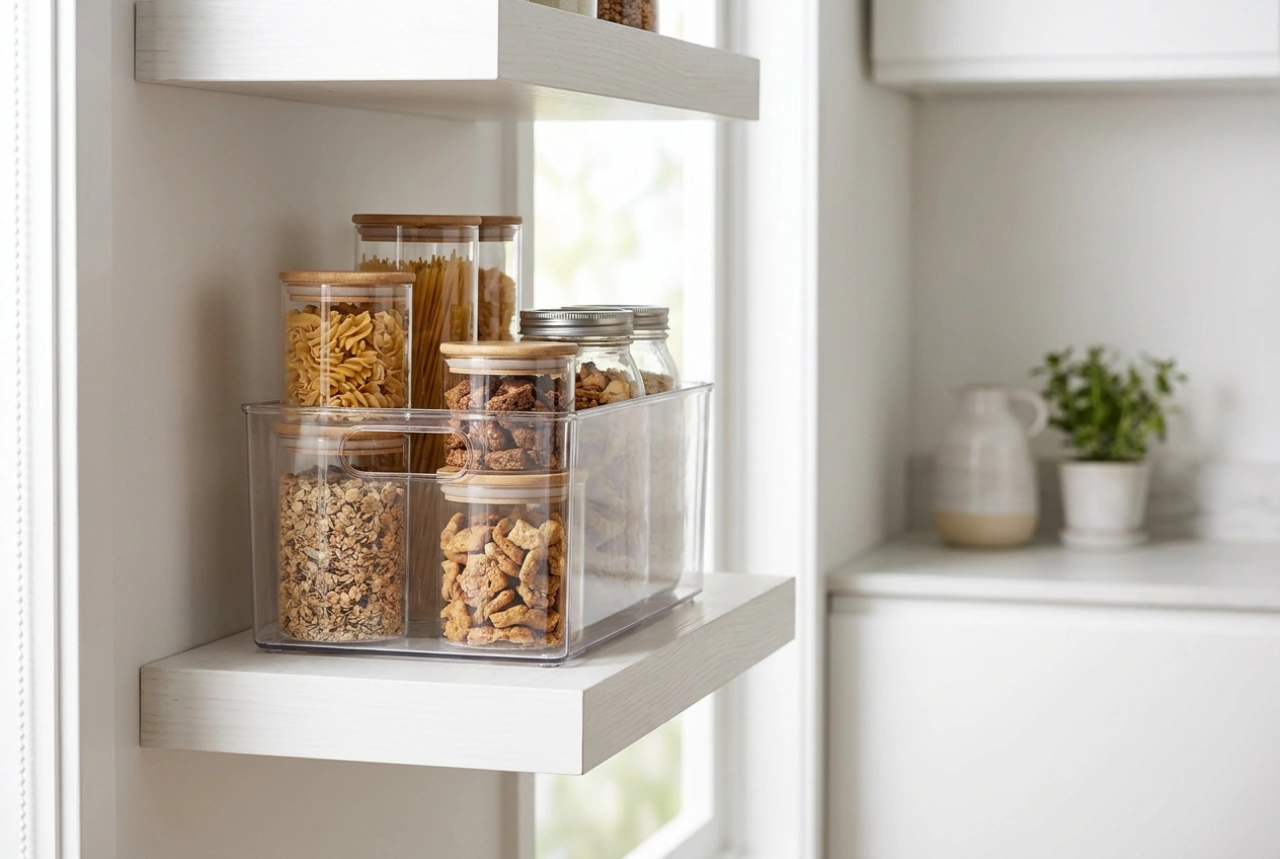
This transparency is a critical factor in cognitive ergonomics. When containers are opaque, the human brain must rely on memory or external labels to identify the contents, which increases cognitive load and slows down daily tasks. Transparent walls allow light to refract through the container, rendering the contents visible from multiple angles. This immediate visual feedback eliminates the physical search process, making it easy to locate small items like sewing notions, fasteners, or craft supplies at a single glance.
The Physics of Lids: Dust Exclusion and Microclimate Control
A storage container is only as effective as its closure mechanism. Lids serve several distinct physical functions beyond simply keeping items from spilling out. First, they combat gravity-driven dust accumulation. Because plastics naturally develop a static charge (the triboelectric effect) that attracts airborne particulates, an open plastic container acts as a magnet for dust. A secure lid seals the interior volume, preventing atmospheric dust from settling on delicate items.
Additionally, a well-fitting lid creates a stable microclimate inside the container. Rapid changes in ambient humidity can introduce moisture to stored items, leading to the oxidation of metallic components like screws, paperclips, or safety pins. While not completely hermetic, a snap-locking lid significantly slows down air exchange, mitigating the risk of moisture condensation during sudden temperature fluctuations in pantries, workshops, or utility rooms.
Spatial Zoning and the Mechanics of Compartmentalisation
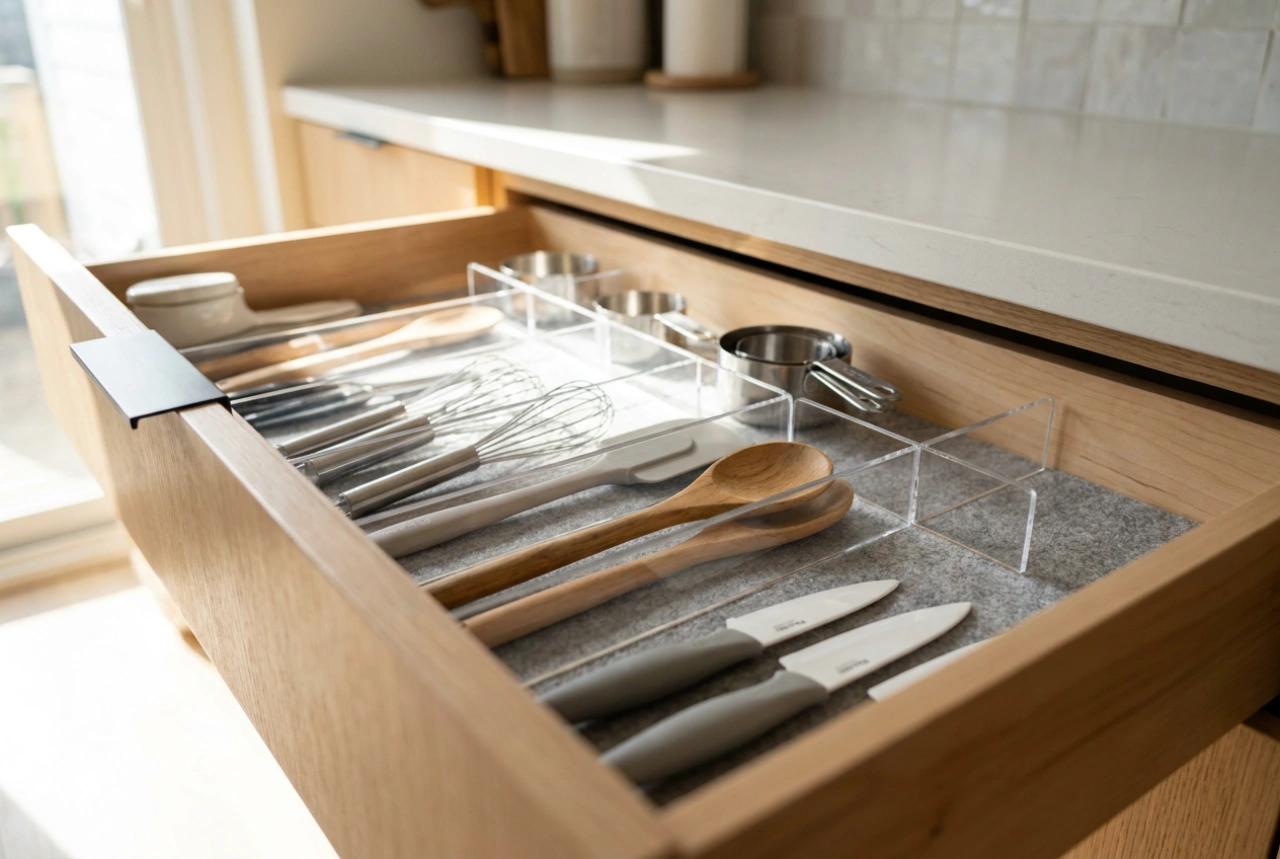
Simply throwing small items loosely into a large container creates a secondary chaos known as the "jumble effect." Due to physical forces like inertia and gravity, smaller or heavier items naturally migrate to the bottom when the container is moved or jostled. To prevent this, successful organisation requires spatial zoning using modular interior dividers.
- The Grid System: Utilise removable dividers or smaller individual cups inside the main bin to isolate different categories of items. This prevents lateral shifting when the container is transported.
- Volume Optimisation: Choose a container depth that matches the scale of the items. Deep containers encourage vertical stacking, which buries items, whereas shallow containers maximise surface area, keeping everything on a single, highly visible plane.
- Weight Distribution: Always place denser, heavier items near the base of the container to lower its centre of gravity, preventing accidental tips when stacking multiple units.
Maintaining Clarity: Cleaning and Preventing Micro-Scratches
To preserve the visual benefits of transparent plastic containers, proper physical and chemical maintenance is essential. Plastics are softer than glass and highly susceptible to mechanical abrasion, which can permanently ruin their transparency.
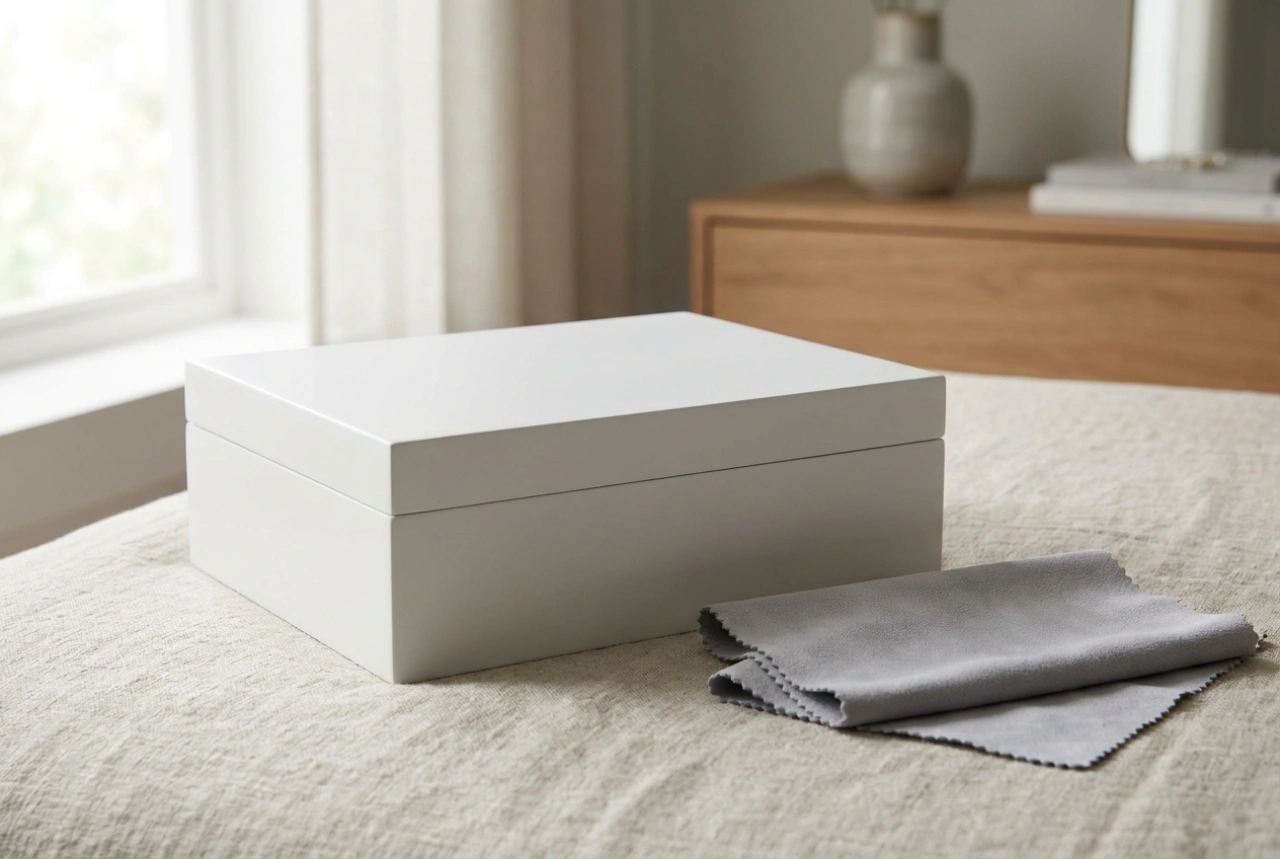
When cleaning polypropylene or PET containers, never use abrasive scouring pads or harsh chemical solvents like acetone, which can dissolve the plastic surface, leaving it permanently cloudy and structurally weakened. Instead, wash the containers by hand using warm water (not exceeding 40°C to prevent thermal warping) and a mild surfactant, such as standard dishwashing liquid. Gently wipe the surfaces with a soft microfiber cloth, which lifts dirt without scratching. To prevent hard water spots caused by calcium and magnesium deposits, dry the container immediately with a clean, lint-free cloth rather than letting it air-dry.