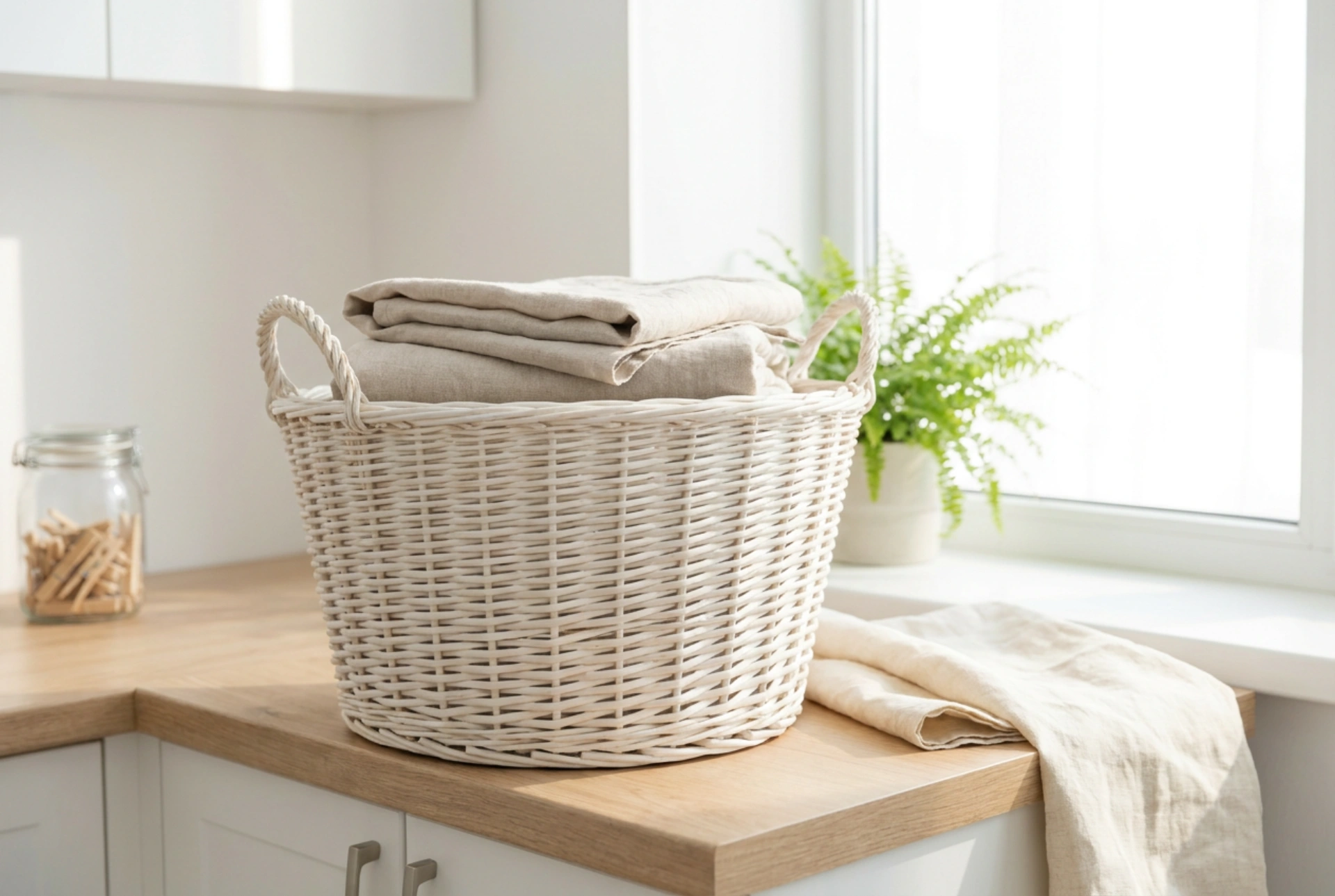


Maintaining a white wicker laundry basket requires balancing moisture levels to protect natural cellulose fibers while keeping painted finishes bright and free from yellowing. Understanding the material science of natural weaves and the chemistry of safe cleaning agents is essential for preventing structural degradation and mould growth.
The Material Science of Natural Wicker
Wicker is not a specific material but a traditional weaving technique utilizing flexible plant shoots, most commonly willow, rattan, reed, or bamboo. These materials are composed of cellulose, hemicellulose, and lignin. This organic composition makes the fibers highly hygroscopic, meaning they naturally absorb and release moisture from the surrounding environment to maintain equilibrium.
When wicker is painted white, the coating acts as a protective barrier against external moisture and physical abrasion. However, this barrier is rarely completely impermeable. Microscopic cracks in the paint layer allow humidity to penetrate. If damp laundry is left inside the basket, water molecules migrate into the porous plant cells via capillary action. This can lead to swelling, warping of the weave, and eventually the colonization of mould spores, which digest the cellulose and weaken the structural integrity of the basket.
Cleaning Chemistry for White Finishes
Maintaining the bright, clean appearance of white wicker requires careful selection of cleaning agents. Traditional chlorine bleach should be avoided. While highly effective at killing mould, sodium hypochlorite is a strong oxidiser that degrades the organic lignin within the wood fibers, rendering them brittle. It can also chemically strip the protective paint binders, leading to flaking and yellowing.
Instead, use mild surfactants and oxygen-based bleaches. A dilute solution of sodium percarbonate (oxygen bleach) in warm water (around 40°C) is ideal. When dissolved, it releases hydrogen peroxide and sodium carbonate. The hydrogen peroxide acts as a gentle disinfectant and bleaching agent that targets organic pigments and organic stains without structurally damaging the plant fibers or the paint matrix. For routine cleaning, a neutral-pH surfactant, such as a mild vegetable-based dish soap, is sufficient to emulsify lipids and dust particles without stripping the protective topcoat.
The Correct Cleaning and Drying Protocol
To clean a white wicker laundry basket without damaging the delicate weave, follow a strict sequence of physical and chemical steps:
- Dry Dust Extraction: Before introducing any moisture, use a vacuum cleaner fitted with a soft dusting brush. Vacuum thoroughly along the direction of the weave to pull out dust, lint, and loose dirt from the deep crevices. Introducing water to dusty wicker creates a muddy paste that settles deeper into the joints.
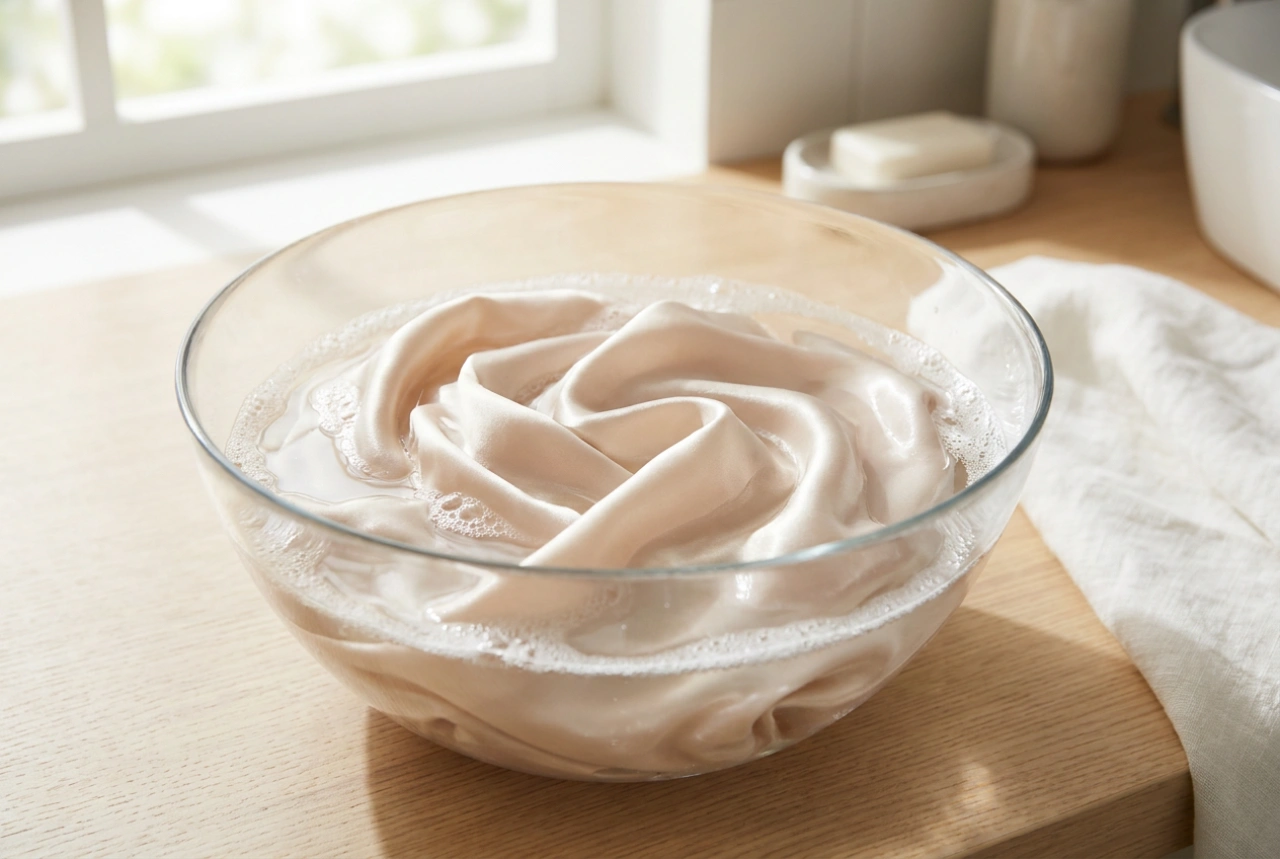
- Controlled Moisture Application: Dip a clean microfiber cloth into your prepared warm surfactant or oxygen-bleach solution. Wring it out thoroughly until it is only slightly damp. Wipe down the entire surface, working in small sections. For stubborn spots in the weave, use a soft-bristled utility brush, brushing gently in parallel with the fibers, never perpendicular, to prevent fraying.
- Residue Neutralisation: Wipe the basket a second time with a clean cloth dampened only with fresh, clean water. This removes residual surfactants which can otherwise attract airborne dust and form a sticky film over time.
- Accelerated Dehydration: Because natural fibers weaken when saturated, rapid drying is critical. Place the basket in a well-ventilated space with active airflow, such as near an open window or a fan. Avoid placing it directly in intense, hot sunlight or next to a high-temperature radiator, as rapid thermal expansion can crack the white paint and dry out the underlying wood, causing it to split.
Preventing Structural Decay and Stains
The most effective way to care for a white wicker basket is to minimise direct contact with damp fabrics. Always line the basket with a removable, washable bag made of breathable natural fibers like unbleached cotton or linen. This liner absorbs excess humidity from damp towels or activewear, preventing moisture from transferring directly into the wicker weave. Additionally, ensure the basket is kept in a bathroom with adequate mechanical ventilation to keep the ambient relative humidity below 60%, preventing the atmospheric conditions that foster mould development.