

Maintaining a double-door refrigerator with an integrated ice maker requires a systematic approach to thermodynamics, water filtration, and microbial control. Because these appliances combine complex water delivery systems with high-volume cooling, routine hygiene prevents both mechanical failures and water contamination.
Preventing Biofilm in Water Lines and Ice Dispensers
The internal water lines of a double-door refrigerator are highly susceptible to biofilm formation. Biofilm is a structured community of microorganisms embedded in a self-produced matrix of extracellular polymeric substances (EPS) that adheres to the inner walls of polymer tubing. Stagnant water, combined with light heat radiated from the refrigerator compressor, creates a microenvironment where bacteria can colonize.
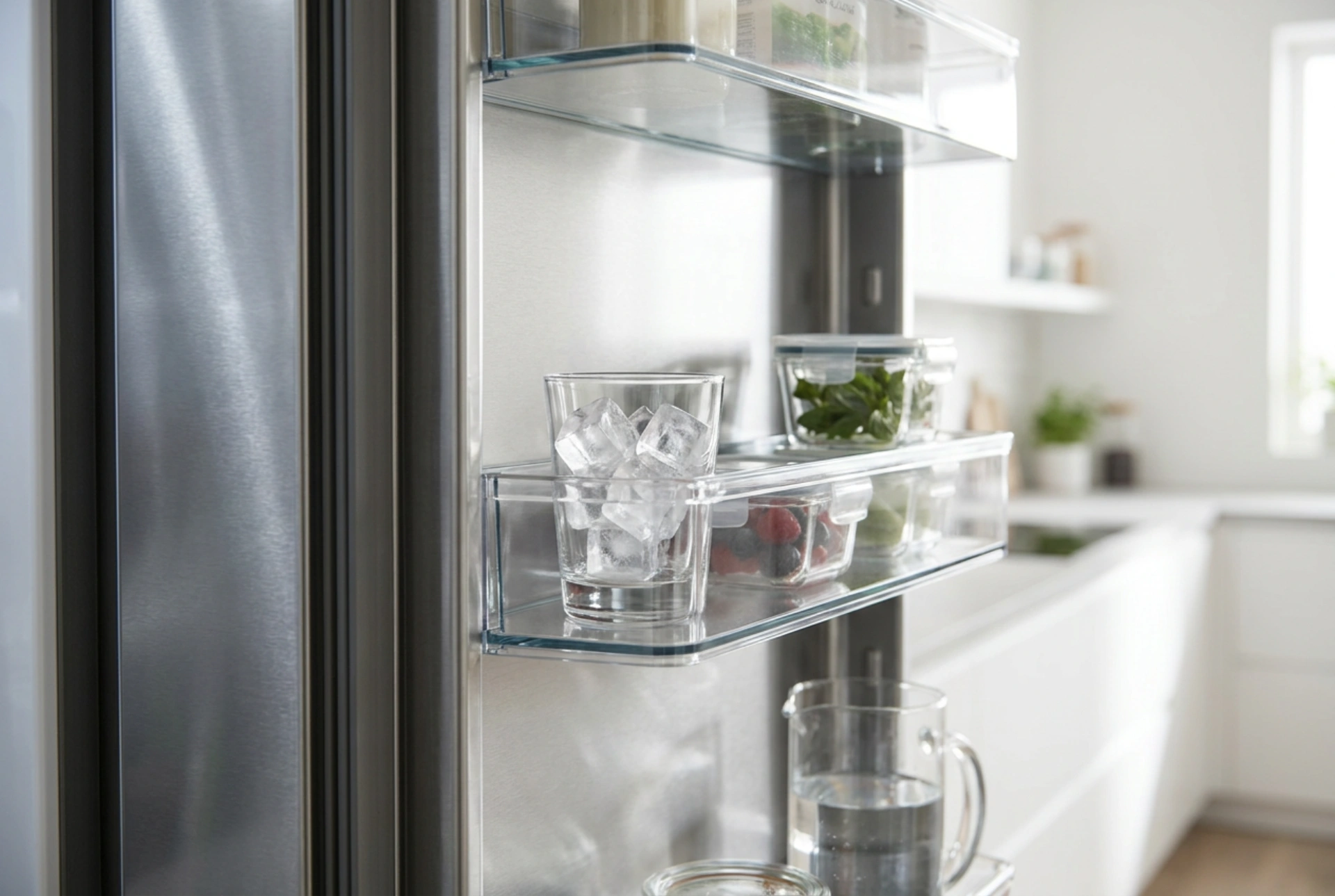
To prevent this, water must flow regularly. If the ice maker is left unused for more than a week, the ice bin should be emptied, and the system should be flushed. Run at least two liters of water through the dispenser to clear stagnant water from the internal reservoir. Additionally, replace the activated carbon filter every six months. Carbon filters excel at adsorbing chlorine and organic compounds, but once saturated, they can become breeding grounds for bacteria.
Descaling the Ice Mold and Water Path
Tap water contains dissolved minerals, primarily calcium and magnesium ions. As water freezes to form ice, these minerals are excluded from the ice crystal lattice, concentrating along the edges of the ice mold. Over time, this results in the accumulation of calcium carbonate (limescale), which creates a rough surface that makes ice release difficult and damages the ejection mechanism.
To dissolve these mineral deposits safely without damaging food-grade plastics, use a weak organic acid such as citric acid:
- Mix two tablespoons of citric acid powder with one liter of warm water until fully dissolved.
- Turn off the automatic ice-making function and remove the ice storage bin.
- Carefully wipe down the ice mold tray with a soft cloth dipped in the citric acid solution. Allow the acid to react with the alkaline scale for ten minutes, then wipe clean with distilled water.
- Never use harsh chlorine bleach in the ice mold, as it can degrade the silicone or plastic coatings, causing ice to stick permanently.
Optimizing Condenser Coils for Thermal Efficiency
The cooling efficiency of a double-door refrigerator depends entirely on the second law of thermodynamics: transferring heat from the cold interior to the warmer kitchen environment. This transfer occurs at the condenser coils, usually located at the bottom or rear of the appliance. Over time, static electricity and convective air currents pull household dust, pet hair, and airborne grease onto these coils.
This accumulation acts as an insulating thermal barrier. The compressor must run longer and hotter to reject the same amount of heat, which accelerates wear on the mechanical seals and drastically increases electrical consumption. Every six months, pull the appliance away from the wall, disconnect the power supply, and use a narrow vacuum attachment or a specialized long-reach coil brush to remove the dust layer. Ensure you do not bend the delicate aluminum fins during this process.
Preserving Magnetic Door Gaskets
The elastomer gaskets on double-door refrigerators maintain the thermal boundary. If a gasket fails, warm, humid air continuously leaks into the cabinet. This moisture undergoes phase change, depositing as frost on evaporator coils and ice maker components, which disrupts automated defrost cycles.
To keep the magnetic gaskets pliable and functional, clean them quarterly using a mild alkaline solution of baking soda (sodium bicarbonate) dissolved in warm water. Avoid petroleum-based lubricants or harsh detergents, which strip plasticizers from the elastomer, causing it to become brittle and crack. After cleaning, dry the gasket thoroughly and apply a thin layer of food-grade silicone oil or paraffin wax to the hinge side to prevent the rubber from sticking and tearing during door operation.