

Double-door refrigerators offer expansive storage, but without an understanding of internal thermodynamics, their advanced cooling systems can go to waste. Properly organising your shelves based on microclimates and airflow patterns is the key to extending food shelf life and minimising energy consumption.
The Physics of Cold Air in Double-Door Systems
Every refrigerator operates on the principle of convection, where cold air sinks and warmer air rises. In double-door models—whether side-by-side or French door—this dynamic is influenced by the placement of the evaporator coils and air vents. Typically, the coldest zone of the main compartment is the lowest shelf, situated just above the crisper drawers. Conversely, the door bins are the warmest zones because they are constantly exposed to ambient room temperature when opened.
Understanding these thermal gradients prevents premature spoilage. For instance, storing highly perishable items like milk or fresh meat on door shelves subjects them to rapid temperature fluctuations. When warm room air hits these items, it triggers condensation and microbial growth. By matching the thermal sensitivity of your food to the correct zone, you establish a stable storage environment.
The Strategic Shelf Blueprint
The Top and Middle Shelves: Consistent Stability
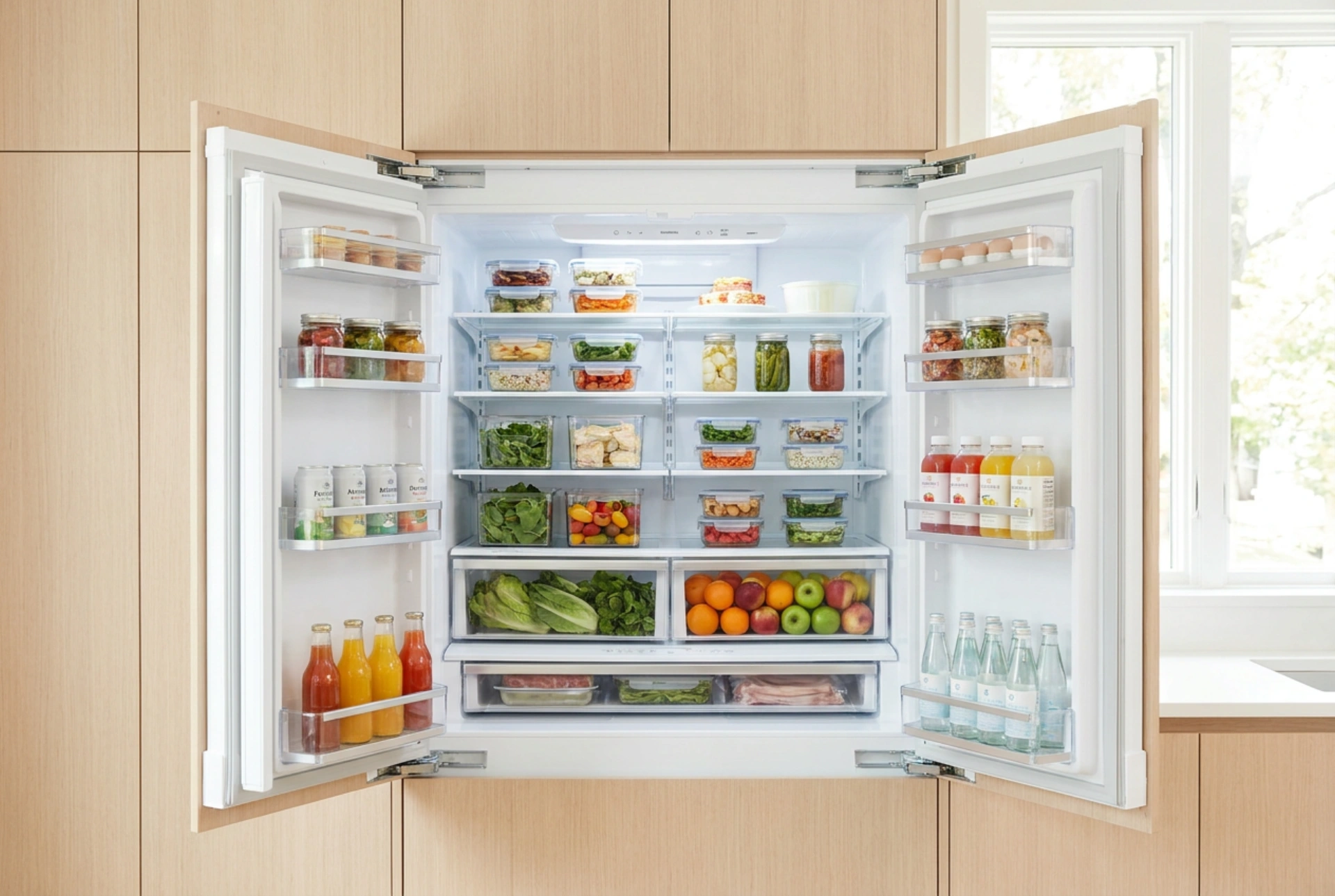
The upper shelves maintain the most consistent, moderate temperatures. Since they are less susceptible to the coldest drafts from the cooling vents, they are ideal for foods that do not require intense chilling but must remain refrigerated. Store pre-cooked meals, leftovers in airtight containers, deli meats, and ready-to-eat dairy products like yoghurt and cheese here.
The Bottom Shelf: The Cold Zone
As the coldest part of the main compartment, the bottom shelf is reserved for raw proteins, including poultry, meat, and fish. Storing raw meat at the lowest level serves a dual purpose: it keeps the food at the safest, lowest temperature threshold (just above freezing) and eliminates the risk of cross-contamination from dripping juices onto foods below.
The Door Bins: Thermal Buffers
Because the doors experience the highest temperature volatility, they should only hold natural preservatives. Condiments, vinegar-based dressings, jams, and pasteurised juices can withstand these temperature swings without spoiling. Keep milk, eggs, and fresh dairy away from these zones to prevent rapid souring.
Crisper Drawers: Controlling Humidity and Ethylene
Modern double-door appliances feature adjustable crisper drawers designed to regulate humidity levels. Understanding how to use these controls is essential for fresh produce preservation.
- High-Humidity Zone (Closed Vent): Closing the vent seals in moisture, making this drawer perfect for leafy greens, herbs, broccoli, and cucumbers. These vegetables are sensitive to moisture loss and wilt quickly in dry air.
- Low-Humidity Zone (Open Vent): Opening the vent allows gases and moisture to escape. This is crucial for ethylene-producing fruits like apples, pears, and avocados. Ethylene is a natural ripening gas; if trapped, it accelerates decay. Keeping these fruits in a low-humidity, vented drawer prevents them from rotting prematurely.
The Role of Material Science in Storage
The materials you use to store food impact the refrigerator’s thermal efficiency. Glass containers are superior to plastic because glass has a higher thermal mass. Once chilled, glass retains its low temperature longer, even when the fridge door is briefly opened. This helps maintain a stable microclimate around the food and reduces the workload on the appliance compressor.
Furthermore, air circulation is critical. Crowding shelves prevents the natural flow of cold air, leading to warm pockets and uneven cooling. Maintain at least a two-centimetre gap between containers to allow convective currents to move freely throughout the cabinet. This simple adjustment ensures uniform temperature distribution and optimises overall energy consumption.