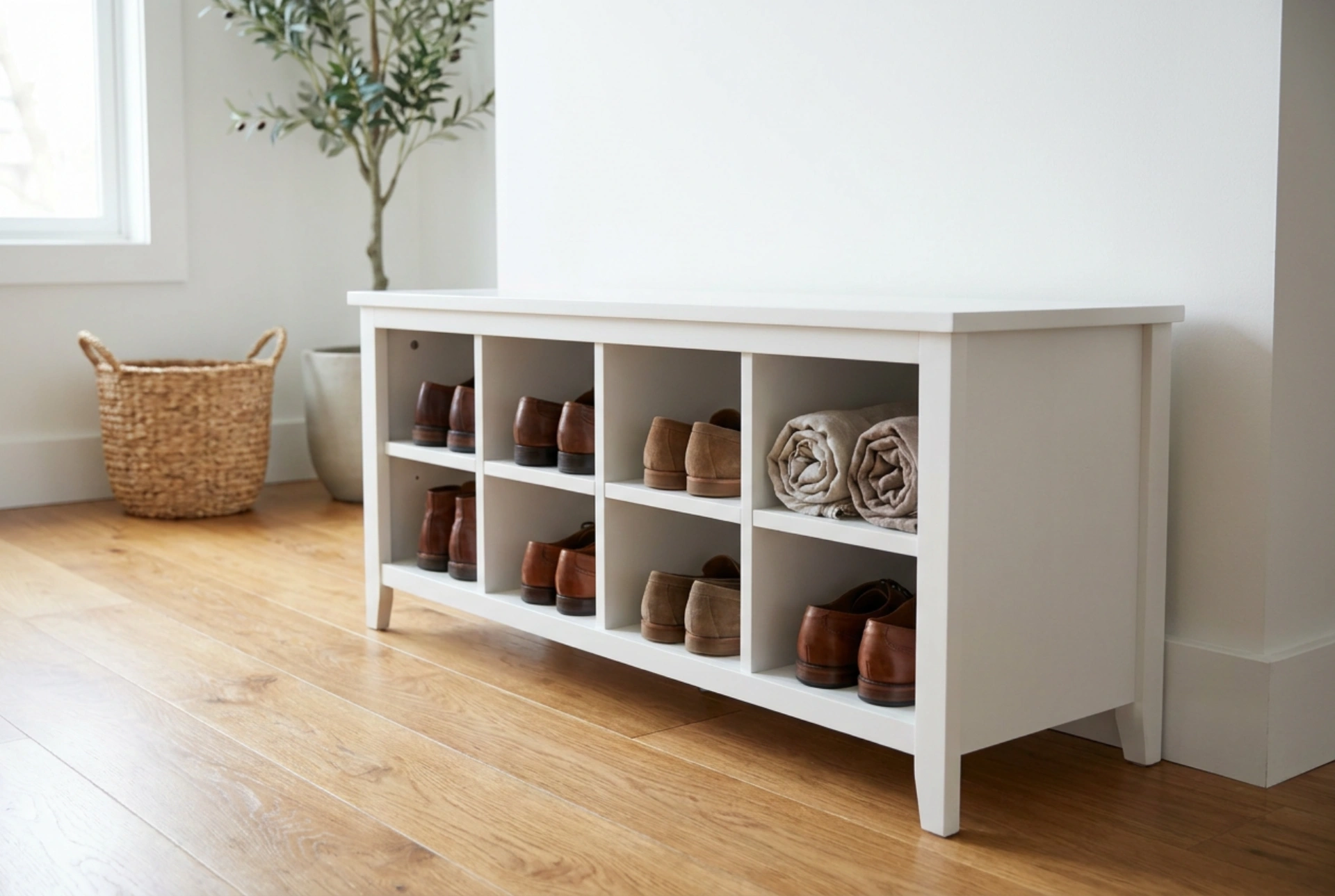


Maximising hallway space requires a strategic combination of physical containment, ergonomic design, and light management. A white entryway bench with integrated seating solves the chaotic storage of footwear by establishing clear vertical zoning while using reflective properties to expand tight spaces.
The Physics of Vertical Zoning and Airflow in Shoe Storage
Leaving shoes scattered on the floor creates physical obstacles and traps moisture. Footwear worn throughout the day absorbs perspiration, which must evaporate to prevent material degradation and bacterial growth. Storing shoes in dedicated compartments, or cubbies, elevated off the floor establishes a regulated microclimate.
- Air Circulation: Open or semi-open cubby designs allow air to flow around the entire shoe, accelerating the drying process of leather, canvas, and synthetic textiles.
- Thermal Protection: If your hallway has underfloor heating, placing shoes directly on the floor can dry out natural leather oils, causing cracking. A raised bench acts as a thermal barrier, preserving shoe structural integrity.
- Geometric Efficiency: Elevating storage into a structured grid format reduces the footprint of your footwear collection by up to 60%, utilising vertical space instead of valuable floor surface area.
Material Science: Maintaining and Protecting White Finishes
While a white finish reflects light to make narrow corridors feel more spacious, it is highly susceptible to scuffs, dirt transfer, and chemical staining from outdoor soles. Understanding the chemistry of finishes is key to keeping the surface pristine.
Most modern white benches are coated with melamine, polyurethane lacquer, or water-resistant laminate. To clean black rubber scuffs without stripping the protective topcoat, avoid harsh solvents like acetone, which can dissolve the lacquer. Instead, use a mild non-ionic surfactant dissolved in warm water. For stubborn scuffs, utilise a melamine foam sponge dampened slightly with water. The open-cell structure of melamine foam acts like an ultra-fine sandpaper (micro-abrasion), physically lifting the rubber residue without chemical degradation of the underlying paint.
The Ergonomics of the Entryway Sequence
The act of removing shoes involves a specific physical sequence that, when unsupported, leads to clutter. Without a seat, individuals tend to balance on one foot, leaning against walls and transferring oils and dirt from their hands to the wall paint. This physical instability often results in shoes being kicked off haphazardly, creating a pile at the door.
Integrating a stable bench seat alters this behavioural pattern. It provides a stable platform at a standard seating height (typically 40 to 45 centimetres), which naturally encourages residents to sit, remove their footwear, and immediately slide it into the compartment directly below. This minimises physical strain and establishes an intuitive, friction-free routine that prevents the accumulation of clutter.
Preventing Chemical and Moisture Damage in Cubbies
Outdoor footwear carries water, road salt, and acidic soil particles into the home. When these elements accumulate inside wooden or particle-board cubbies, they can cause swelling and delamination of the edges. To mitigate this risk, line the bottom of the compartments with thin, non-reactive polypropylene liners. Polypropylene is chemically inert, hydrophobic, and easily removable for washing. This barrier prevents moisture from penetrating the wood joints, halting the mechanical expansion of the fibres and extending the lifespan of your furniture.