

Corner cabinets often become black holes of storage due to their deep geometry and limited physical access. By understanding the physics of reach and utilizing targeted organizational systems, you can convert these awkward angles into highly functional storage zones.
The Geometry of the Corner: Why Space Gets Lost
The fundamental challenge of a corner cabinet lies in the ratio between the opening width and the internal volume. Standard rectangular storage relies on direct linear access. A corner cabinet, however, forces you to reach along a diagonal axis. This creates a deep apex—often more than 80 centimeters from the door opening—which is far beyond the average comfortable reach distance of 50 to 60 centimeters. Consequently, the back of the cabinet remains dark, unutilized, or filled with forgotten items. To solve this, you must either bring the items to the light using mechanical systems or categorize them strictly by physical accessibility and frequency of use.
Mechanical Solutions: Rotating and Sliding Systems
The most effective way to bypass the depth of a corner cabinet is through mechanical assistance. These systems alter the physical path of your items, bringing them to the front rather than forcing you to reach into the back:
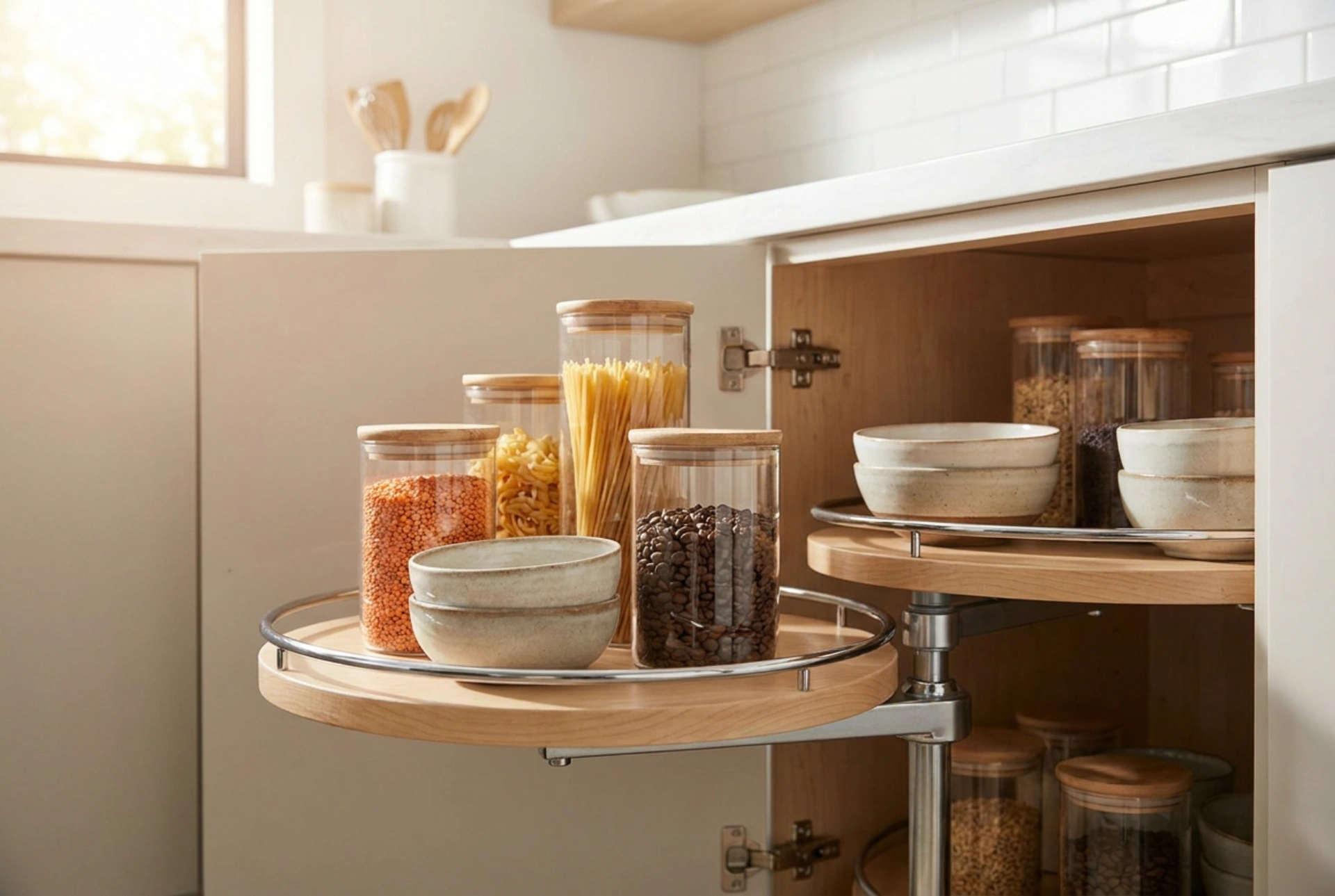
- Rotational Carousels (Lazy Susans): These shelves rotate on a central vertical pivot. By turning the shelf, items from the deep rear are brought directly to the cabinet opening. When organizing a carousel, place heavier objects near the center of rotation to reduce torque and minimize physical strain on the central bearing.
- Pull-Out Blind Corner Organizers: These utilize a dual-track sliding mechanism. Pulling the cabinet door draws a front set of baskets out of the opening, which simultaneously pulls the hidden rear baskets into the accessible front zone. This maximizes volumetric efficiency because it utilizes rectangular shelves that fit tight corners better than circular carousels.
Physical Zoning by Frequency of Use
If retrofitting mechanical hardware is not an option, you must rely on strategic manual zoning. This requires categorizing your items based on how often you need to retrieve them. Divide the cabinet depth into three distinct zones:
The Active Zone (Front)
This occupies the first 30 centimeters of depth directly behind the door. Store daily essentials here. Because access is immediate, you do not need storage containers; items can sit directly on the shelf for quick grab-and-go retrieval.
The Transitional Zone (Middle)
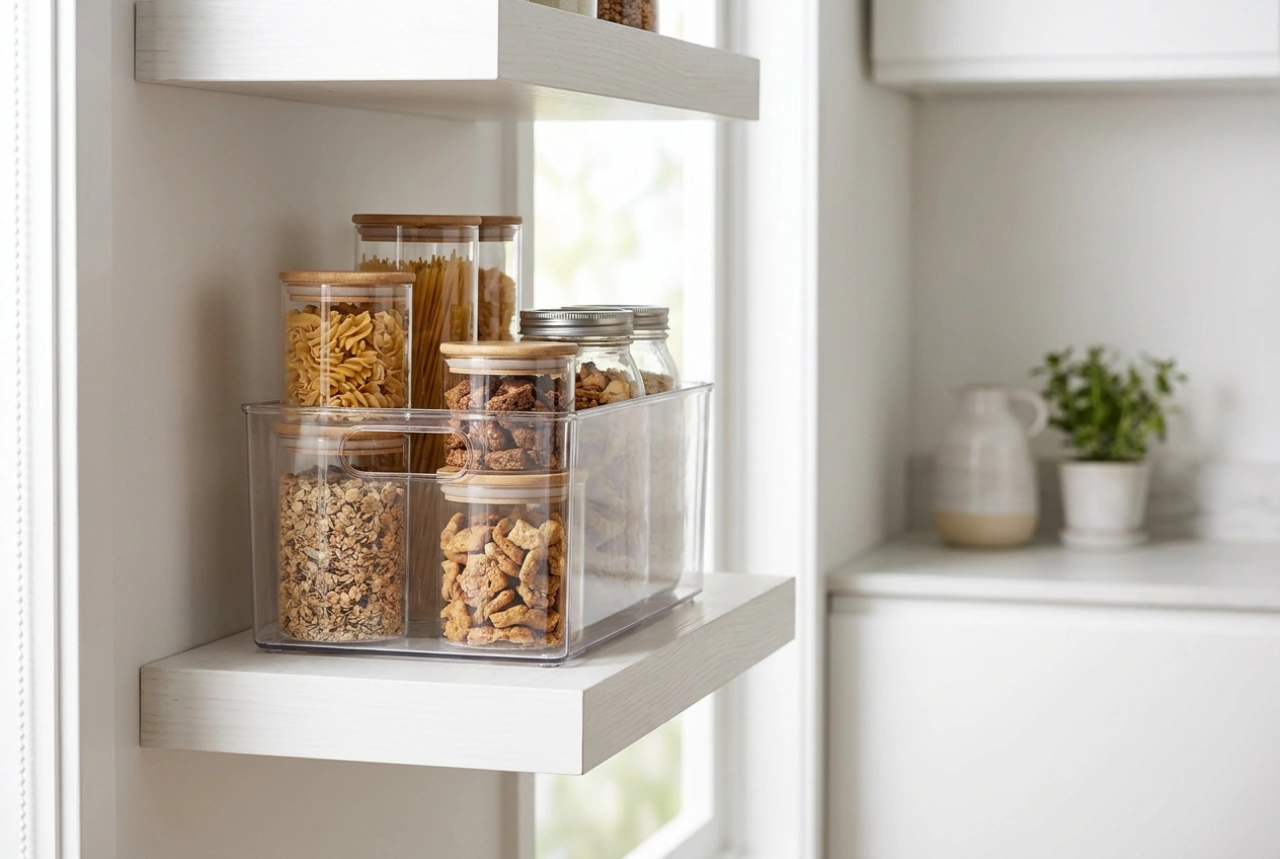
This is the area where you must reach or bend slightly. Use clear, deep plastic bins with integrated front handles. The handles allow you to pull the entire container out like a drawer to access items in the back, while the transparent material prevents items from being forgotten.
The Deep Apex (Back Corner)
Reserve this deepest, least accessible zone for seasonal or rarely used items. Always pack these in labeled, dust-tight containers. Because you only retrieve them once or twice a year, the physical effort required to reach them occasionally is an acceptable trade-off for reclaiming the space.
Lighting and Weight Distribution for Safety and Usability
Darkness compounds the difficulty of corner storage. Installing a simple battery-operated, motion-activated LED strip along the inner door frame or the underside of the top shelf illuminates the deep apex, instantly eliminating the visual blind spot. Furthermore, structural integrity must guide your placement. Always store heavier, bulkier items on the bottom shelf of the cabinet. Placing heavy objects on upper corner shelves raises the center of gravity of the furniture unit, making retrieval physically hazardous and putting unnecessary stress on wall anchors or cabinet joints.