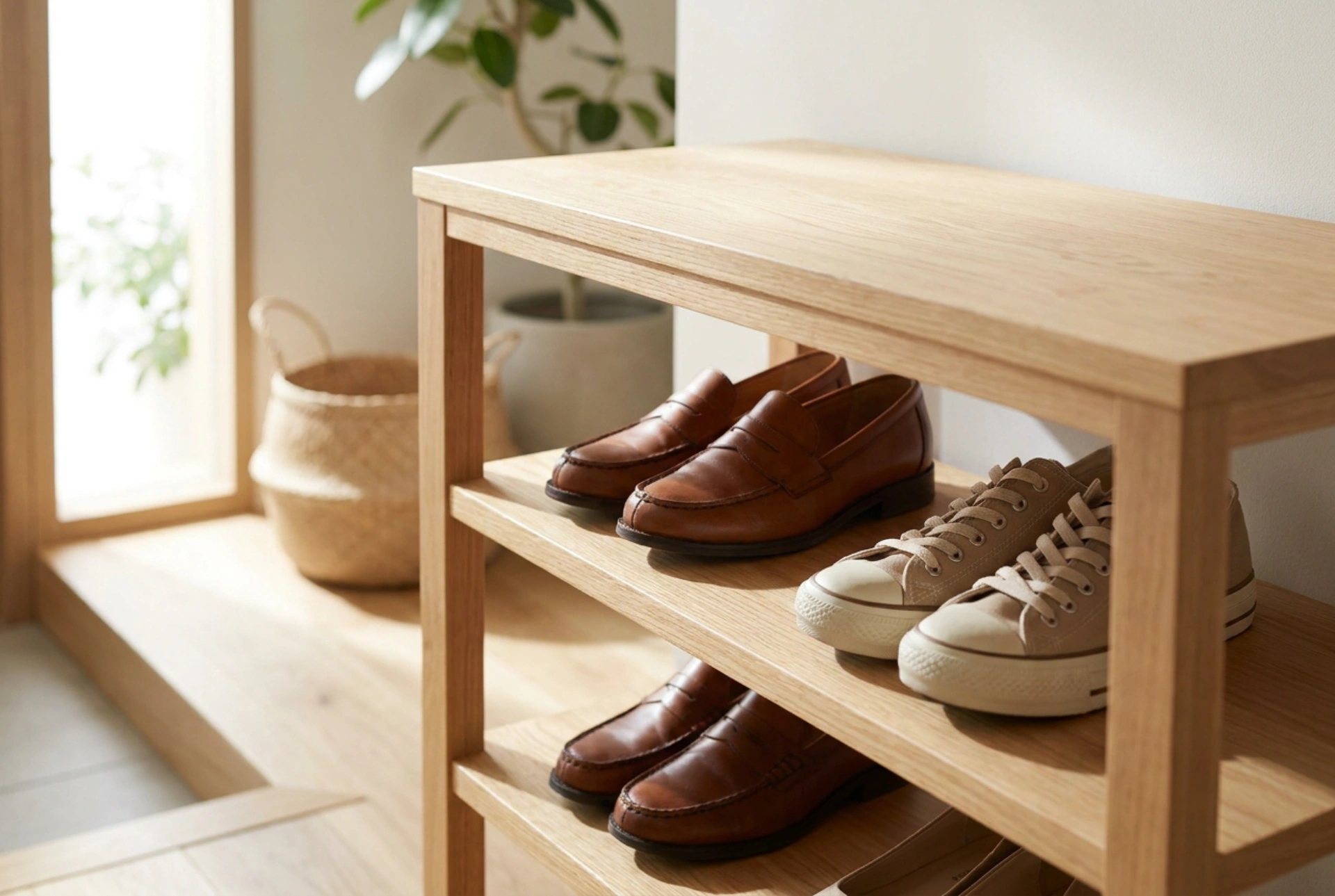


A wooden shoe rack is more than an aesthetic addition to an entryway; it is a functional tool that regulates moisture, promotes essential airflow, and preserves footwear structure. Understanding the material science of timber and the physical dynamics of shoe drying allows you to optimize entryway organization while actively extending the lifespan of your shoes.
The Physics of Drying: Airflow and Convective Current
When shoes are worn, they absorb significant amounts of perspiration and environmental moisture. Storing them in closed cabinets traps this dampness, creating an ideal breeding ground for bacteria and fungi. An open, slatted wooden shoe rack utilizes basic thermodynamic principles to solve this problem. Air must circulate freely around the entire shoe—including the sole—to facilitate evaporation.
By elevating footwear on slatted shelves, you allow room-temperature air to flow underneath the sole. As warm air rises, it creates a gentle convective current that draws moist air away from the shoe’s upper materials. For maximum efficiency, shoes should be spaced at least two to three centimetres apart. This prevents cold, damp microclimates from forming between adjacent pairs, accelerating the drying process and preventing structural leather decay.
The Material Science of Wood in High-Moisture Zones
Wood is a naturally hygroscopic material, meaning it interacts dynamically with atmospheric moisture, absorbing and releasing water vapour to reach equilibrium with its environment. This property makes wood highly suitable for entryways, where wet shoes are common, provided the timber is treated correctly. Raw, untreated wood will warp, crack, or develop mould when exposed to wet soles, while fully sealed wood loses its ability to absorb ambient humidity.
The ideal balance is achieved through the use of breathable protective finishes. Penetrating oils, such as tung oil or linseed oil, saturate the wood fibres and polymerise within the grain. This creates a hydrophobic barrier that repels liquid water while allowing the wood to breathe and release absorbed vapour. Alternatively, water-resistant polyurethane coatings provide a hard, impermeable shield that is highly resistant to mechanical wear, making it suitable for the bottom shelves where wet, muddy boots are frequently placed.
Protecting Timber from Outdoor Contaminants and Road Salt
In winter and rainy seasons, shoes carry acidic mud, grit, and alkaline road salt (sodium chloride and calcium chloride) onto the shelves. These contaminants can chemically degrade both the wood finish and the underlying timber fibres. When salt dries, it crystallises and expands within the pores of the wood, a process known as salt weathering, which leads to micro-cracking and flaking of the finish.
To prevent this chemical damage, implement a simple care protocol:
- Initial wipe-down: Never place dripping wet shoes directly on wooden shelves. Use a low-profile, absorbent tray filled with natural river stones on the bottom shelf to catch excess runoff.
- Gentle cleaning: Clean the wooden rack periodically using a damp microfibre cloth and a pH-neutral soap solution. Avoid harsh alkaline detergents or chlorinated cleaners, which strip the protective oils and break down the lignin in the wood.
- Reapplication of finish: Reapply a thin layer of natural oil or wax to the high-wear areas of the rack every six to twelve months to maintain the hydrophobic barrier.
Optimising Shoe Rotation and Structural Maintenance
An organized entryway relies on a systematic order of operations. To maintain both the shoe rack and your footwear, establish a strict rotation system. Wet leather shoes require up to twenty-four hours to dry completely at the core. Placing them immediately back into service or stacking them closely prevents the leather from resting, leading to permanent creasing and premature cracking.
When placing shoes on the rack, insert unvarnished cedar shoe trees into high-quality leather footwear. Cedar contains natural aromatic hydrocarbons (cedrol) that act as natural deodorisers and fungicides, while the wood actively draws moisture from the interior lining of the shoe. Aligning the shoes consistently on the rack—with heavier boots on the lowest, sturdiest shelves and lighter canvas sneakers or slippers on the upper tiers—optimises weight distribution and prevents the wooden joints from loosening over time under uneven loads.