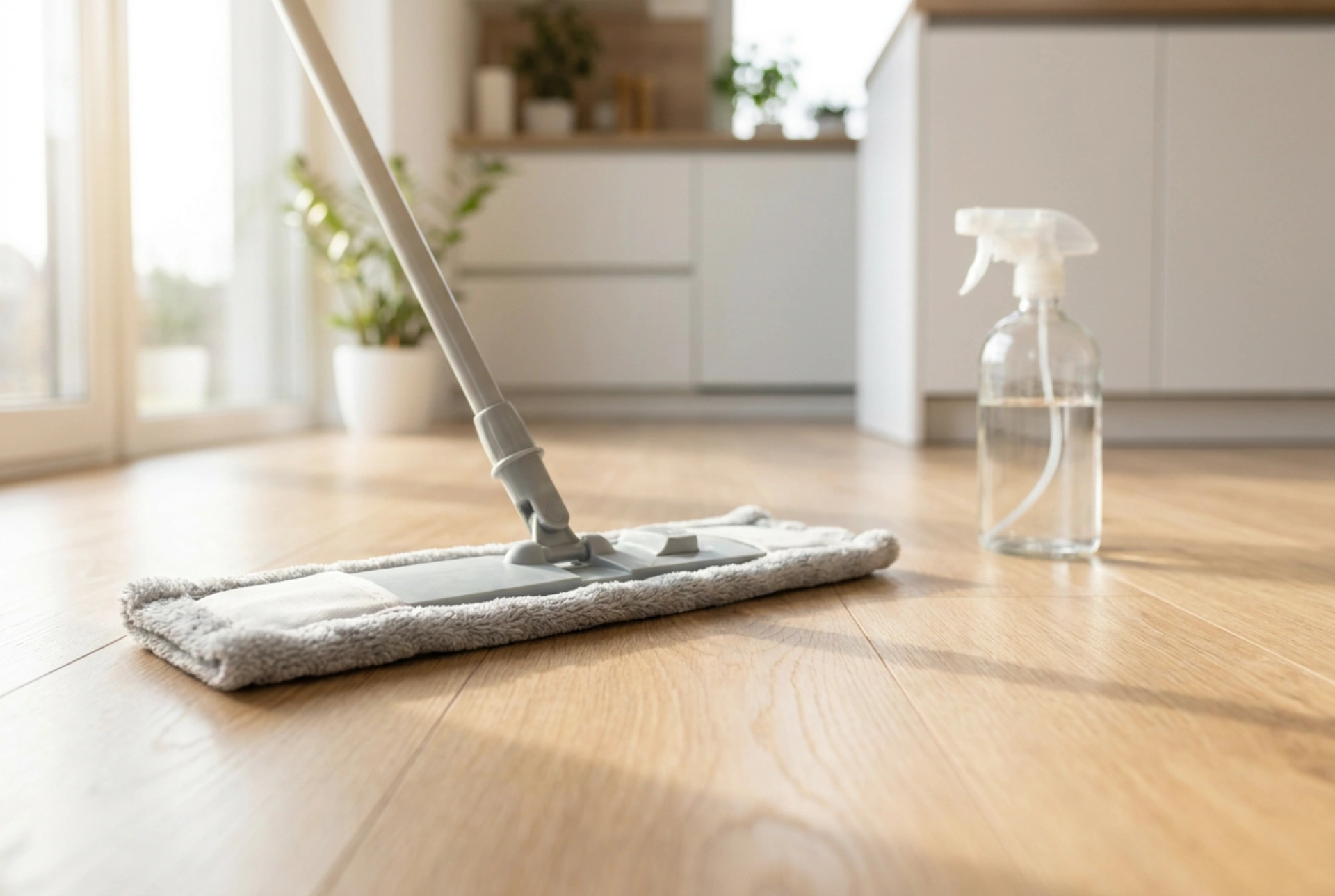


Achieving a streak-free shine on laminate floors requires understanding how synthetic surfaces interact with chemical residues and moisture. Traditional soap-based detergents leave microscopic films that catch the light, turning a freshly cleaned surface into a cloudy, smeared floor.
The Physics of Laminate and Why Streaks Form
Laminate flooring consists of a dense wood-fiber core topped with a printed decorative layer, sealed beneath a hard, transparent wear layer made of melamine or polyurethane resin. Unlike natural wood, this top layer is completely non-porous. Because the synthetic surface cannot absorb any liquids, whatever you apply to the floor must either evaporate entirely or be mechanically removed.
Streaks are the visible residue of unevaporated substances. When a cleaning solution dries, any dissolved minerals from hard tap water, heavy surfactants, or oily polishing agents are left behind. These leftover compounds scatter light unevenly rather than reflecting it uniformly, which creates the dull, cloudy patterns commonly known as streaks.
Decoding Cleaner Chemistry: Surfactants vs. Solvents
To choose the right cleaning agent, you must understand how its chemical components behave during and after application. The ideal laminate cleaner should lift lipids and dirt without leaving a lasting solid residue.
- Avoid Soap-Based Detergents: Cleaners containing natural vegetable soaps, linseed oil, or silicones are designed to nourish porous wood. On non-porous melamine, they cannot penetrate and instead build up a sticky, microscopic layer that traps dust and highlights footprints.
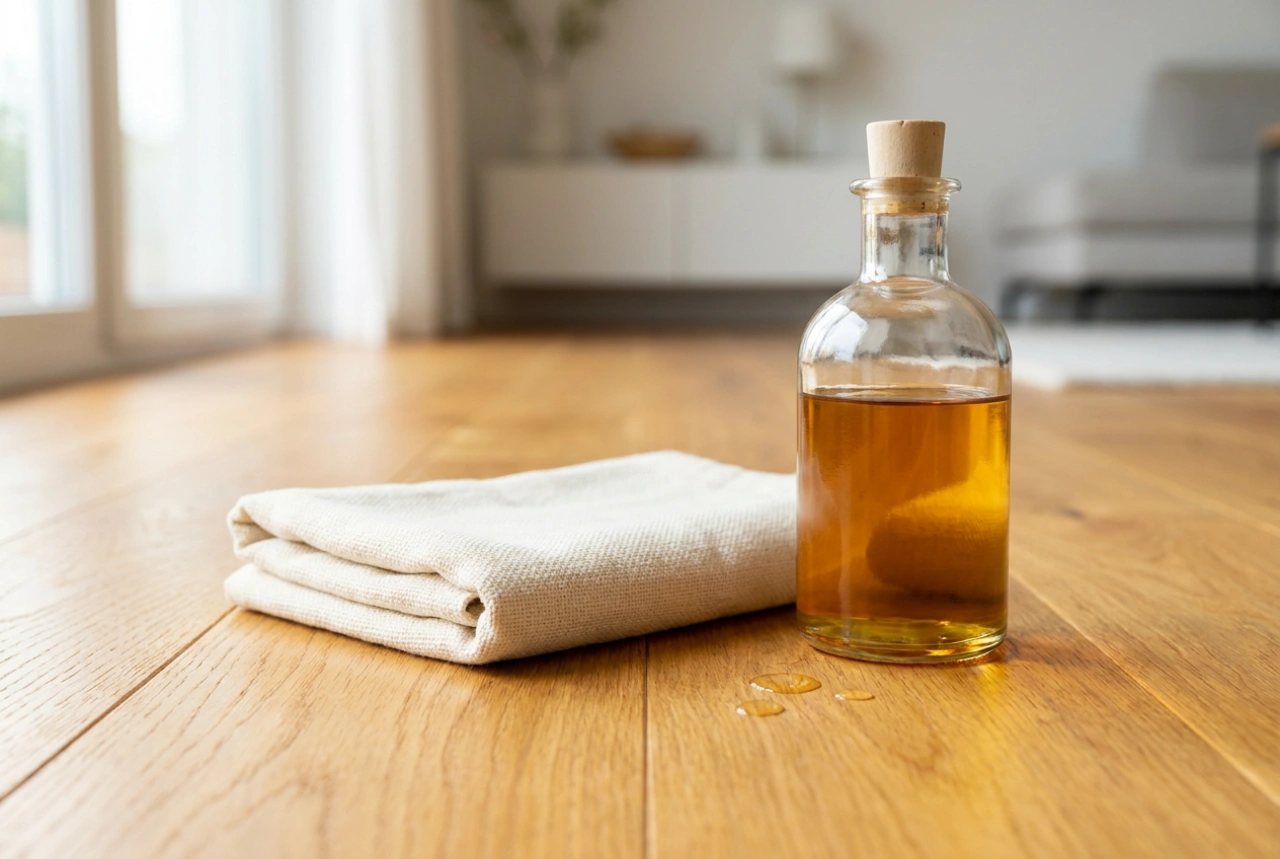
- Utilize Volatile Solvents: Look for formulations utilizing isopropyl alcohol or light, fast-evaporating solvents. Alcohol lowers the surface tension of water, allowing it to wet the surface evenly, and then evaporates rapidly along with the dissolved oils, leaving nothing behind.
- Select Non-Ionic Surfactants: If the cleaner contains surfactants to break down grease, they should be non-ionic. These surfactants carry no electrical charge, making them less likely to attract dust particles to the floor post-cleaning compared to cationic or anionic alternatives.
The Impact of Water Hardness and Temperature
Often, the primary cause of streaks is not the commercial cleaner itself, but the water mixed with it. Municipal tap water contains dissolved calcium and magnesium ions. As the water molecule evaporates, these minerals precipitate out of the solution, forming micro-crystalline white spots on the dark or semi-gloss finish of your laminate panels.
To eliminate this variable, dilute your cleaning concentrate with distilled or demineralized water. Because distilled water has had its mineral ions removed, it acts as a hungry solvent, pulling dirt away from the floor and evaporating cleanly without a trace. Furthermore, using lukewarm water rather than cold water increases the kinetic energy of the molecules, speeding up the evaporation rate and reducing the window of time in which dust can settle onto the wet surface.
Mechanical Technique: The Role of Microfiber and Moisture Control
Even the perfect chemical formulation will fail if applied with improper physical tools. Traditional cotton string mops or sponge mops release too much liquid and merely displace dirt rather than lifting it.
The Capillary Action of Microfiber
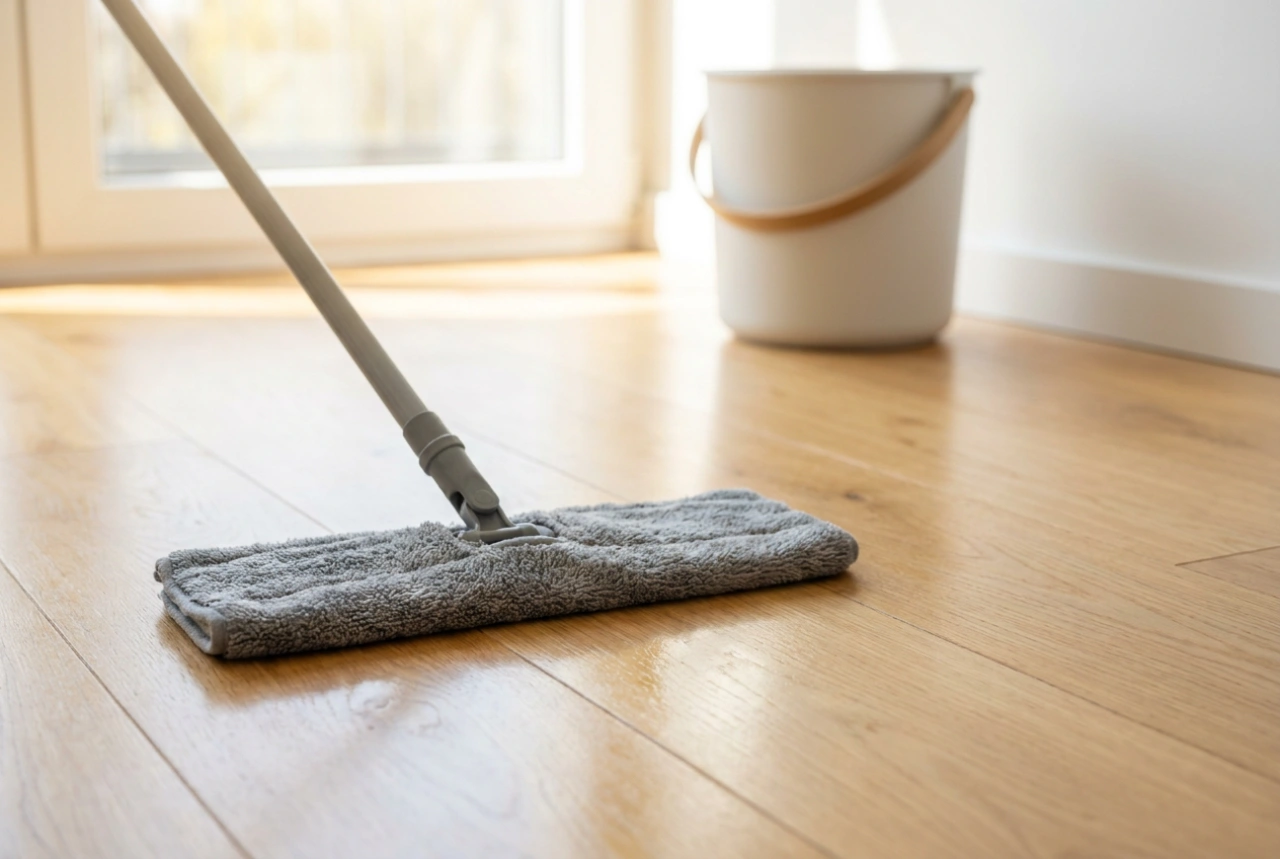
Always use a flat mop equipped with a clean, high-density microfiber pad. Microfiber strands are mechanically split during manufacturing, creating microscopic hooks and channels. These channels utilize capillary action to physically pull dissolved soils and moisture away from the laminate surface and lock them deep within the fiber structure, preventing them from being smeared back onto the floor.
The Damp-Only Rule and Movement Patterns
Laminate floor joints are vulnerable to moisture. If water penetrates the seams, the high-density fiberboard core will swell, causing irreversible warping. The microfiber pad should be barely damp—ideally pre-sprayed with the cleaning solution rather than soaked in a bucket. When wiping, work in straight lines parallel to the grain pattern of the laminate. This ensures that any microscopic residual moisture aligns with the physical texture of the floor, rendering any dry lines virtually invisible.
Checking pH Neutrality for Long-Term Panel Care
When selecting your cleaning liquid, check the pH level. The chemical bonds of the protective melamine resin and the resins sealing the joints are sensitive to extremes. Highly alkaline solutions (pH above 9) or strong acids (pH below 4) can degrade these protective seals over time, making the laminate dull and more susceptible to moisture damage. Opt for a pH-neutral formula (around pH 7) to protect the structural integrity of your flooring while ensuring a safe, daily clean.