

Efficient workshop organisation relies on more than just aesthetics; it is deeply rooted in material science and chemistry. Properly managing a metal toolbox and organising small hardware ensures your tools remain free from oxidation and structurally sound for decades.
The Physics of Metal Toolboxes: Steel versus Aluminium
When selecting a metal toolbox, the primary choice lies between steel and aluminium, each offering distinct physical advantages. Steel toolboxes, particularly those made from heavy-gauge sheet steel, provide superior structural integrity, tensile strength, and impact resistance. However, untreated iron alloys are highly susceptible to oxidation. To counter this, quality steel toolboxes are finished with a powder-coating process. This electrostatically applies a dry polymer powder that is subsequently cured under heat to form a robust, non-porous barrier. This barrier physically blocks oxygen and water molecules from reaching the iron atoms beneath, preventing the formation of iron oxide (rust).
Aluminium toolboxes, on the other hand, are inherently lightweight and highly resistant to atmospheric corrosion. When exposed to oxygen, aluminium instantly forms a microscopic, self-passivating layer of aluminium oxide on its surface. This ultra-thin oxide layer is highly stable and prevents further oxygen penetration. However, aluminium is softer than steel and more prone to structural deformation under heavy loads, making it ideal for lighter hand tools and portable storage, whereas steel remains the standard for heavy-duty stationary workshop environments.
Understanding and Preventing Galvanic Corrosion in Hardware Storage
Storing small hardware such as screws, washers, and brass fasteners inside a metal toolbox introduces the risk of galvanic corrosion. This electrochemical process occurs when two dissimilar metals come into physical contact in the presence of an electrolyte, which can be as simple as atmospheric humidity. The metal with the lower electrode potential (the anode) corrodes at an accelerated rate, while the metal with the higher potential (the cathode) remains protected.
For example, if brass screws are stored in direct contact with an unpainted steel compartment in a humid environment, the steel will rapidly oxidise. To prevent this chemical reaction, you must break the electrical circuit between the metals:
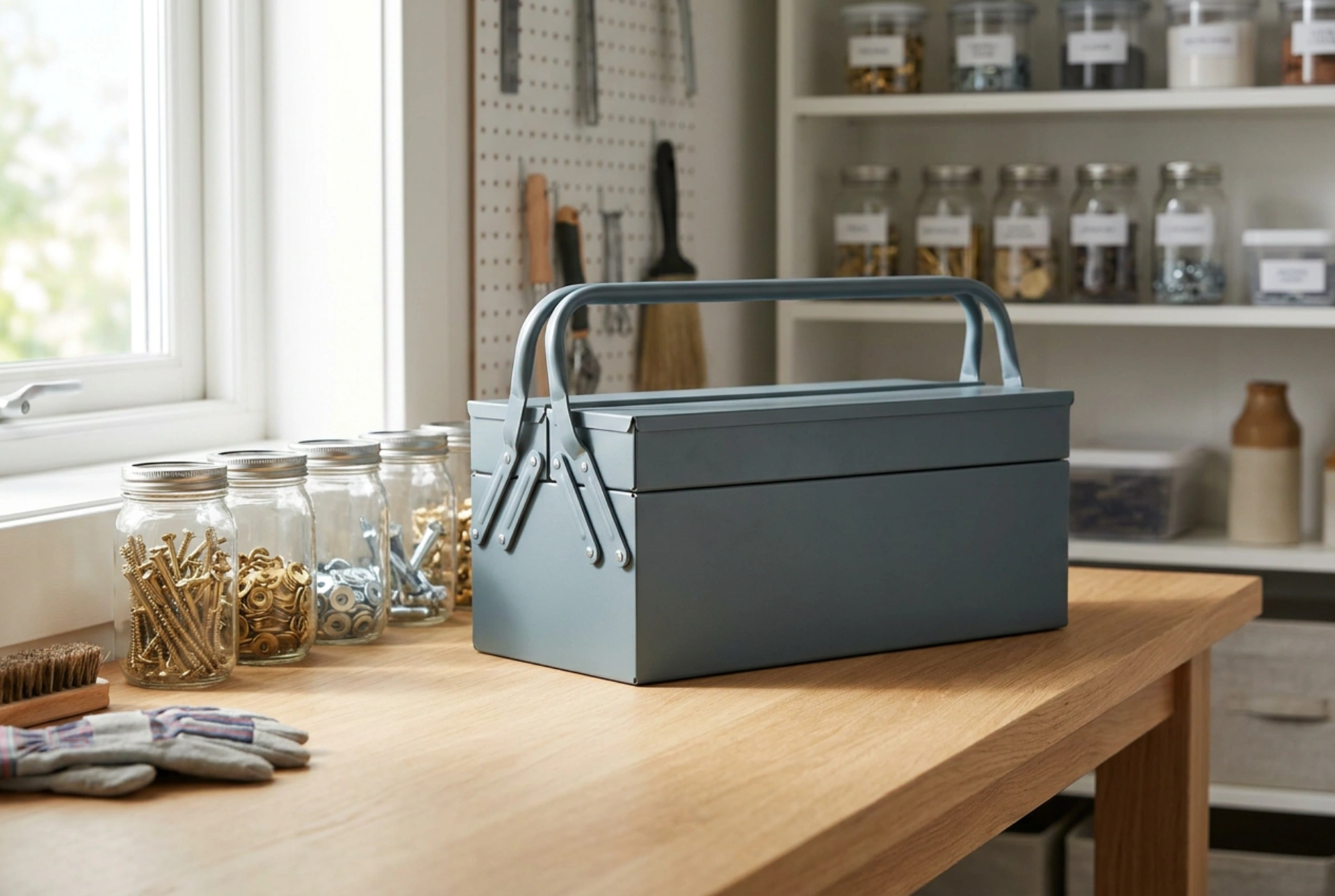
- Physical Isolation: Store small hardware in inert containers. High-density polyethylene (HDPE) bins, polypropylene organisers, or clear glass jars are highly effective because they are electrical insulators and do not react chemically with metals.
- Humidity Control: Eliminate the electrolyte by keeping the relative humidity low. Placing silica gel sachets inside your toolbox actively adsorbs moisture from the air, keeping the internal environment dry enough to halt electrochemical reactions.
- Material Segregation: Group hardware strictly by its composition. Keep stainless steel, brass, zinc-plated steel, and copper in separate compartments.
Optimising Space: The Order of Operations for Small Parts
An organised toolbox improves workflow efficiency and prevents mechanical wear of the tools themselves. Randomly piling heavy tools on top of delicate hardware leads to thread damage and surface abrasion. Establish a systematic layout based on weight, frequency of use, and material sensitivity.
Begin by thoroughly cleaning all small hardware before storage. Manufacturing residues, cutting oils, and sweat from handling contain corrosive salts and acids that can initiate localised pitting corrosion. Wipe hardware down with isopropyl alcohol, which degrease effectively and evaporates rapidly without leaving water residues behind. Once dried, place the hardware into dedicated modular trays. Position the heaviest items at the base of the toolbox to maintain a low centre of gravity, preventing the box from tipping when opened. Reserve upper cantilever trays for lighter, frequently accessed items like fasteners, nuts, and washers.
Maintenance and Lubrication of Storage Systems
To preserve the lifespan of a metal toolbox, regular mechanical and chemical maintenance is required. Over time, hinges and latches experience friction, leading to microscopic wear and stripping of the protective powder coating. Avoid using wet lubricating oils, as they act as a magnet for airborne dust, metal shavings, and debris, forming an abrasive paste that accelerates mechanical wear.
Instead, apply dry lubricants such as PTFE (polytetrafluoroethylene) or graphite powder to moving parts. These dry lubricants reduce friction by leaving a thin, slippery polymeric film that does not attract particulates. Periodically inspect the seal of the toolbox lid; if your box features a rubber gasket, clean it with a damp cloth to remove grit, and apply a thin layer of silicone grease to maintain its elasticity and prevent moisture ingress.