

Washer-dryer combos offer incredible space-saving convenience, but achieving perfectly dried clothes without damaging fibers requires understanding the specific thermodynamics of these dual-purpose machines.
The Thermodynamics of Combination Drying
Unlike standalone tumble dryers that often vent moisture-laden air directly out or use highly efficient heat pumps, most washer-dryer combos rely on condensation drying. In this closed-loop system, the machine heats air and circulates it through the wet laundry to evaporate the moisture. This damp, warm air is then directed over a cold-water condenser unit—typically cooled by incoming tap water—where the moisture liquefies and drains away. Because this process relies on temperature differentials to extract water, it inherently takes longer and uses more water than standalone systems. Understanding this mechanism is crucial: the efficiency of condensation directly depends on the temperature difference between the hot drum air and the cooling water. If the drum is packed too tightly, the air cannot flow freely, preventing the moisture from reaching the condensing surface and resulting in damp, overheated garments.
The Drum Volume and Load Capacity Paradox
One of the most common mistakes when using a combination appliance is ignoring the difference between washing and drying capacities. A machine rated for an 8 kg wash cycle can typically only dry 4 to 5 kg of laundry. This is not an arbitrary limit; it is a fundamental law of physics. Wet fabrics clump together and occupy relatively little space. However, for evaporation to occur efficiently, garments need ample physical volume to tumble and separate. Without this space, hot air cannot penetrate the center of the wet mass. Instead, the outer layers overheat and bake, while the inner core remains wet. Overloading also increases friction between fabrics, which accelerates fiber wear, causes pilling, and creates deep, heat-set creases that are nearly impossible to iron out.
Fiber Science: How Heat Affects Different Materials
Every fabric behaves differently under thermal stress. Natural fibers like cotton and linen absorb a significant amount of water, causing their molecular chains to swell. When subjected to sudden high heat and mechanical tumbling, these fibers undergo "stress relaxation," which causes them to shrink back to their original, pre-stretched state. Synthetics, such as polyester and nylon, are thermoplastic materials. They have a specific glass transition temperature at which they soften. If the dryer temperature exceeds this threshold, the synthetic fibers soften and conform to whatever shape they are currently tumbled into, resulting in permanent wrinkles or structural weakening. To protect your textiles, you must match the drying cycle to the fiber type, opting for lower temperatures (around 50 to 60 degrees Celsius) for delicates and synthetics, and reserving higher temperatures solely for heavy-duty cottons.
A Step-by-Step Protocol for Optimal Drying
To maximize the lifespan of your wardrobe and ensure uniform drying in a combo machine, implement this strict order of operations:
- Sort by fabric weight and density: Never dry lightweight synthetics alongside heavy cotton towels. The synthetics will dry rapidly and begin to overheat while the cotton remains damp, creating a highly inefficient and damaging environment inside the drum.
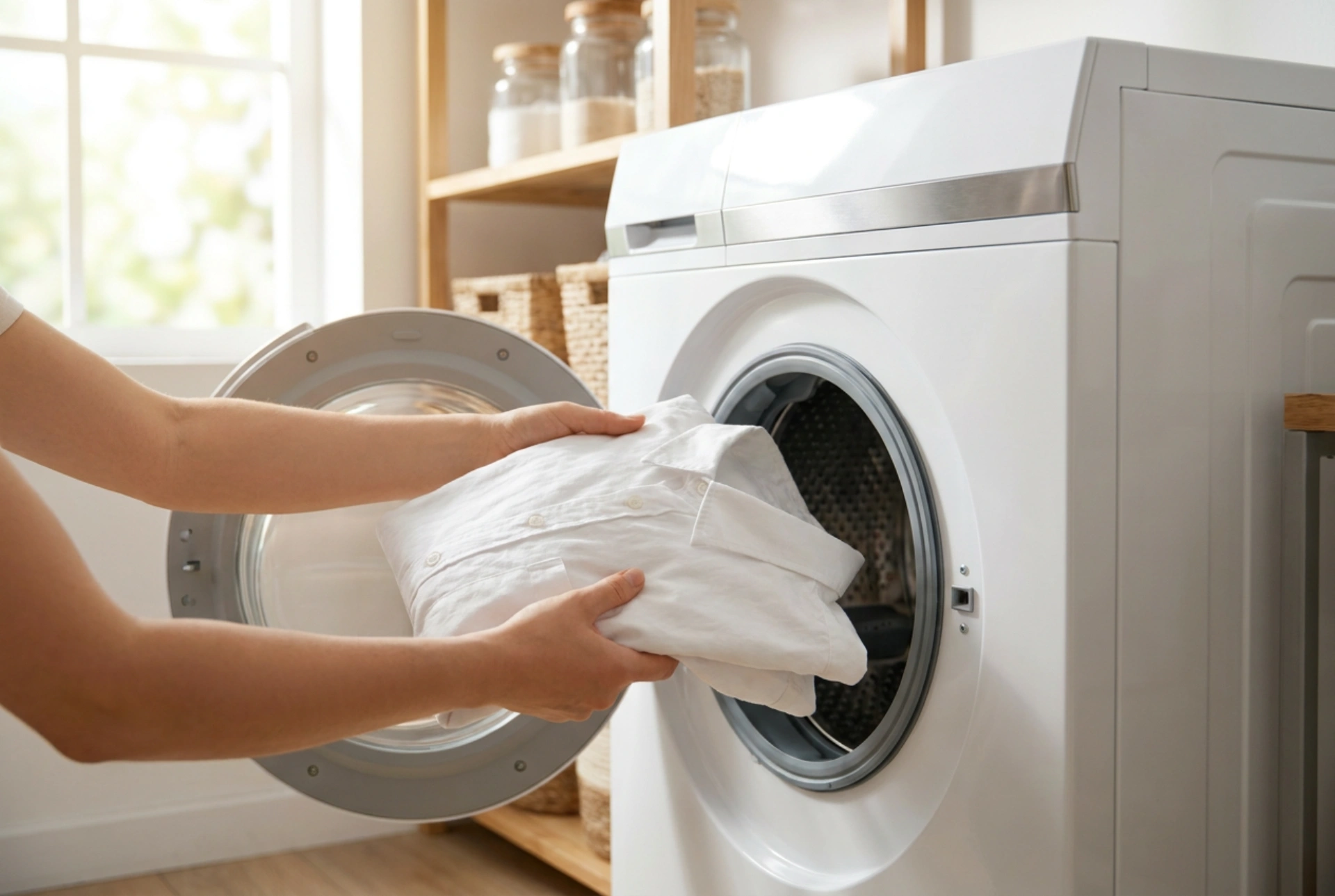
- Apply the half-load rule: If you run a full wash cycle, pause the machine before the drying phase begins. Remove at least half of the wet laundry to line-dry, leaving only the heavier or more urgent items in the drum for the tumble-dry cycle.
- Shake out each garment: Before initiating the drying cycle, take a moment to shake out each damp item. This introduces air between the fibers and prevents clothes from twisting into tight ropes that block airflow.
- Never skip the cool-down phase: The final 10 to 15 minutes of a drying cycle should always involve unheated tumbling. This cool-down phase lowers the fabric temperature gradually, allowing the polymer chains in both natural and synthetic fibers to stabilize in a relaxed, flat state, which significantly reduces creasing.