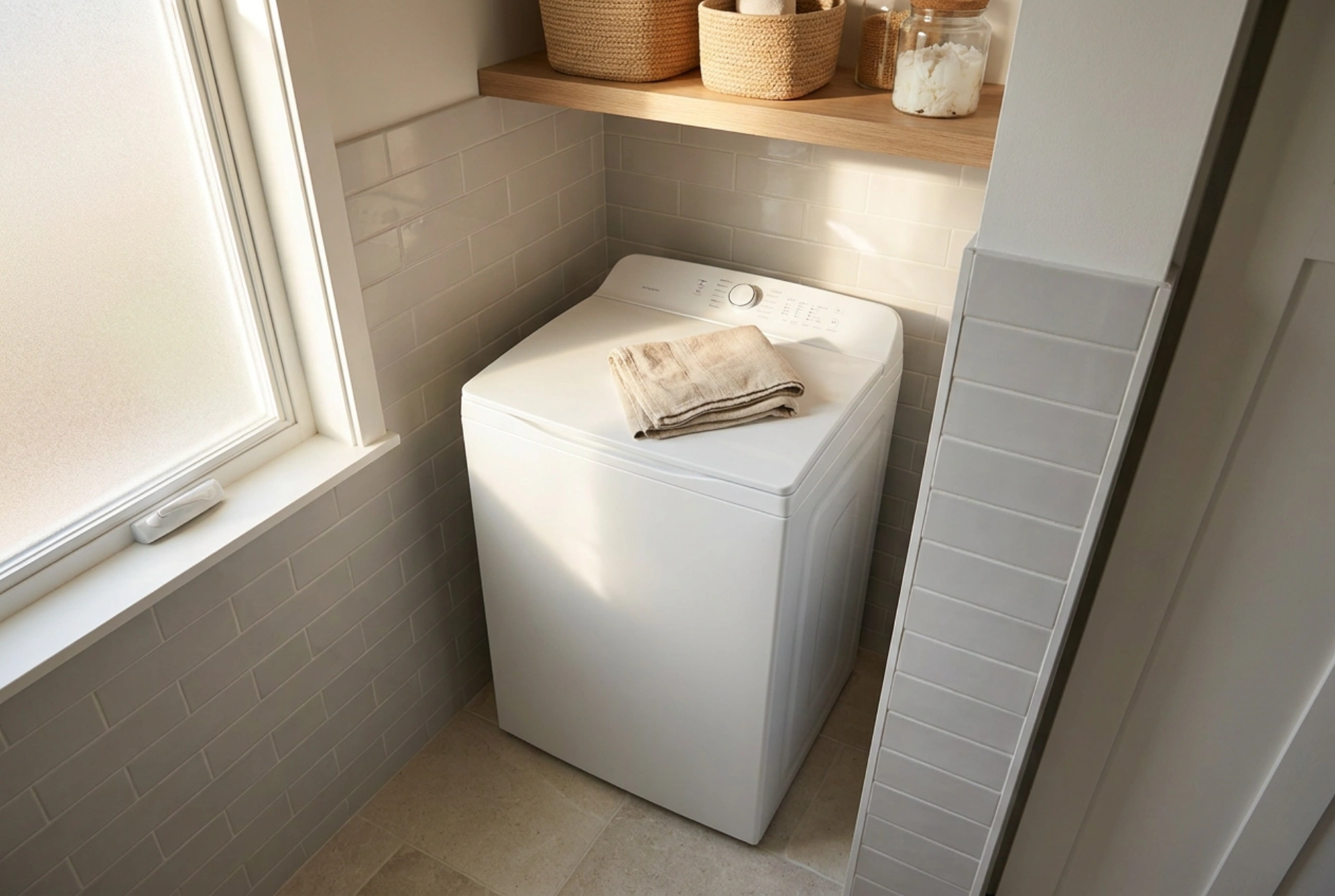


Fitting a washing machine into a compact bathroom niche requires careful consideration of spatial physics, vibration dampening, and moisture control. When installing a narrow top-loading appliance, understanding how to manage kinetic forces and airflow ensures both the longevity of the machine and the preservation of your alcove walls.
The Physics of Kinetic Energy: Preventing Wall Impact
During the spin cycle, a washing machine generates significant kinetic energy. As the drum accelerates to speeds up to 1200 RPM, any imbalance in the laundry load translates into lateral vibrations. In a narrow alcove, these vibrations can cause the machine's steel cabinet to repeatedly strike the surrounding tiled walls, leading to structural damage or chipped finish.
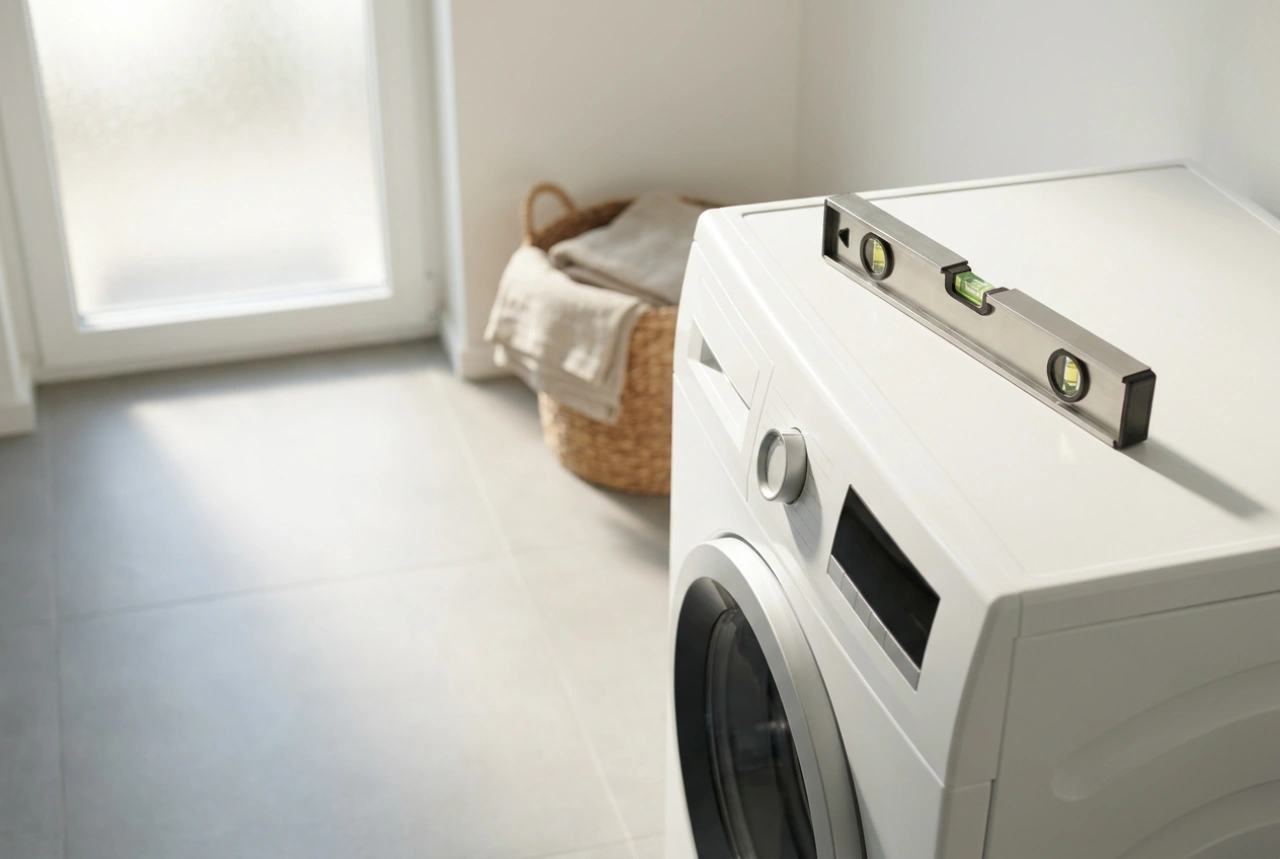
To mitigate this risk, a minimum clearance of 2 to 3 centimetres must be maintained on all sides of the appliance. This physical buffer prevents direct contact during high-resonance phases. Additionally, precise leveling is critical. Using a spirit level, adjust the threaded feet so the machine is perfectly horizontal. This ensures the center of gravity remains aligned over the vertical axis, minimizing orbital sway. Installing high-density rubber anti-vibration pads under the feet can further decouple the appliance from the floor, absorbing kinetic waves before they transfer to the building structure.
Moisture Management and Preventing Anaerobic Mold Growth
Top-loading washing machines are uniquely susceptible to moisture retention because their main lid seal faces upward, trapping humid air inside the drum. When tucked into a confined niche, natural air convection is severely restricted, accelerating the formation of mold, mildew, and unpleasant odors caused by anaerobic bacteria.
To maintain proper hygiene, the washing machine lid must remain propped open between cycles to allow moisture to evaporate. In a small alcove, this requires a vertical clearance equal to the height of the fully opened lid plus at least 10 centimetres of free airspace above it. To facilitate evaporation, ensure your bathroom's mechanical ventilation system is fully functional, drawing moist air away from the niche. Periodically running an empty cycle with citric acid or oxygen bleach helps dissolve scale and organic deposits where mold spores colonize, maintaining a sterile environment within the tight enclosure.
Managing Hose Tension and Prevention of Siphoning
The space behind a washing machine in an alcove is often extremely limited, which poses a threat to the integrity of utility hoses. When pushing the appliance back into its designated slot, rubber or braided stainless steel inlet hoses can easily kink. A kinked hose restricts water flow and creates localized high-pressure zones that accelerate material fatigue, eventually leading to catastrophic rupture.
Furthermore, the physical routing of the drain hose must adhere to gravity-based principles. The drain hose must form a loop that rises to at least 60 centimetres (but no more than 100 centimetres) above the floor level before connecting to the standpipe. This physical barrier prevents siphoning—a process where atmospheric pressure differences draw water out of the machine prematurely during the wash cycle, or allow dirty wastewater to flow back into the clean drum. Ensure hoses are secured with U-brackets to prevent them from shifting under the pressure surges of the drain pump.
Accessing Maintenance Points in Tight Spaces
Unlike front-loaders, top-loading machines offer superior access to the drum from above, but accessing internal maintenance components like the lint filter or emergency drain can be challenging in a narrow niche. Over time, physical debris, hair, and small objects collect in the pump filter, reducing draining efficiency and placing undue strain on the electric motor.
To avoid having to fully extract the heavy machine for routine maintenance, plan for accessibility. Choose a model where the pump filter is accessible from the front base or through the drum interior. For cleaning the exterior cabinet, use a soft microfiber cloth dampened with a mild, non-abrasive detergent. Avoid harsh chlorine-based cleaners on the painted steel casing to prevent chemical oxidation and premature rusting in high-humidity zones.