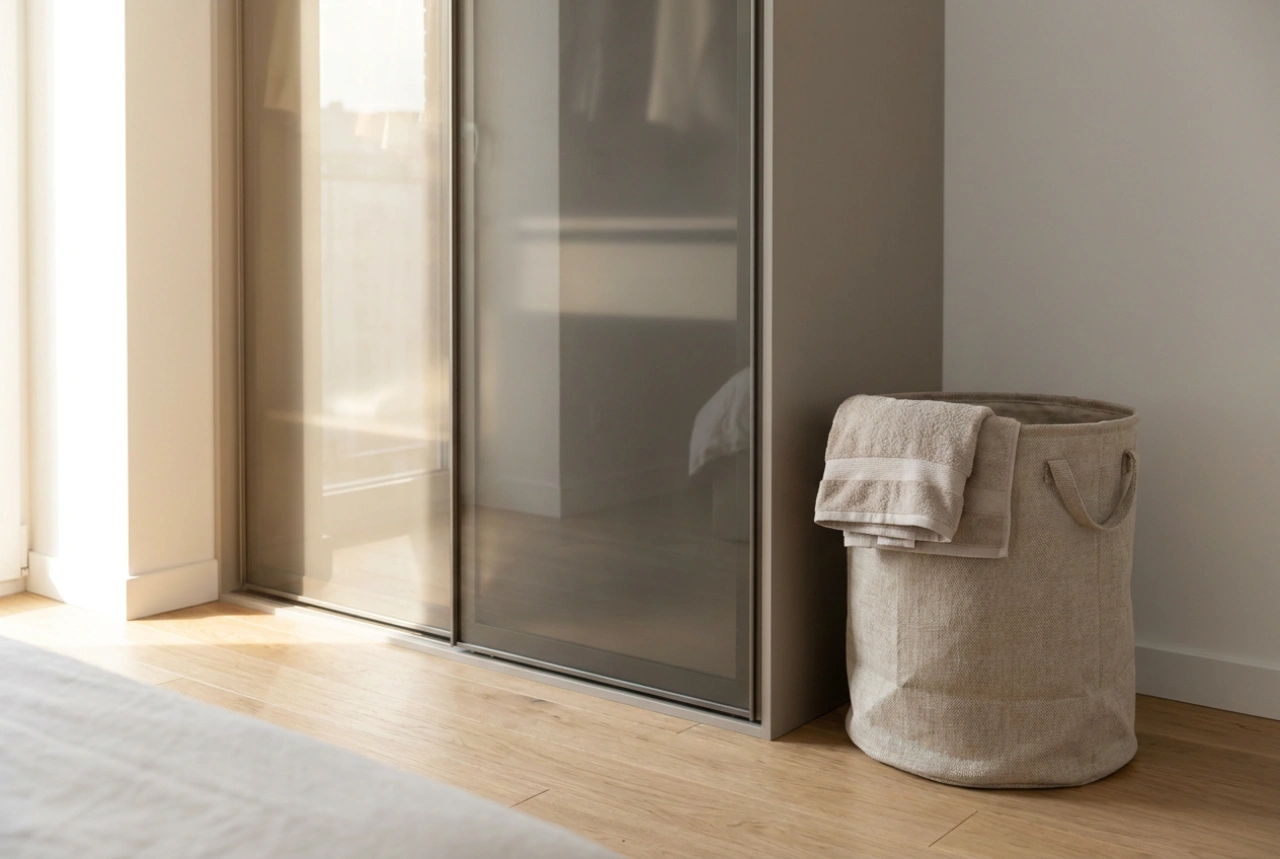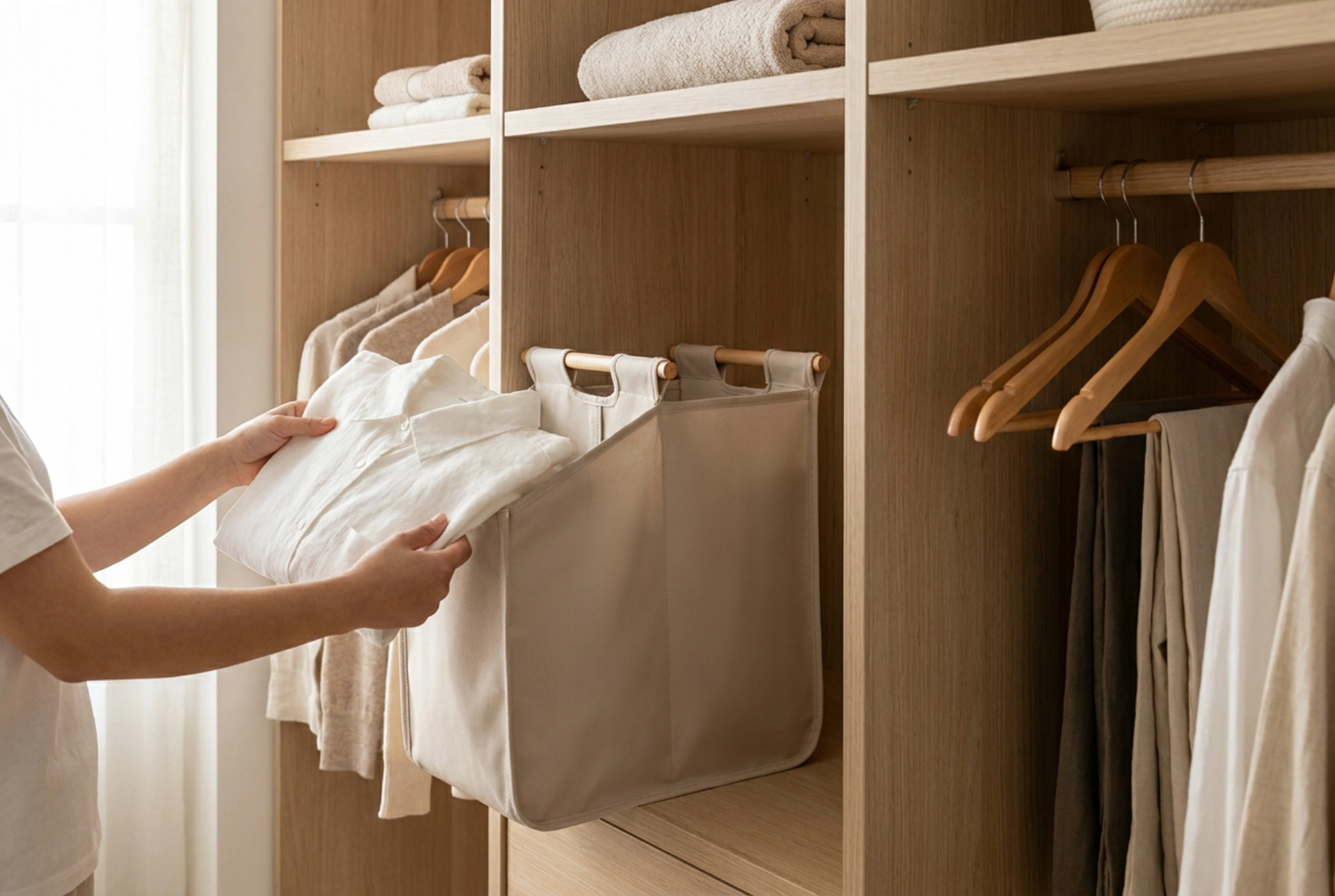


Integrating laundry baskets directly into your wardrobe simplifies sorting and protects delicate fabrics by preventing the cross-contamination of moisture and odours before garments even reach the washing machine. Establishing a systematic sorting workflow inside the wardrobe minimises fabric wear, preserves garment structure, and optimises washing machine efficiency.
The Science of Sorting: Why Separation Matters
Sorting laundry is not merely about aesthetic organisation; it is deeply rooted in material science and textile chemistry. When fabrics are agitation-washed, they interact on a molecular level. Placing different textile types together leads to three primary vectors of degradation: dye transfer, mechanical abrasion, and soil redistribution.
Dye Bleeding and Thermal Energy
Unbound dye molecules, particularly in cotton and wool, tend to leach into the washing water. This process increases at higher temperatures because the thermal energy breaks the weak bonds holding the dye to the organic fibres. When white synthetic fabrics like polyester, which is highly lipophilic and prone to absorbing dyes and oils, are washed with dark cottons, they act like sponges, absorbing these free-floating dye molecules and quickly turning grey or dull.
Mechanical Abrasion and Friction
Heavy fabrics like denim, canvas, and metal zippers act as physical abrasives against delicate yarns such as silk, linen, or fine cotton knitwear. During the spin cycle, the kinetic energy causes rougher fibres to rub against smoother ones, leading to pilling (the formation of tiny tangles of fibre) and microscopic tears that weaken the overall weave of your clothes.
Selecting the Optimal In-Wardrobe Laundry Sorter
An in-wardrobe laundry system must prevent moisture accumulation and bacterial proliferation in an enclosed space. Unlike standalone bathroom bins, wardrobe baskets require specific material properties to prevent stale air from affecting clean garments nearby.
- Breathability: Fabric sorters made of natural linen or cotton, or open-weave synthetic mesh, allow continuous air circulation. This prevents anaerobic bacteria from digesting sweat and sebum residue, which generates volatile organic compounds that cause stubborn, musty odours.
- Compartmentalisation: Multi-section sorters with two or three compartments allow you to categorise items instantly as you undress. This eliminates the need to dump dirty clothes on the floor to sort them later, keeping the bedroom clean and reducing dust mites.
- Moisture Resistance: If you frequently deposit damp gym wear, look for baskets with a removable, washable lining or those treated with a hydrophobic, non-toxic barrier that prevents moisture from soaking into the wooden structure of the wardrobe.
The Three-Step Pre-Sort Protocol
To achieve clean laundry while extending the life of your garments, sort clothes into three distinct categories directly inside your wardrobe baskets:
1. Colour and Dye Affinity
Divide clothes into whites, light colours (pastels, light greys), and darks (blacks, navies, deep reds). This division prevents dye transfer. Additionally, keep bright red and orange items separate for their first few washes, as these dyes are chemically less stable and more likely to migrate.
2. Fabric Weight and Friction Potential
Separate heavy items like jeans, jackets, and thick towels from lightweight garments such as t-shirts, blouses, and underwear. Washing heavy materials separately protects delicate seams and prevents the washing machine drum from becoming unbalanced during high-speed spinning.
3. Temperature and Wash Cycle Requirements
Different fibres react differently to heat. Protein-based fibres like wool and silk denature and shrink in warm water, requiring cool, gentle agitation. Cellulose fibres like cotton and linen can withstand higher temperatures and vigorous mechanical action, which are necessary to dissolve heavy oils and starches.
Optimising the Wardrobe Environment
To ensure your in-wardrobe sorting system remains clean and odour-free, ensure your wardrobe has adequate ventilation. Never place soaking wet items directly into a closed wardrobe sorter; allow damp workout clothes or rain-soaked garments to air dry on a rack before placing them in the bin. Regularly wash the fabric liners of your baskets at 60 degrees Celsius with an oxygen-based bleaching agent to sanitise the material and eliminate latent bacterial spores.