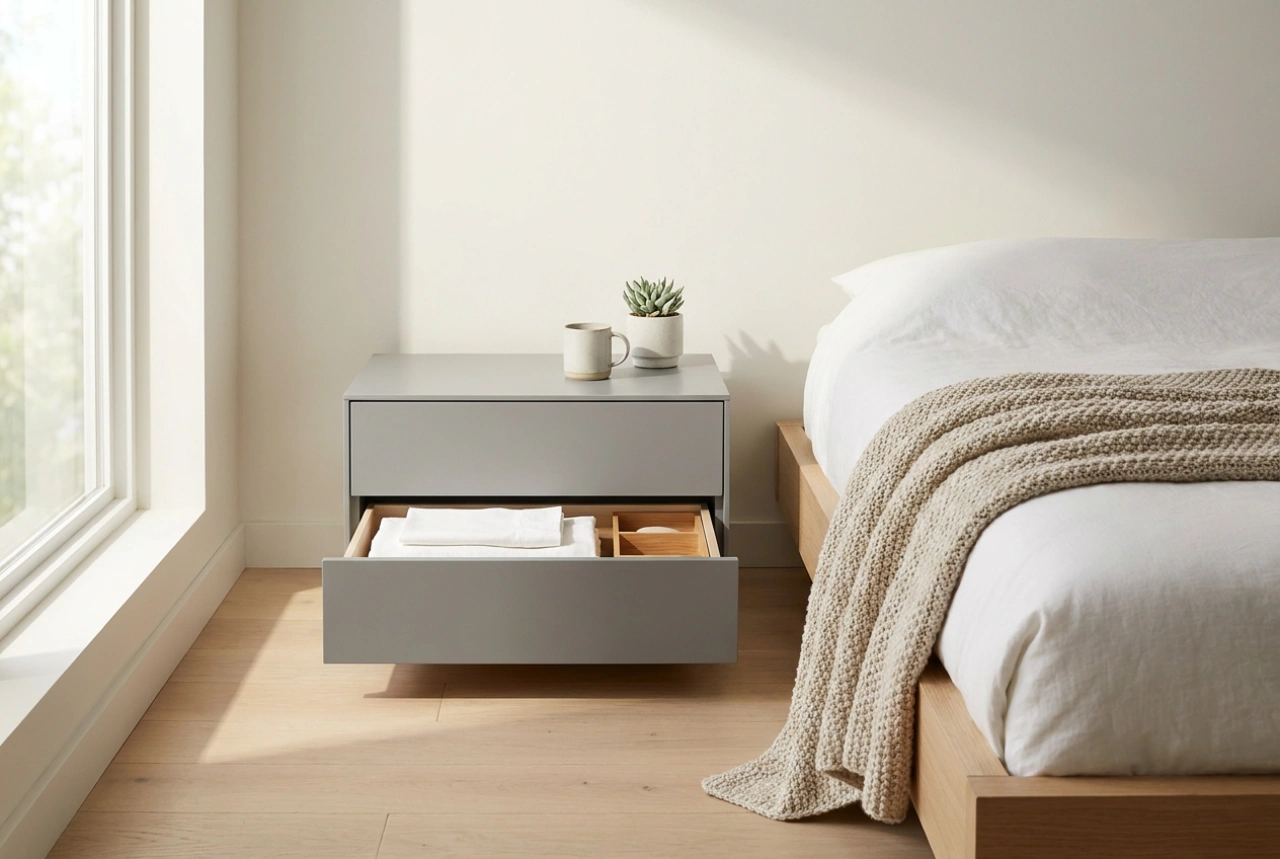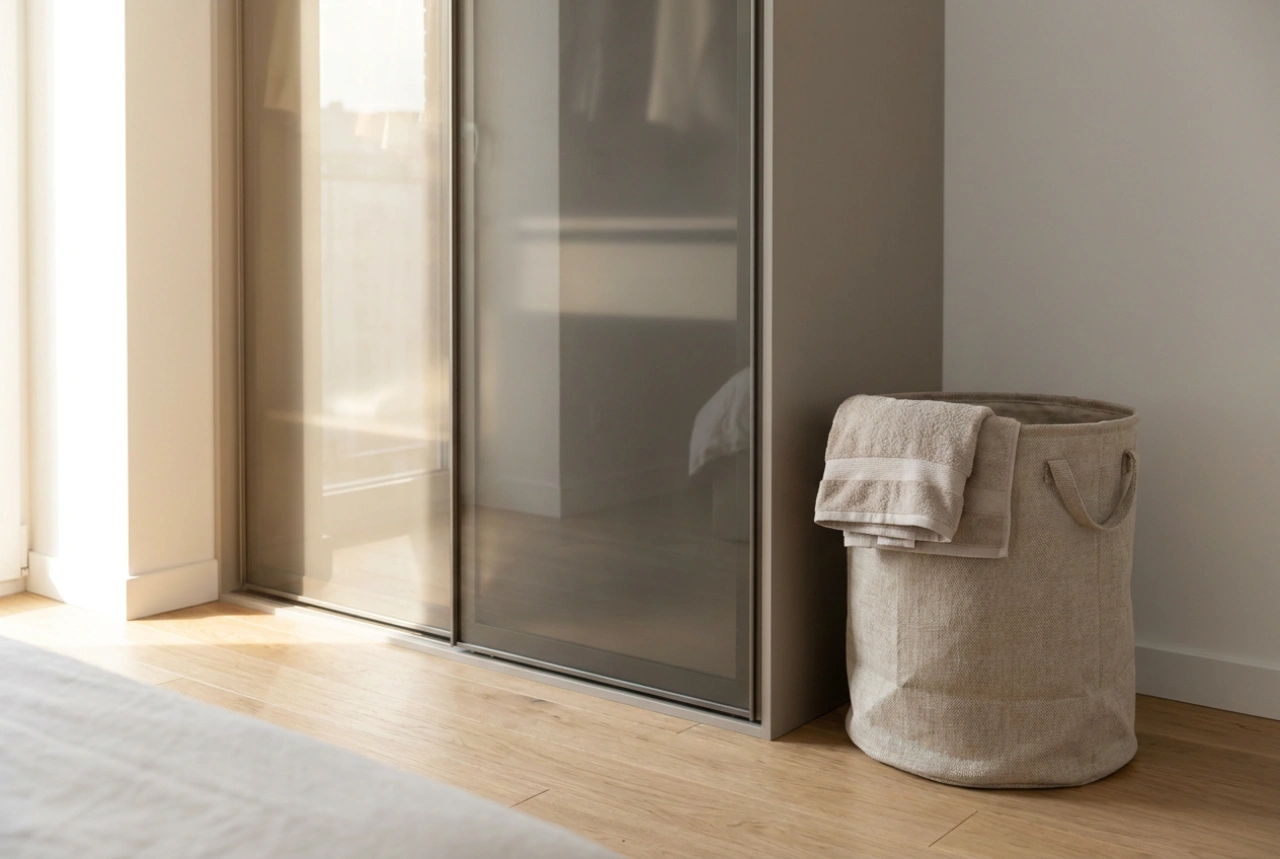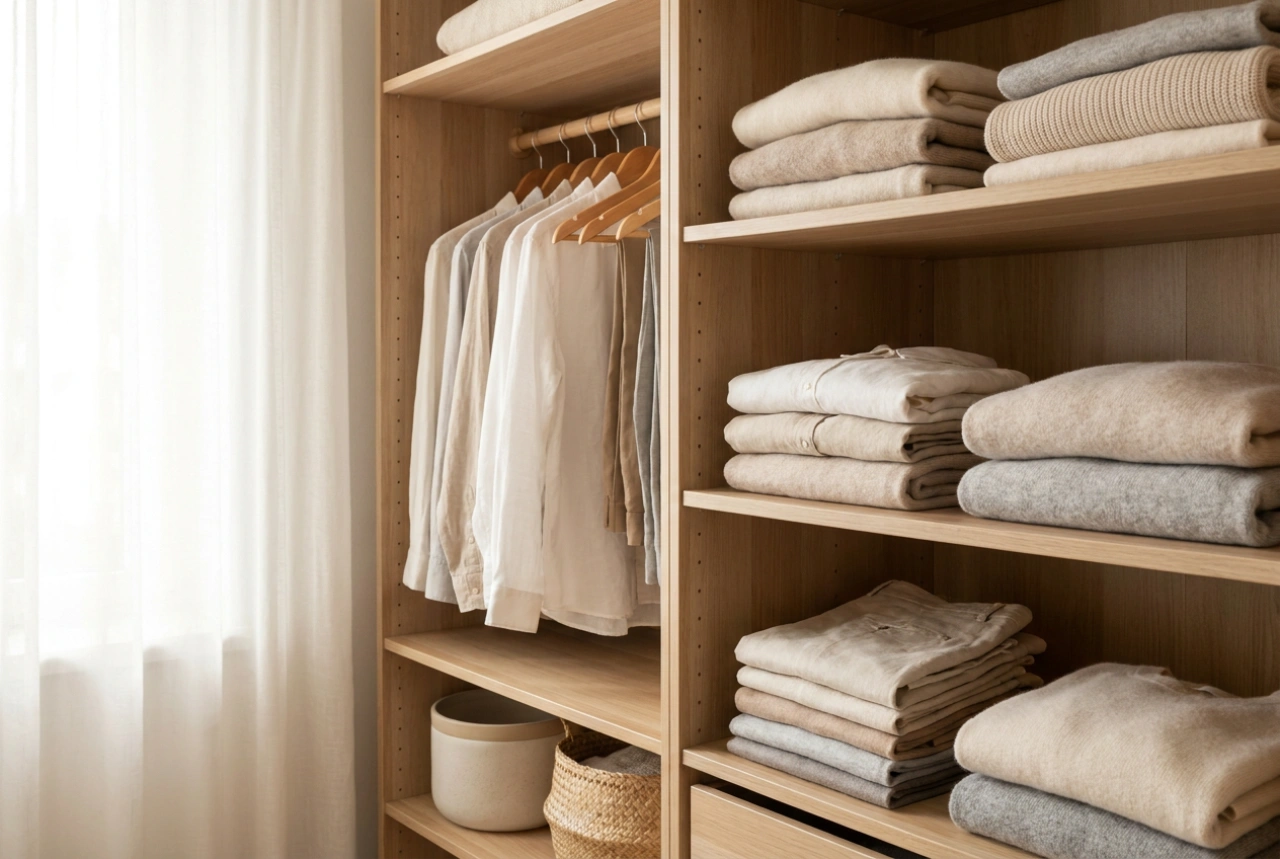


Creating a dedicated dressing zone in an existing bedroom does not require invasive building work; instead, it relies on the clever application of spatial physics, textile weight, and structural zoning. By utilizing freestanding elements, textile barriers, and proper weight distribution, you can establish a highly functional mini wardrobe that feels distinct, organized, and structurally sound.
The Mechanics of Textile Zoning: Choosing the Right Fabric Barrier
Using fabric as a soft partition is one of the most effective non-structural methods to divide a room. However, not all fabrics perform equally. To create a true sense of separation, you must consider the material's weight, weave density, and light transmission.
- Density and Weight: Medium-to-heavyweight fabrics, such as high-density linen (around 200–300 gsm) or heavy cotton duck, are ideal. The physical mass of these fabrics allows them to hang straight under gravity, reducing swaying from draughts and providing a solid visual block.
- Acoustic and Thermal Properties: Heavy woven textiles act as minor acoustic dampeners. They absorb high-frequency sounds within the dressing nook, creating a quieter, more intimate atmosphere while also preventing dust from migrating freely between zones.
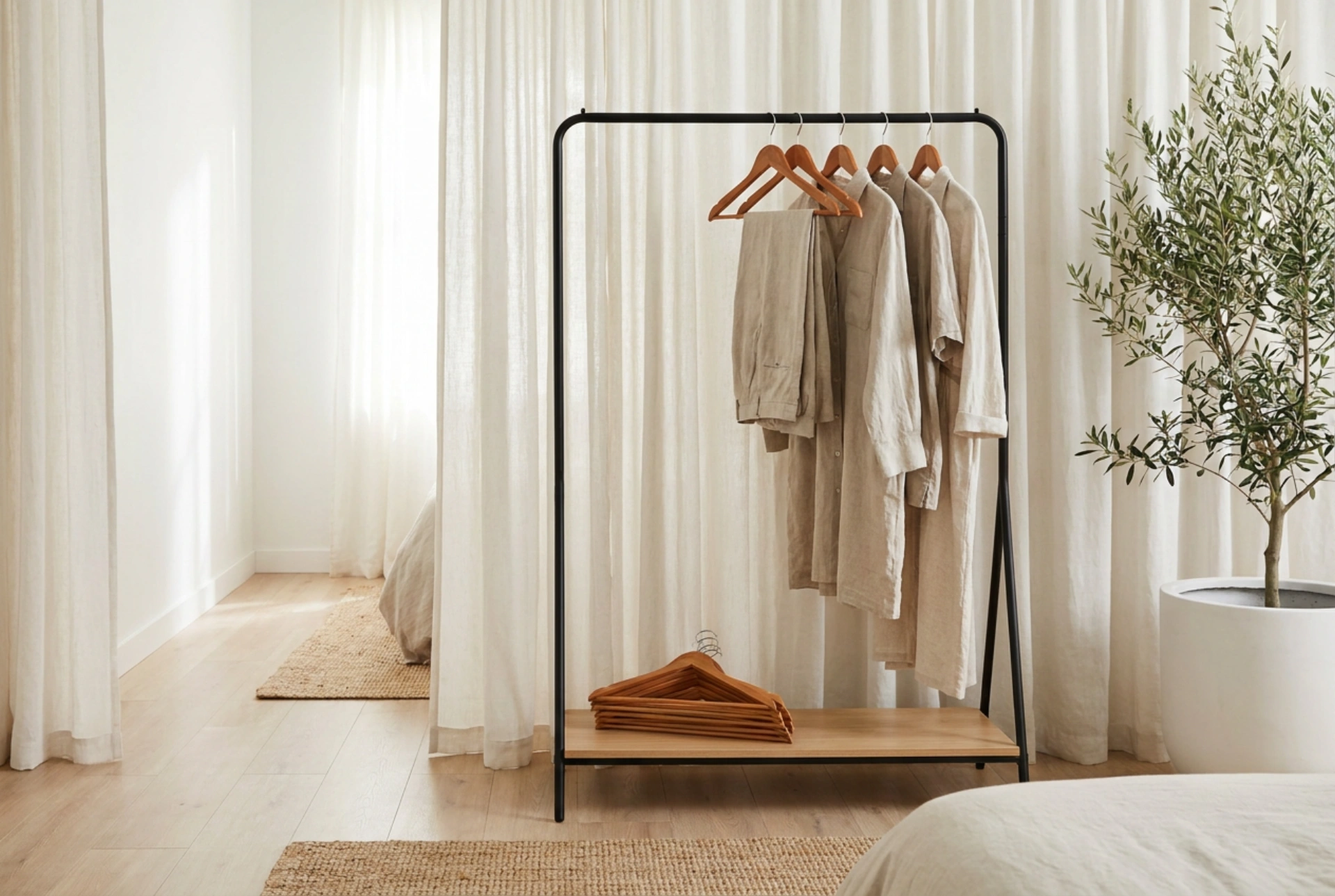
- Suspension Mechanics: To avoid drilling into walls, use a heavy-duty spring-tension rod or a freestanding frame. Ensure the tension rod has silicone or rubber end-caps; these increase the coefficient of friction against plaster or paint, preventing slippage without causing surface degradation.
Gravity and Stability: Engineering the Freestanding Rack
A freestanding clothing rack forms the structural core of your non-renovation wardrobe. Understanding the center of gravity and load-bearing capacity is crucial to prevent structural failure or tipping.
Select a rack constructed from matte powder-coated steel or heavy-gauge industrial piping. Steel offers high tensile strength and rigidity. When assembling and loading the rack, apply basic principles of physics: place the heaviest items—such as winter coats and boots—at the very bottom of the structure. This lowers the center of gravity, significantly increasing lateral stability. Distribute the hanging weight evenly along the horizontal bar rather than clustering heavy garments in the center, which can induce structural sagging over time due to bending stress.
Airflow and Microclimate Preservation
Enclosing a small space with clothing can restrict air circulation, leading to microclimates where humidity accumulates. This increases the risk of mustiness and fabric degradation.
To maintain proper airflow, ensure that your fabric partitions do not seal the space completely from floor to ceiling. Leave a gap of at least 5 to 10 centimeters at both the bottom and top of the curtain. This gap facilitates natural convection currents: cool air enters at the bottom, warms slightly, and escapes from the top. Additionally, choose breathable natural fibers like linen for your divider, as they allow air molecules to pass through while still maintaining visual privacy.
Visual Expansion and Lighting Mechanics
A small partitioned wardrobe can easily feel cramped. To counteract this, utilize the science of reflection and light refraction to trick the eye and improve usability.
Positioning a full-length floor mirror inside the zone serves two purposes: practical utility and spatial illusion. Placing the mirror perpendicular to the natural light source (such as a window) bounces ambient light deeper into the dark wardrobe corner. Avoid placing high-wattage incandescent bulbs in this enclosed zone, as they emit heat that can degrade delicate clothing fibers. Opt instead for low-profile, battery-operated LED strips with a high Colour Rendering Index (CRI of 90 or above). This ensures colors are rendered accurately when selecting outfits, without generating heat or requiring complex electrical wiring.