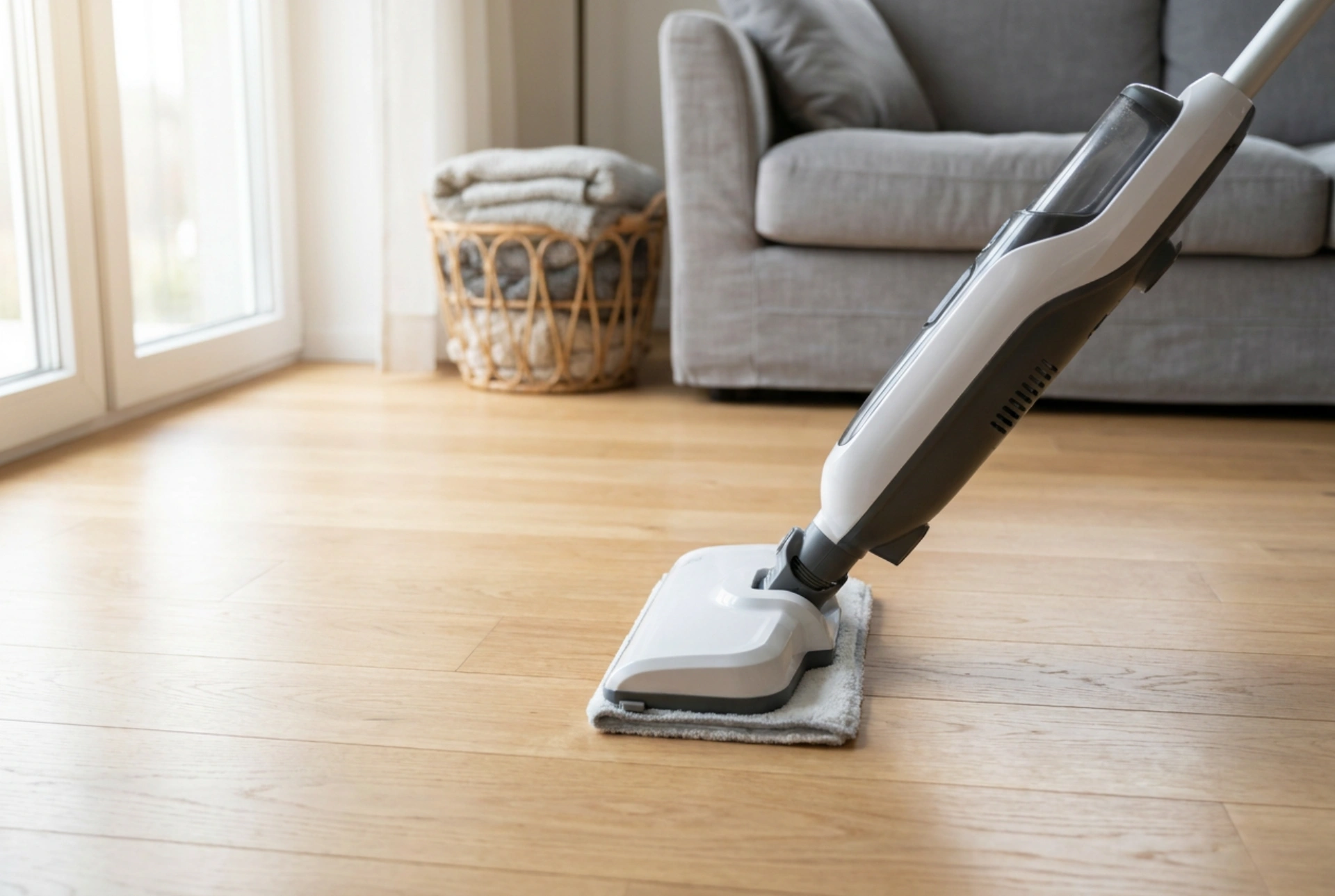


Cleaning floors with a cordless steam mop offers unmatched mobility, but using high-temperature vapour requires strict adherence to physical and material limits to prevent surface damage. Understanding how heat, moisture, and pressure interact with different flooring materials ensures deep sanitisation without compromising structural integrity.
The Physics of Steam Cleaning and Material Sensitivity
Steam cleaning relies on the thermal energy of water vapour to break the intermolecular bonds holding dirt, grease, and biological matter to floor surfaces. When water is heated to its boiling point and released as steam, it rapidly transfers heat energy to the cold floor. This thermal shock emulsifies oils and loosens particulates without the need for chemical surfactants. However, this rapid heat transfer can be highly destructive to sensitive materials.
Standard wood polymers, resins, and adhesives react dynamically to temperature changes. For instance, the polyurethane sealant on hardwood floors has a specific thermal tolerance. Exceeding this threshold can cause the coating to soften, cloud, or peel. Similarly, laminate floors are constructed from high-density fibreboard topped with a photographic layer and a melamine wear layer. If steam penetrates the joints between laminate planks, the moisture condenses inside the wood core, causing irreversible swelling and buckling.
Evaluating Flooring Materials for Steam Compatibility
Before introducing high-temperature moisture to a floor, it is vital to determine the material’s sealing status and composition.
- Sealed Hardwood: Only suitable for steam if the sealant is completely intact. If a drop of water placed on the floor is absorbed within a few minutes, the floor is unsealed; in this case, steam must never be used.
- Laminate and Engineered Wood: These materials feature highly vulnerable seams. Use steam sparingly, utilising the lowest temperature setting, and ensure the mop is constantly in motion.
- Ceramic and Porcelain Tiles: Highly resistant to heat and moisture. However, synthetic tile grouts or degraded cementitious grouts can degrade under high pressure and temperature.
- Vinyl and LVT (Luxury Vinyl Tile): Modern vinyl often uses adhesives that soften at temperatures above sixty degrees Celsius. Check manufacturer guidelines, as excessive heat can cause vinyl planks to shift or unglue.
The Mechanics of Safe Cordless Operation
Operating a cordless steam mop requires specific techniques to maximise efficiency and protect surfaces. Because cordless units rely on battery-operated heating blocks, managing heat output and movement is essential.
1. Constant Linear Movement
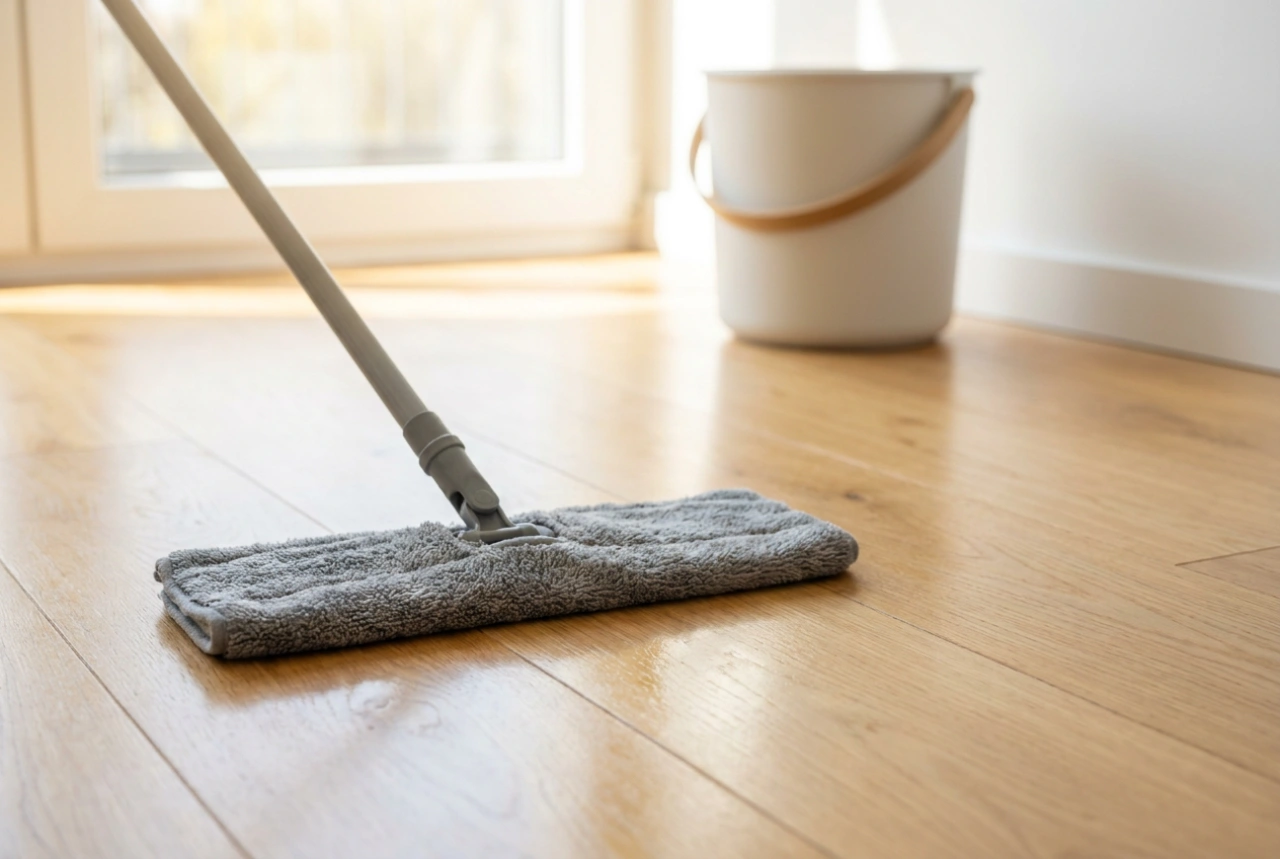
Never allow a steam mop to rest in a single spot while active. Accumulating heat and condensation in one concentrated area can blister wood finishes or melt vinyl adhesives within seconds. Maintain a steady, moderate pace, gliding the mop head in overlapping straight paths along the direction of the wood grain.
2. The Barrier Principle
Always use a high-quality microfibre pad. The microfibre does not just collect loosened dirt; it acts as a crucial thermal and moisture regulator. It diffuses the concentrated steam coming from the nozzles, converting a potentially damaging jet of hot water into a uniform, gentle vapour barrier.
3. Pre-Cleaning Protocol
Dry debris is highly abrasive. When pushed under a hot, damp microfibre pad, small dust and sand particles act like sandpaper under pressure, micro-scratching the floor finish. Always vacuum or sweep thoroughly before steam mopping.
Water Quality and Cordless Device Maintenance
The longevity of a cordless steam mop and the safety of your floors depend on the water used. Tap water contains dissolved minerals like calcium carbonate and magnesium. When heated inside the mop’s compact chamber, these minerals precipitate out of solution, forming solid scale deposits. This scale can clog the steam nozzles, leading to uneven steam distribution, spitting of boiling water droplets, or complete heating element failure. To prevent this, always use demineralised or distilled water. This ensures a clean, gaseous steam output that dries rapidly without leaving mineral streaks on your polished floors.