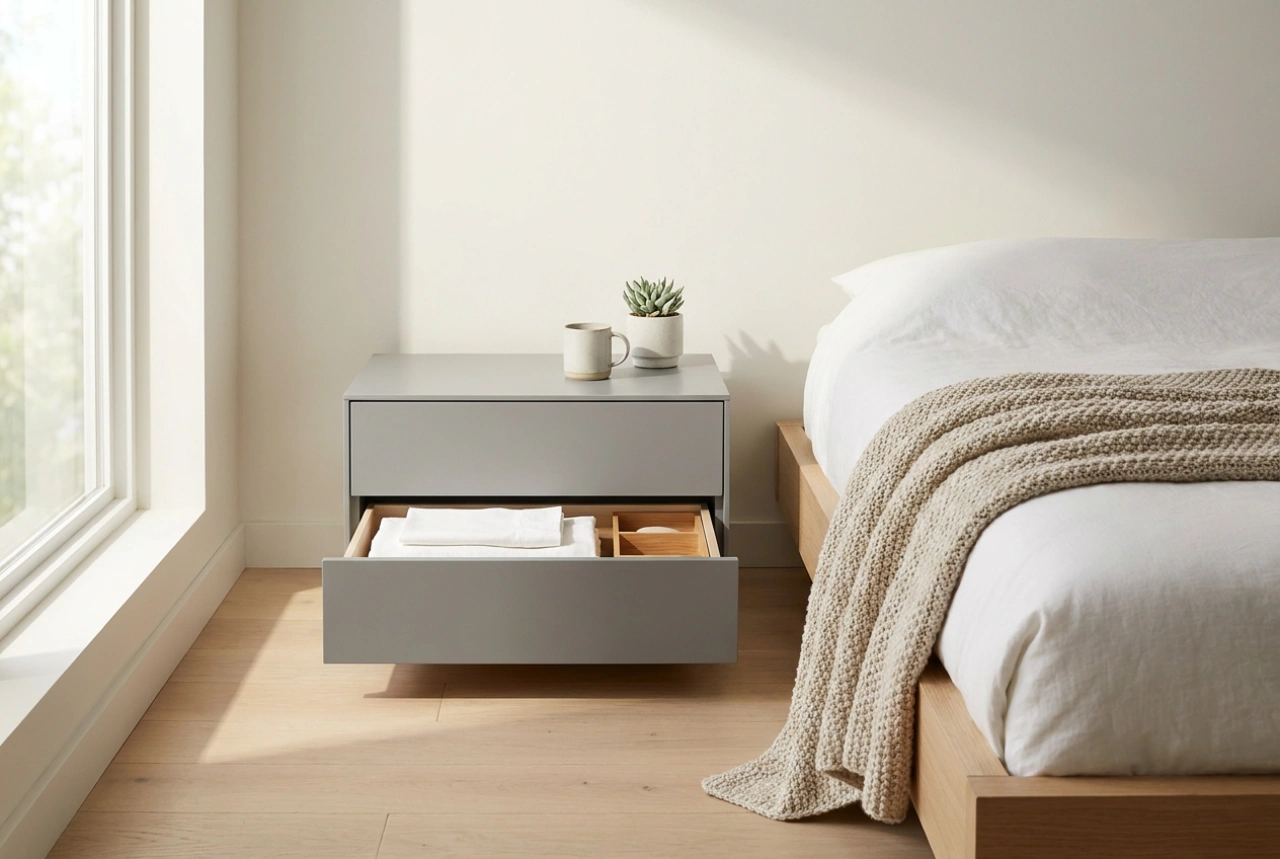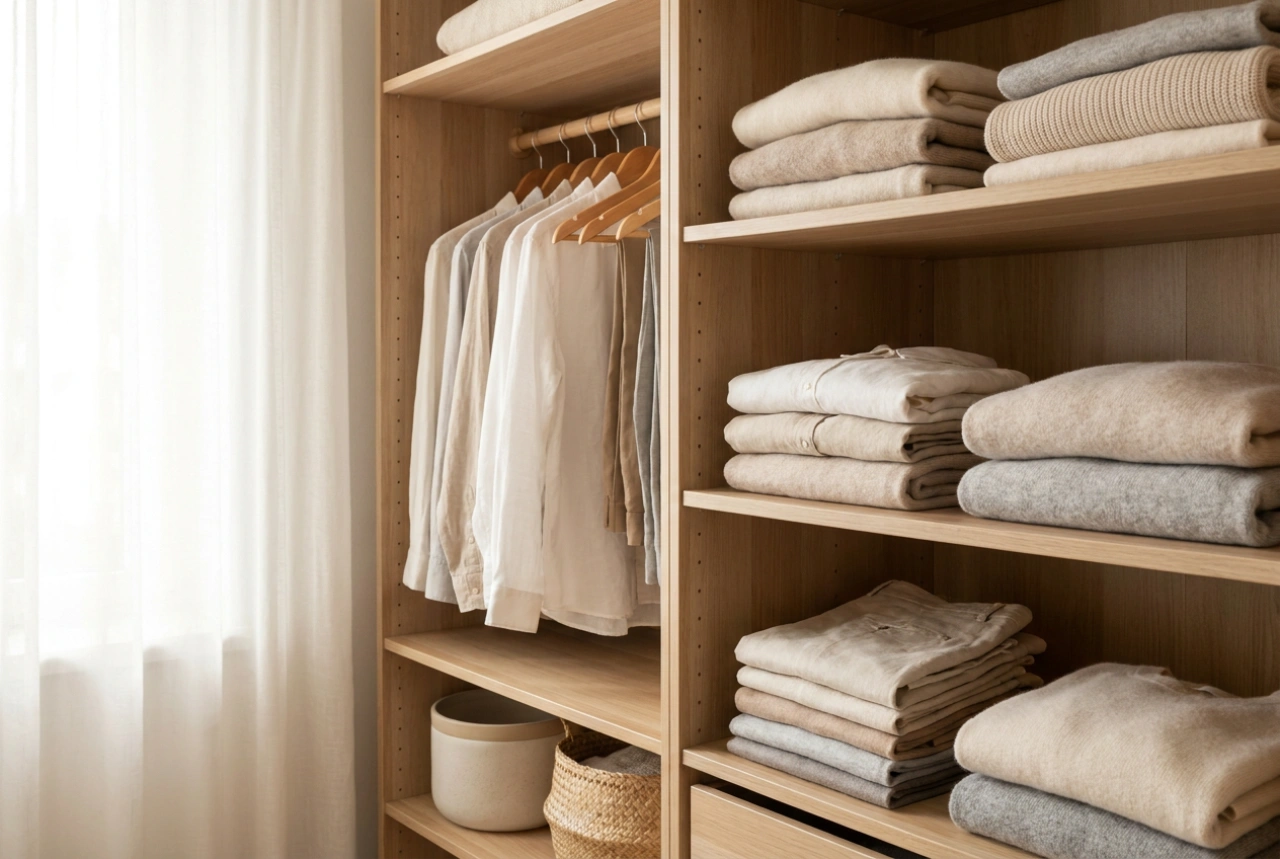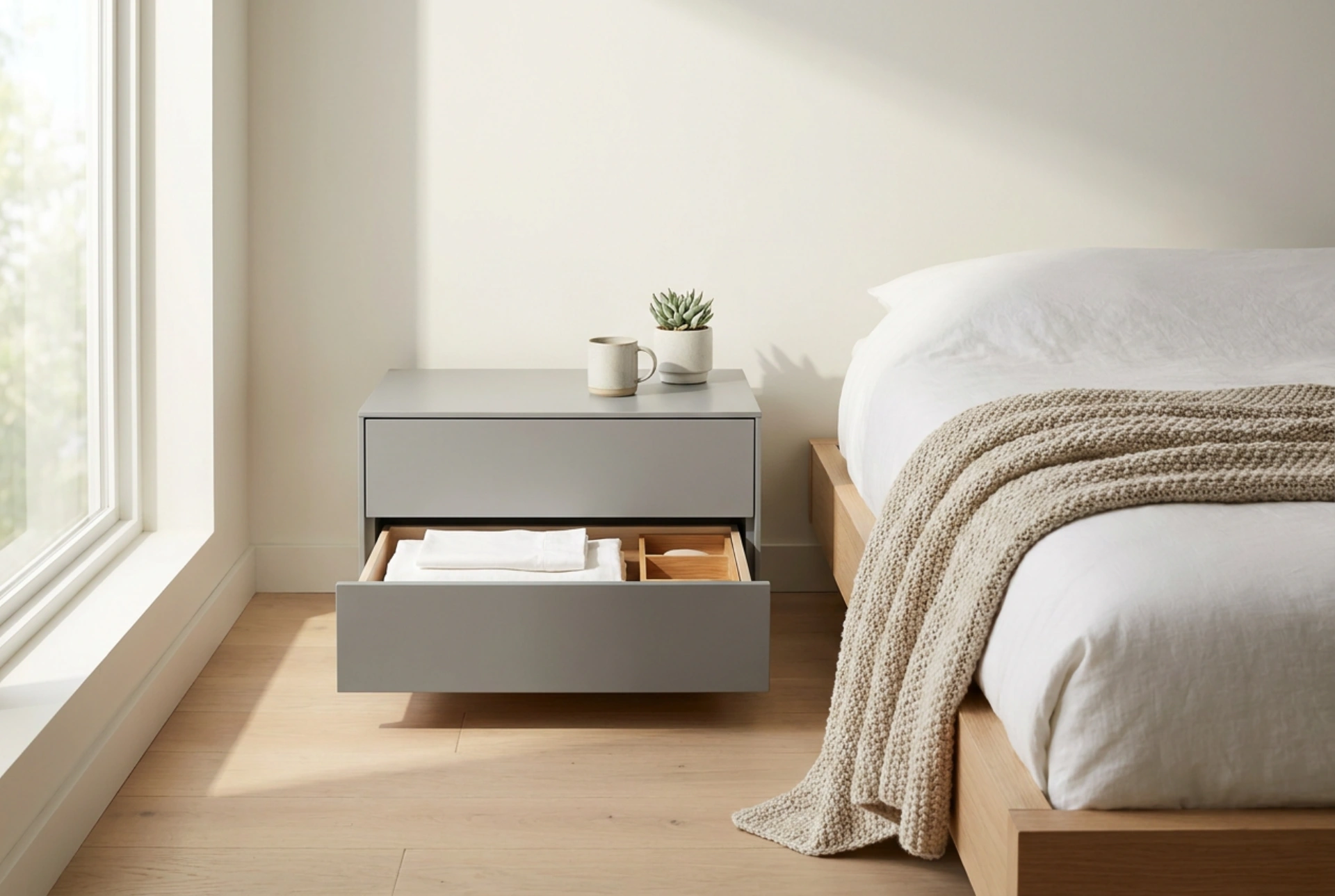


Transforming a chaotic wardrobe drawer into a structured, highly functional storage system is not merely an aesthetic choice; it is a practical method to extend the lifespan of delicate garments. By compartmentalising undergarments, you eliminate the mechanical friction and fabric stress that occur during daily retrieval.
The Physics of Fabric Degradation in Unstructured Drawers
When clothing items are piled loosely in a large, undivided drawer, they are subjected to kinetic energy every time the drawer is opened or closed. This constant shifting causes different textiles to rub against one another. For delicate fibres such as silk, lace, and fine knits, this friction leads to pilling, snagging, and structural weakening. Over time, the agitation breaks down the outer protein or cellulose chains of the natural fibres, making them brittle.
Furthermore, packing garments tightly without defined boundaries causes uneven compression. Undergarments at the bottom of a stack bear the cumulative weight of the items above, crushing elastic bands and ruining the pre-formed shapes of padded bras. Using rigid or semi-rigid dividers distributes the pressure evenly, isolating each garment in its own micro-environment and preventing destructive physical contact.
Material Science: Selecting the Right Organiser
The choice of material for your drawer organisers directly influences the climate inside your wardrobe. Not all materials are suitable for long-term textile storage:
- Non-woven Polypropylene: This synthetic polymer is highly breathable, lightweight, and chemically inert. It does not off-gas harmful compounds that could degrade synthetic elastics, and its porous nature prevents moisture trapping.
- Untreated Timber and Bamboo: While visually appealing, raw wood can release natural acids (such as acetic acid) and resins that yellow white fabrics over time. If using wood, ensure it has a fully cured, water-based lacquer finish to prevent snagging and chemical transfer.
- Moulded Plastics: High-density plastics are easy to clean and extremely durable, but they lack breathability. They are best suited for climate-controlled rooms where humidity levels are kept consistently low to avoid condensation.
- Corrugated Cardboard: Although inexpensive, paper-based organisers are highly hygroscopic. They absorb moisture from the air, creating a breeding ground for musty odours, dust mites, and silverfish.
The Mechanics of Vertical Folding
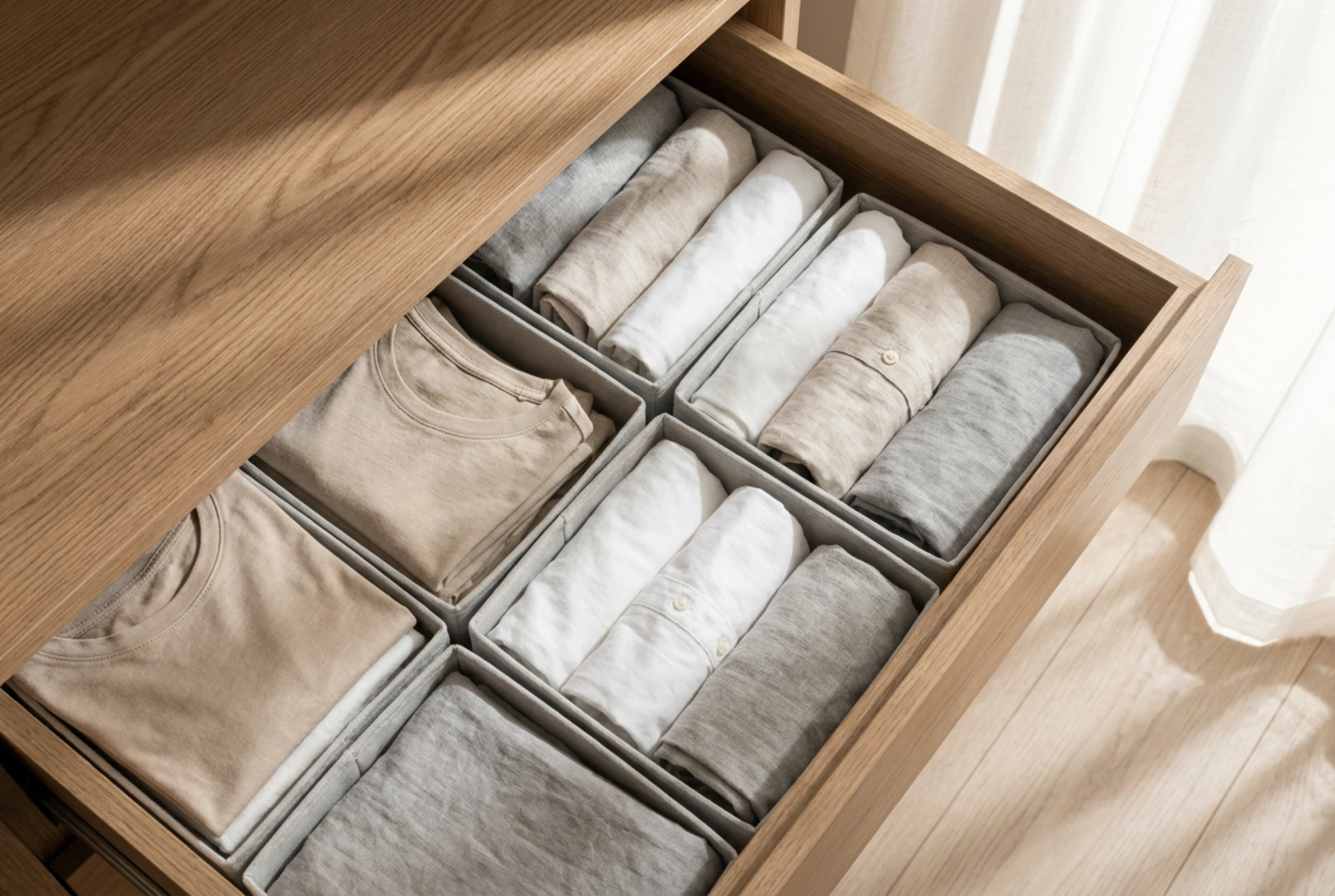
To maximise the efficiency of compartmentalised storage, the method of folding must evolve from traditional stacking to vertical filing. Stacking garments horizontally creates a hidden layer system where items at the bottom are forgotten and compressed. Vertical folding involves folding each item into a compact, self-standing rectangle that matches the height of your organiser cells.
For socks and underwear, this is achieved by folding the edges inward to form a clean strip, then rolling or folding the strip into thirds. When placed vertically inside the compartments, every single item is visible at a glance. This layout eliminates the need to rummage through layers, which destabilises the entire drawer. Additionally, the lack of compression preserves the loft of natural wools and the elasticity of technical synthetic blends.
Maintaining Airflow and Micro-Climates
Dark, enclosed wardrobe drawers can easily develop stagnant micro-climates where humidity accumulates. High relative humidity triggers the breakdown of polyurethane fibres (commonly found in elastic waistbands) through a process called hydrolysis. To combat this, ensure your organisers are not packed so tightly that air cannot circulate between the cells.
Regular maintenance is essential to prevent the accumulation of organic dust (such as microscopic skin flakes and lint), which attracts pests. Every season, empty the organisers completely, vacuum the drawer interior using a brush attachment, and wipe down all surfaces with a damp microfibre cloth. Allow the drawers to dry completely before reintroducing the organisers and garments, ensuring a clean, low-friction, and chemically stable environment for your wardrobe.