

Non-plumbed refrigerators with integrated ice makers offer the convenience of automated ice production without the need for a mains water connection. By using an internal refillable reservoir, a small mechanical pump, and precise thermal sensors, these appliances reliably produce ice using fundamental principles of thermodynamics and fluid dynamics.
The Core Mechanism: From Reservoir to Ice Tray
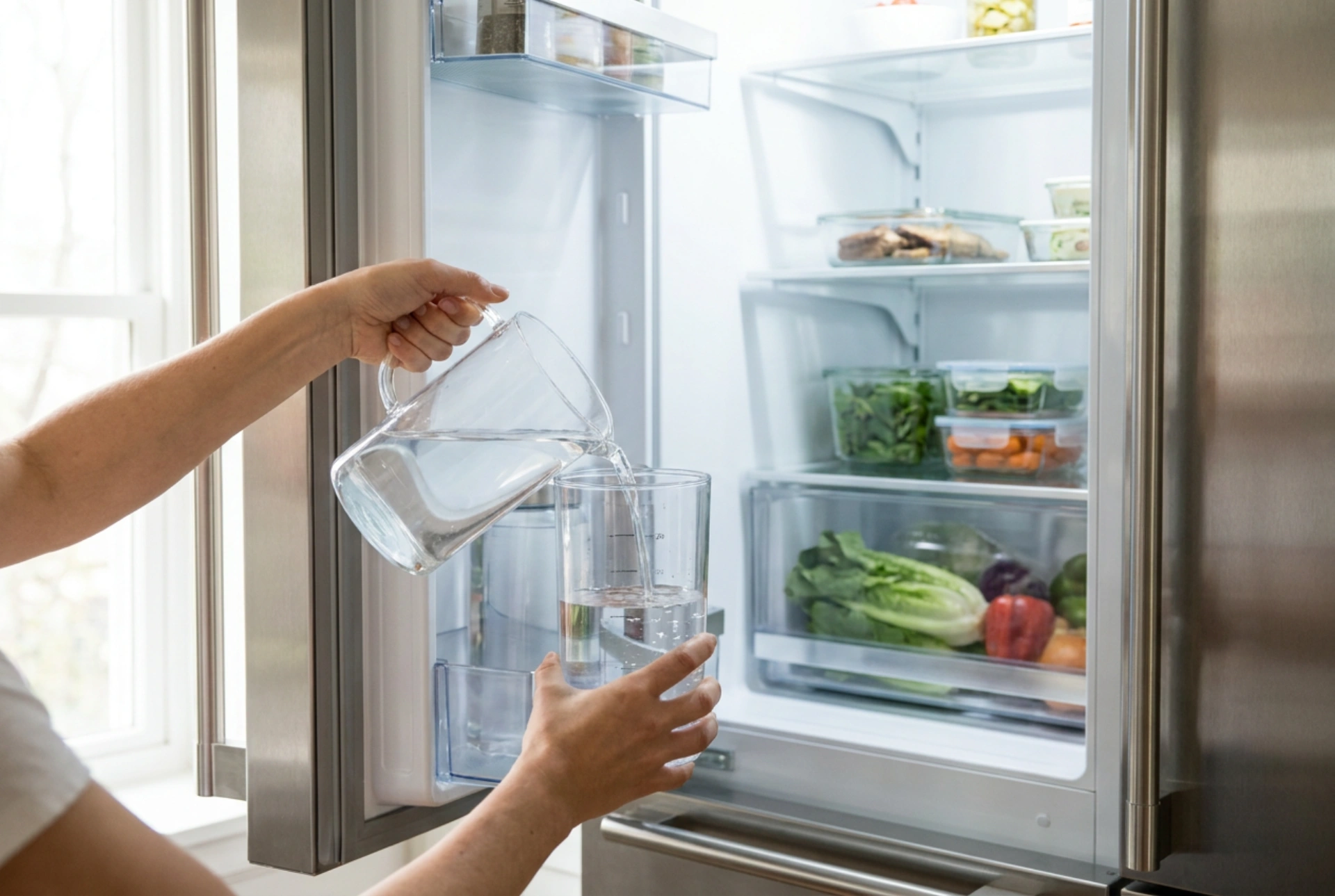
Unlike plumbed appliances that rely on external water pressure from your home's mains (typically 2 to 4 bar), a non-plumbed refrigerator relies entirely on a localized gravity feed or a small, low-voltage electric pump. When you fill the internal water reservoir—usually located on the refrigerator door or a dedicated shelf—the water rests in a food-grade plastic container, typically made of high-density polyethylene (HDPE).
Once the ice maker triggers a fill cycle, a miniature, low-wattage diaphragm pump activates. This pump draws water from the reservoir through a flexible silicone tube. Because there is no external pressure control, the volume of water delivered to the ice mold is determined by a timed cycle or a flow-metering sensor. The pump runs for a precise number of seconds, pushing exactly enough water to fill the individual mold cavities without overflowing. Gravity then assists in settling the liquid evenly across the horizontal freezing tray.
The Freezing and Harvesting Cycle
The transformation of liquid water into solid ice blocks relies on fundamental thermodynamics. The ice mold, usually constructed from aluminum or thermally conductive plastics, is positioned in the coldest zone of the freezer, where temperatures are kept below -18°C.
- Conduction and Freezing: Heat is extracted from the water through the conductive walls of the mold. Because non-plumbed systems often use static air freezing rather than active cold-blast freezing, the process takes slightly longer than in commercial units, usually around 90 to 120 minutes per batch.
- Thermal Sensing: A small thermistor (temperature sensor) attached to the underside of the mold monitors the temperature. Water expands as it freezes, and once the temperature of the mold drops to a specific target (usually around -10°C to -12°C), the sensor confirms that crystallization is complete and the ice is fully solid.
- The Harvest Phase: To release the cubes, the appliance initiates a harvest. Depending on the design, a small, low-wattage heating element beneath the mold turns on for a few seconds to slightly melt the outer microscopic layer of the ice cubes, reducing friction. Simultaneously, a motorized drive shaft rotates a set of plastic ejector blades or twists the flexible mold itself to push the cubes out of the tray and into the storage bin below.
Maintaining Hygiene and Preventing Biofilm
Without the continuous flow of pressurized, chlorinated mains water, non-plumbed reservoirs are highly susceptible to stagnant water and biofilm formation. Biofilm is a structured community of microorganisms embedded in a self-produced polymeric matrix, which can harbor bacteria and alter the taste of your ice.
To prevent this, the water reservoir must be cleaned regularly using household chemistry rather than abrasive commercial detergents. A mild solution of citric acid (about two tablespoons per litre of warm water) is ideal. Citric acid acts as a natural descaler and sanitizer, breaking down mineral deposits (calcium carbonate) and disrupting the cellular walls of bacteria.
Avoid using hot water above 50°C, as high temperatures can warp the food-grade plastic reservoir, compromising the airtight seals. After cleaning, the reservoir should be thoroughly rinsed with cold, filtered water and dried with a lint-free cloth to prevent rapid re-colonization of microbes.
Optimizing Ice Quality and Troubleshooting
The structural integrity and clarity of the ice depend heavily on water temperature and air circulation. Always fill the reservoir with chilled or room-temperature water. Pouring warm water into the tank raises the internal temperature of the refrigerator, forcing the compressor to work harder and slowing down the freezing cycle.
Ensure the freezer vents near the ice maker assembly are not blocked by frozen food packages. Constant laminar airflow is necessary to strip heat away from the mold efficiently. Furthermore, if your tap water has a high mineral content, dissolved calcium and magnesium will precipitate out during the freezing process, leaving a white, powdery residue in the mold and the ice cubes. Using pre-filtered water in the reservoir significantly reduces this scaling, prolonging the lifespan of the internal water pump and ensuring crystal-clear ice.