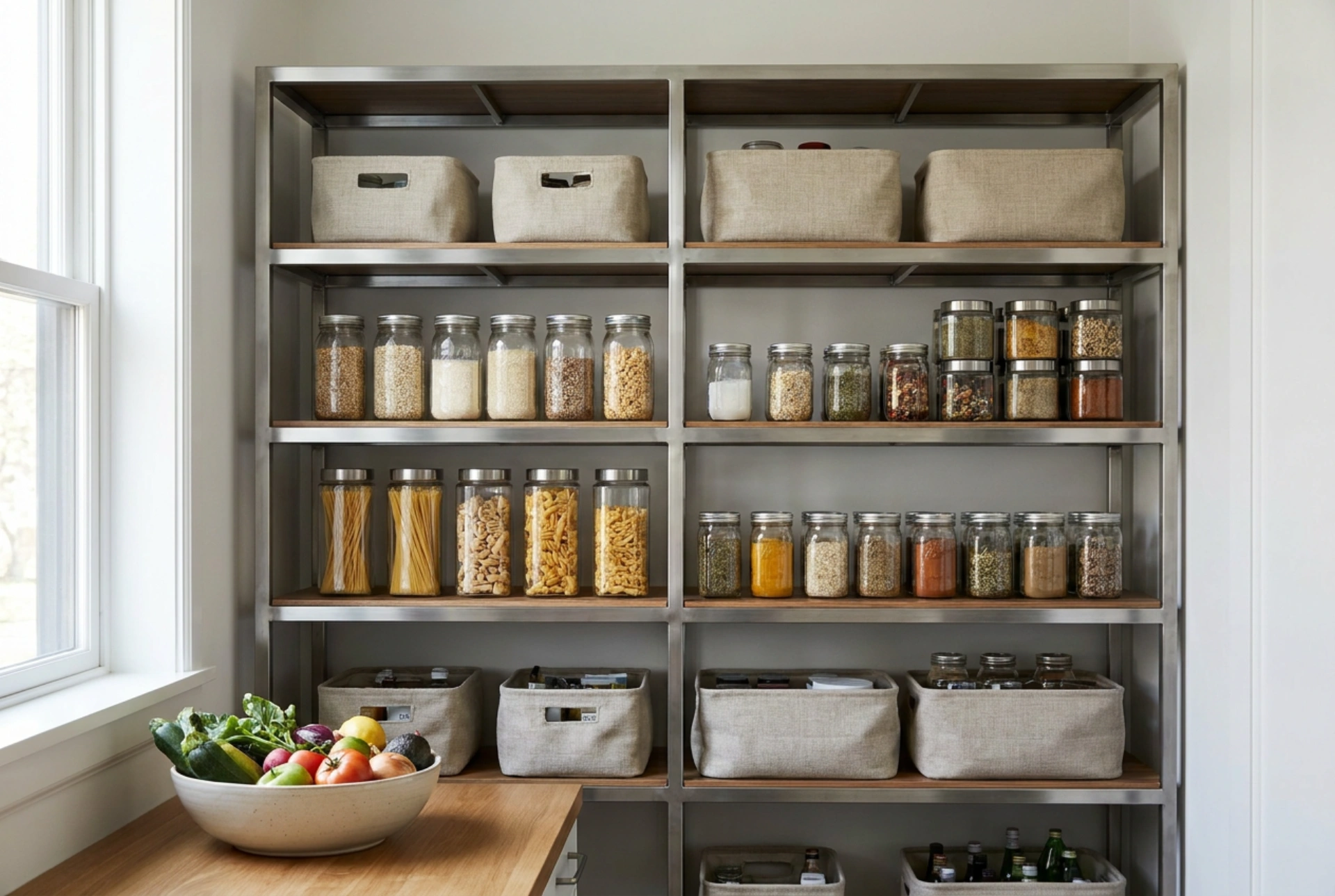


Utilizing industrial metal shelving for home pantry storage is one of the most effective ways to maximize vertical space, provided you understand the mechanical and environmental principles that govern heavy-load storage.
The Physics of Load Distribution and Shelf Stability
Metal shelving units, typically constructed from powder-coated steel or galvanized iron, possess exceptionally high tensile strength compared to wood or particle board. However, safety and longevity depend entirely on how weight is distributed across the vertical frame. To ensure structural stability and prevent the unit from bowing or tipping, you must lower the overall center of gravity.
- Bottom Shelves: Reserve this zone for high-density, heavy items. Bulk sacks of flour, gallons of water, cast iron cookware, and large crates of root vegetables belong here. Placing these items at the base stabilizes the unit against lateral forces.
- Middle Shelves: This area, positioned between waist and eye level, should hold medium-weight, high-frequency items. Canned goods, glass jars of preserved fruits, and daily-use baking supplies are ideal here for ergonomic access.
- Top Shelves: Assign the highest levels to lightweight, low-frequency items. Empty storage containers, paper products, and dry herbs are perfect choices, minimizing the risk of injury from falling heavy objects.
Environmental Control and Preventing Metal Corrosion
While metal shelves are highly durable, they are not completely impervious to chemical reactions. The two primary threats to metal shelving in a pantry environment are humidity-driven oxidation (rust) and chemical etching from spilled food acids. Carbon steel reacts with oxygen and moisture to form iron oxide, which degrades the metal's structural integrity over time.
To prevent this, ensure your shelves have a high-quality powder coating or a galvanized zinc finish. If a spill occurs—especially from acidic liquids like vinegar, citrus juices, or fermented preserves—neutralize the area immediately. Wipe the surface with a mild solution of sodium bicarbonate (baking soda) dissolved in water to neutralize the acid, then dry the surface completely. For wire shelves, incorporating food-grade, BPA-free polypropylene shelf liners provides a non-reactive physical barrier that catches spills before they reach the metal structure, preventing capillary action from trapping moisture against the frame.
Optimizing Microclimates and Air Circulation
Wire metal shelving offers a distinct thermodynamic advantage over solid wood shelves: unimpeded airflow. In a storage pantry, air stagnation leads to localized humidity spikes, creating an ideal breeding ground for mold spores and accelerating the spoilage of fresh produce.
By utilizing wire grids, ambient air can circulate freely around your supplies. This is critical when storing fresh produce like onions, garlic, and potatoes. However, you must also manage the chemical interactions between these plants. For example, onions release ethylene gas, a natural plant hormone that accelerates ripening and decay in neighboring crops, particularly potatoes. Utilize the open airflow of metal wire baskets placed on separate shelves to allow these gases to disperse safely into the room rather than concentrating around sensitive foods.
Material Chemistry of Storage Vessels
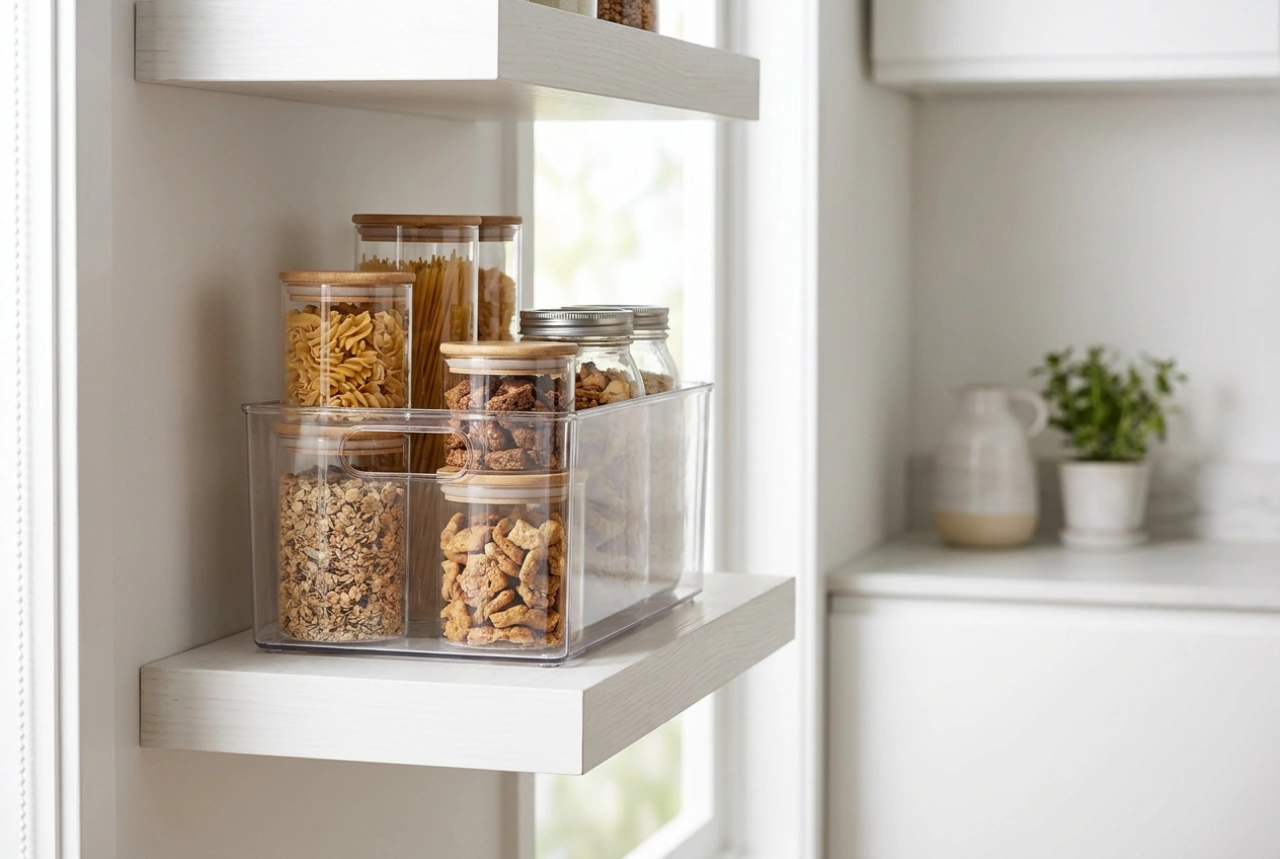
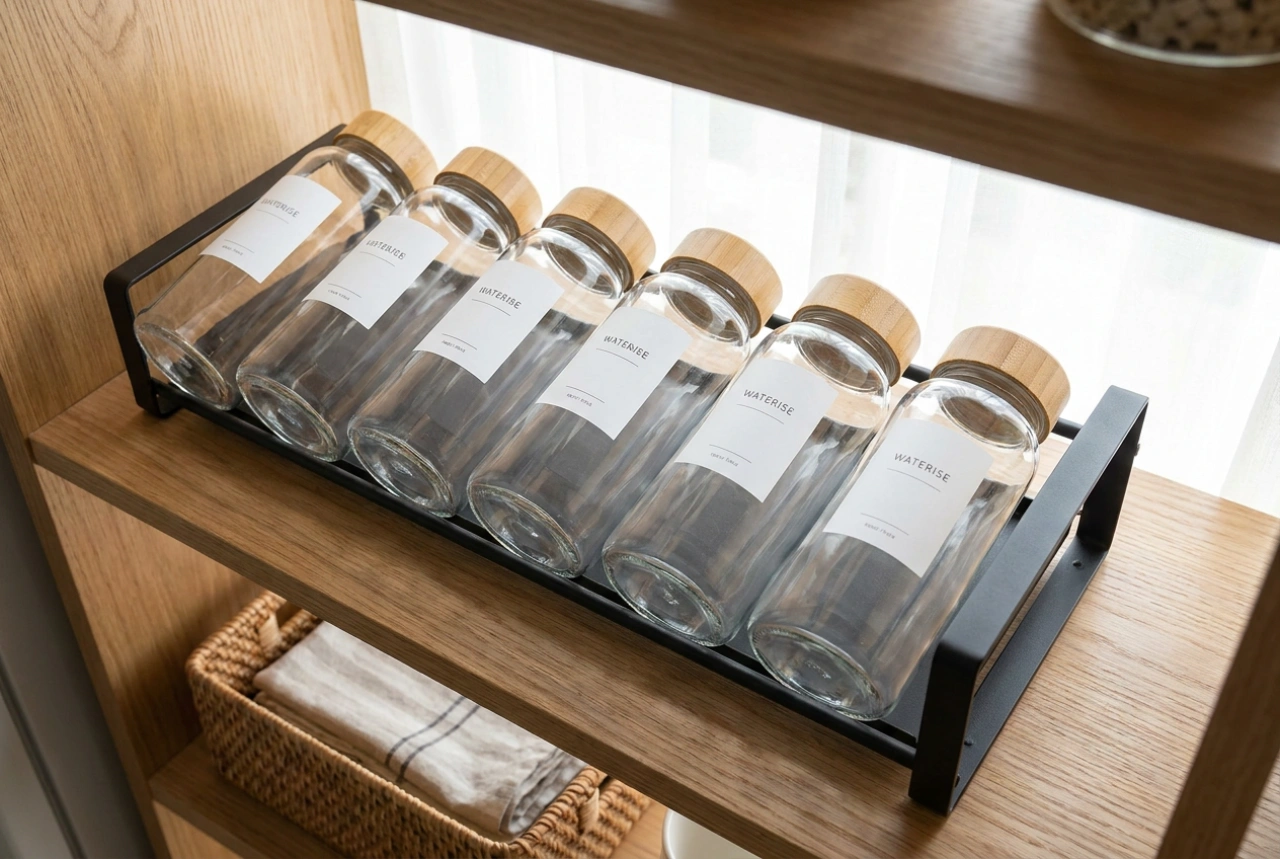
To maximize the utility of your metal shelving, choose storage containers that respect material chemistry. Standardize your dry storage using inert containers, such as soda-lime or borosilicate glass jars. Unlike certain plastics, glass does not leach synthetic polymers or absorb volatile organic compounds (VOCs) from the environment. It provides a non-porous, airtight barrier that blocks moisture absorption, keeping hygroscopic ingredients like sugar and salt from clumping.
When organizing these vessels, implement a strict FIFO (First In, First Out) rotational system. Arrange jars in neat columns from front to back, placing the oldest stock at the front. This physical queue ensures items are consumed before their nutritional value and chemical stability deteriorate.