

Managing a large family fridge-freezer requires more than just stacking containers; it demands an understanding of thermodynamics, humidity levels, and food microbiology to prevent waste and ensure food safety. By aligning your storage habits with the appliance’s natural temperature zones, you can significantly extend the shelf life of your ingredients.
Understanding Refrigeration Thermodynamics
Inside any standard refrigerator, air temperature is not uniform. Because warm air naturally rises and cold air sinks, the top shelves are warmer than the bottom shelves. The coldest zone is always the lower shelf, directly above the vegetable drawers, whereas the door shelves experience the highest temperature fluctuations every time the door is opened. Storing highly perishable items like raw meat and dairy on the door shelves accelerates bacterial growth, while placing them on the bottom shelf maintains their structural integrity and freshness.
The Science of Humidity Drawers
Modern family refrigerators feature crisper drawers designed to regulate moisture levels. Understanding the difference between high and low humidity zones is essential for preserving fresh produce. High-humidity drawers seal off airflow, trapping water vapour. This environment is perfect for leafy greens, broccoli, and cucumbers, which are prone to wilting. Low-humidity drawers, on the other hand, allow moisture to escape. This is crucial for ethylene-producing fruits like apples, pears, and stone fruits. Keeping these groups separated prevents ethylene gas from prematurely ripening and rotting your vegetables.
Preventing Cross-Contamination and Managing Shelves
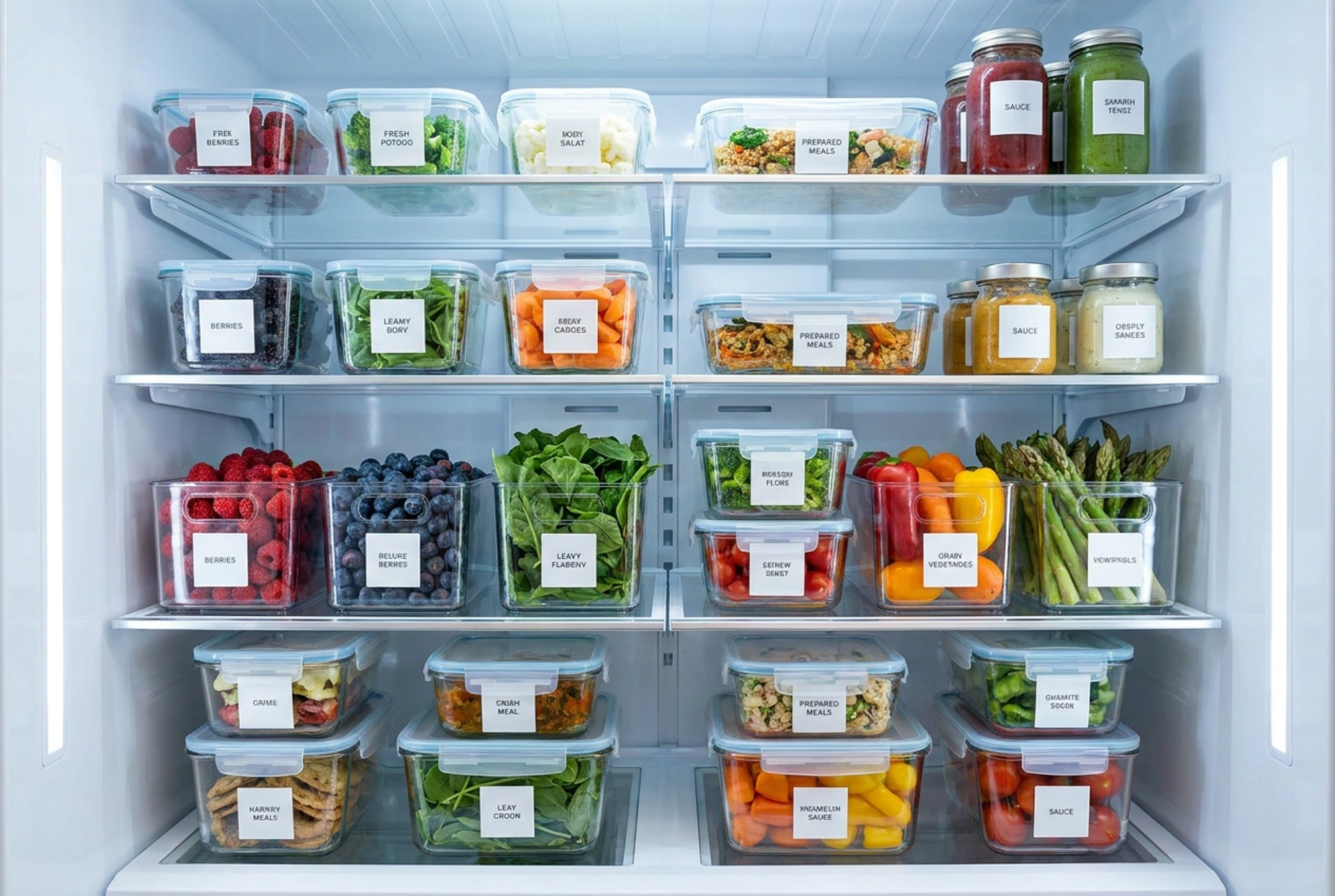
Systematic placement prevents physical and biological cross-contamination. Ready-to-eat foods, leftovers, and cooked meals should always occupy the upper shelves, where the temperature is stable and there is no risk of raw food juices dripping onto them. Raw meats, poultry, and seafood must be sealed in airtight glass containers and placed on the absolute bottom shelf. This structure utilises gravity to protect your other food items from accidental leaks of harmful bacteria like Salmonella.
Optimising the Freezer’s Thermal Mass
A freezer operates most efficiently when it is well-stocked. Solid frozen items act as ice packs, helping to maintain a low temperature and reducing the energy required to cool the air after the door has been opened. However, blocking the cold air vents will restrict air circulation, leading to uneven freezing. To organise a large family freezer, use square or rectangular glass containers to maximise space and stack items by category. Label everything with dates using washable markers, adhering to the first-in, first-out principle to prevent freezer burn and chemical degradation of nutrients over time.
Establishing a Family-Friendly Layout
To maintain temperature stability, minimise the duration the refrigerator door stays open. Create a dedicated children's shelf at eye level containing healthy snacks, pre-portioned yoghurts, and drinks. This targeted access prevents family members from rummaging through the entire fridge, which introduces warm, humid room air. When warm air enters, it condenses on cold surfaces, leading to moisture build-up that promotes mould growth. A logical, visible system keeps the internal climate stable and reduces household energy consumption.