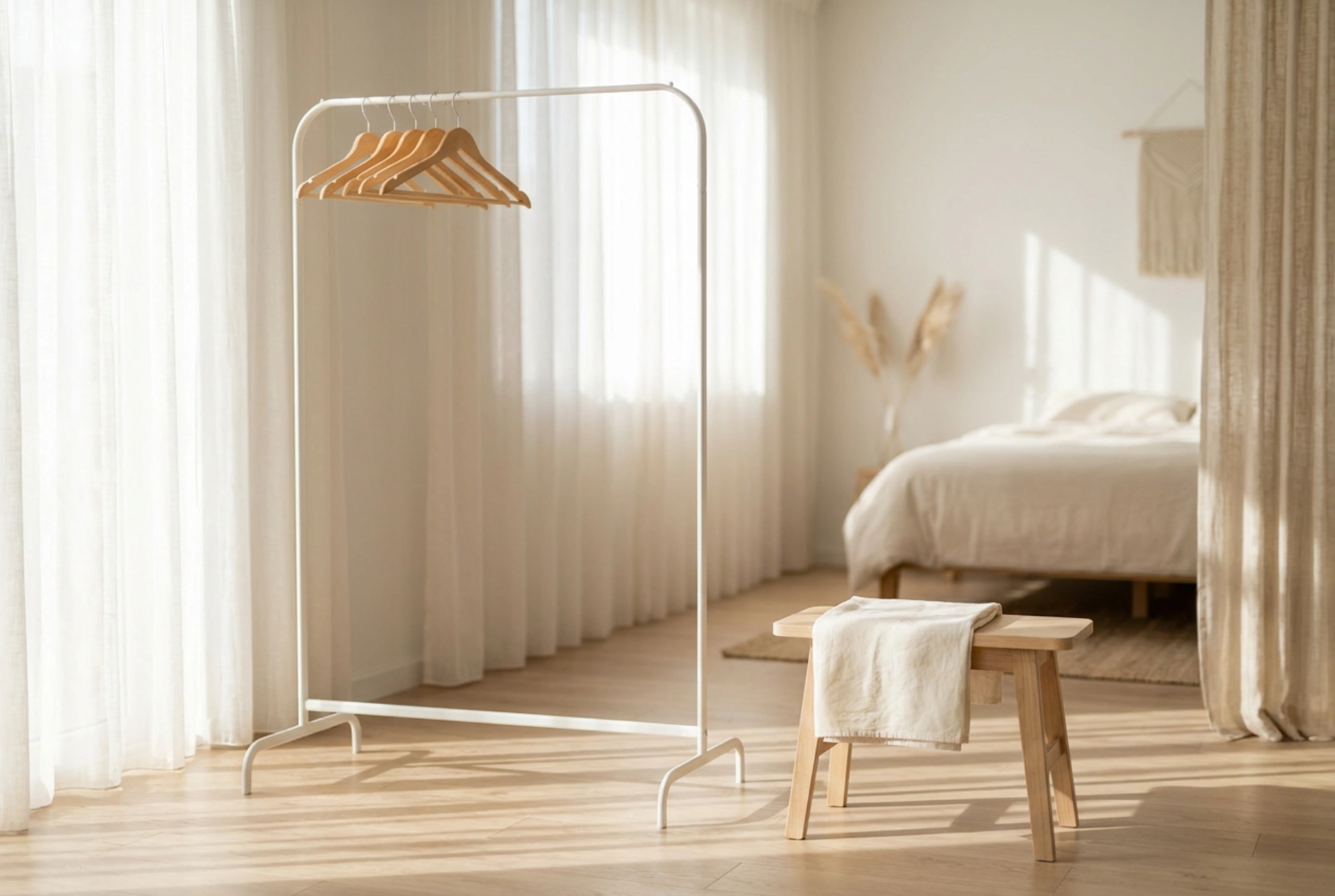


High-quality white clothes racks add a minimalist aesthetic to a room, but they are highly susceptible to yellowing caused by UV light, environmental pollutants, and sebum accumulation. Understanding the chemistry behind this degradation allows you to implement a targeted maintenance routine that preserves the pristine white finish.
The Chemistry of Yellowing: Why White Surfaces Discolour
The yellowing of white furniture, whether it is powder-coated metal, painted wood, or polymer, is primarily driven by three factors: photodegradation, thermal oxidation, and lipid accumulation. When materials are exposed to ultraviolet (UV) radiation from sunlight, the energy breaks down the chemical bonds within the protective polymers or paint binders. This process, known as photo-oxidation, creates free radicals that rearrange into light-absorbing chemical groups called chromophores. These chromophores absorb light in the blue spectrum, causing the surface to appear yellow to the human eye.
Thermal oxidation occurs when the rack is placed near heat sources, such as radiators. Heat accelerates the degradation of the coating, making it more porous and susceptible to staining. Additionally, daily handling transfers natural skin oils (sebum) and sweat to the surface. These organic lipids undergo oxidation over time, turning into a stubborn, yellow-brown film that binds with airborne dust and pollen.
Choosing the Right Cleaning Agents: Avoiding Chemical Damage
Maintaining a white clothes rack requires avoiding aggressive chemical agents that strip or degrade the protective top layer. Many homeowners mistakenly turn to harsh chlorine bleach or ammonia-based cleaners to restore whiteness. However, these strong chemicals can actually initiate polymer degradation, leading to rapid, irreversible yellowing of plastics and polyurethane paints. Abrasive powders and scrubbing pads should also be avoided, as they create microscopic scratches that trap dirt and increase the surface area exposed to oxygen and UV light.
Instead, the optimal approach relies on mild surfactants. A solution of warm water and a few drops of a neutral, fragrance-free dish soap or castile soap is highly effective. Surfactants work at a molecular level, featuring a hydrophilic (water-loving) head and a hydrophobic (oil-loving) tail. When applied to the rack, the hydrophobic tails attach to lipid deposits and grease, lifting them from the surface to be suspended in the water and wiped away safely.
Safe Restoration of Yellowed Surfaces
If mild yellowing has already occurred, you can reverse the process using mild oxidizing agents that target the chromophores without damaging the substrate. Sodium percarbonate (commonly known as oxygen bleach) or a low-concentration hydrogen peroxide solution (3%) are ideal for this purpose. Unlike chlorine bleach, oxygen-based bleaches break down into water and active oxygen, which gently oxidizes and breaks the double bonds of the yellowing chromophores, rendering them colourless.
- Preparation: Dissolve one tablespoon of sodium percarbonate in a litre of warm water, or use a 3% hydrogen peroxide solution directly.
- Application: Dampen a soft microfiber cloth with the solution and apply it evenly to the yellowed areas. For stubborn spots, lay a soaked cloth over the area for 10 to 15 minutes to allow the oxygen molecules to penetrate the grime.
- Rinsing: Thoroughly wipe the surface with a clean, water-dampened cloth to remove any chemical residue, which could otherwise degrade the surface under subsequent UV exposure.
- Drying: Immediately dry the rack with a soft towel to prevent moisture from pooling, which can cause micro-corrosion on metal joints.
Strategic Placement and Preventative Habits
Prevention is the most effective strategy for maintaining a pristine white finish over the long term. Simple adjustments in placement and handling can significantly reduce the rate of chemical and physical degradation.
- UV Shielding: Position the clothes rack away from direct sunlight. If it must stand near a window, use UV-filtering window films, sheer curtains, or blinds to block the most damaging wavelengths of light.
- Distance from Heat: Ensure a minimum distance of one metre from radiators, heaters, or hot-air vents to prevent thermal oxidation of the paint or powder coating.
- Regular Dusting: Dust acts as a catalyst for moisture and chemical reactions. Use a dry microfiber cloth weekly to remove electrostatic dust particles before they bind with humidity.
- Mindful Handling: Try to handle the rack by wooden or non-painted contact points if available, or clean the main handle areas monthly with a mild surfactant solution to prevent sebum build-up.