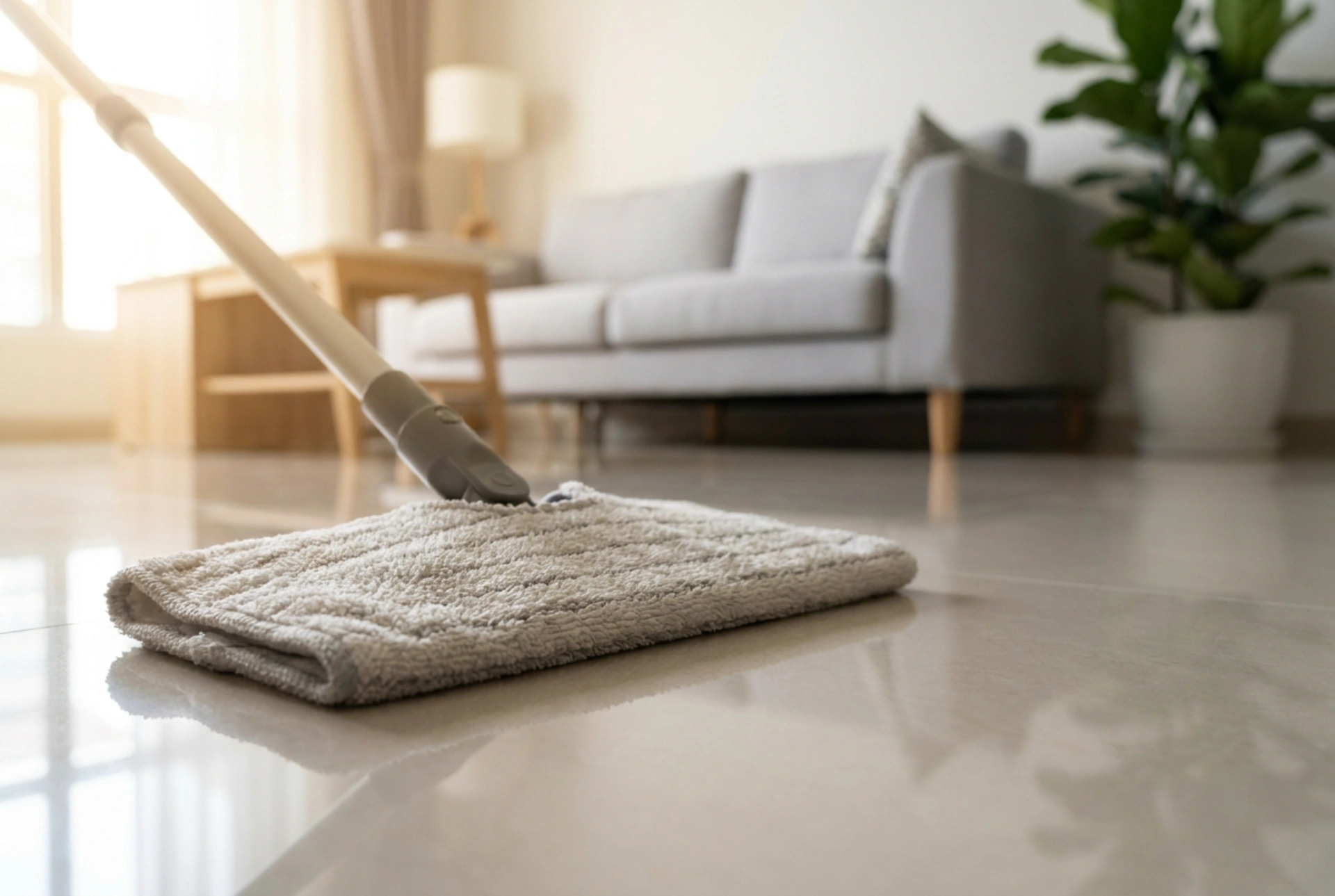


Steam cleaning tiles relies on a precise balance of heat, moisture, and capillary action. Understanding how a clean microfibre pad interacts with vaporized water and tile glaze is the key to preventing streaks and ensuring a truly hygienic finish.
The Physics of Steam and Microfibre Absorption
Steam mops do not wash floor tiles in the traditional sense; they loosen dirt through thermal energy and transfer it to a textile medium. When water vapour at over 100 degrees Celsius hits the cold surface of a ceramic or porcelain tile, it condenses instantly. This rapid phase transition from gas to liquid releases latent heat, which softens grease, emulsifies oily residues, and breaks the electrostatic bonds holding dust to the tile. However, once the dirt is suspended in this thin layer of hot water, it must be immediately absorbed. This is where the microfibre pad comes in. Made of a polyester and polyamide blend, microfibres are split to create microscopic channels. These channels rely on capillary action to draw moisture and suspended soil away from the tile surface and lock them deep within the fabric structure, rather than pushing them around.
The Saturation Limit and Streak Formation
A dirty or saturated mop pad cannot perform this capillary exchange. As you glide the steam mop across the floor, the microfibre pores quickly fill with dirt particles and condensed water. Once the pad reaches its maximum absorption capacity, a tipping point occurs: instead of lifting dirt, the pad begins to drag the captured particulate matter and emulsified oils across the floor. As the steam heat evaporates the remaining moisture, it leaves behind a thin, microscopic layer of residue. On polished porcelain or glossy glazed ceramic tiles, this residue manifests as unsightly streaks, cloudy patches, or a sticky film that actually attracts new dust and soil faster than before. To prevent this, the density of the textile must remain receptive to moisture throughout the entire cleaning process.
Fabric Degradation and the Impact of Wash Cycles
Maintaining the effectiveness of your steam mop pads requires an understanding of polymer chemistry. Microfibres are highly sensitive to heat and chemical binders. Washing pads at excessively high temperatures (above 60 degrees Celsius) or using fabric softeners can ruin their structure. Fabric softeners coat the synthetic fibres with a thin layer of lubricating lipids, which completely clogs the microscopic channels and destroys their capillary absorption capacity. To keep pads performing optimally, wash them with a simple liquid detergent free of optical brighteners and softeners, and opt for air drying to prevent the polyester fibres from melting or fusing together in a hot tumble dryer. Using oxygen-based bleaching agents can help sanitize the pads without damaging the synthetic polymers.
Optimal Cleaning Technique and Rotation
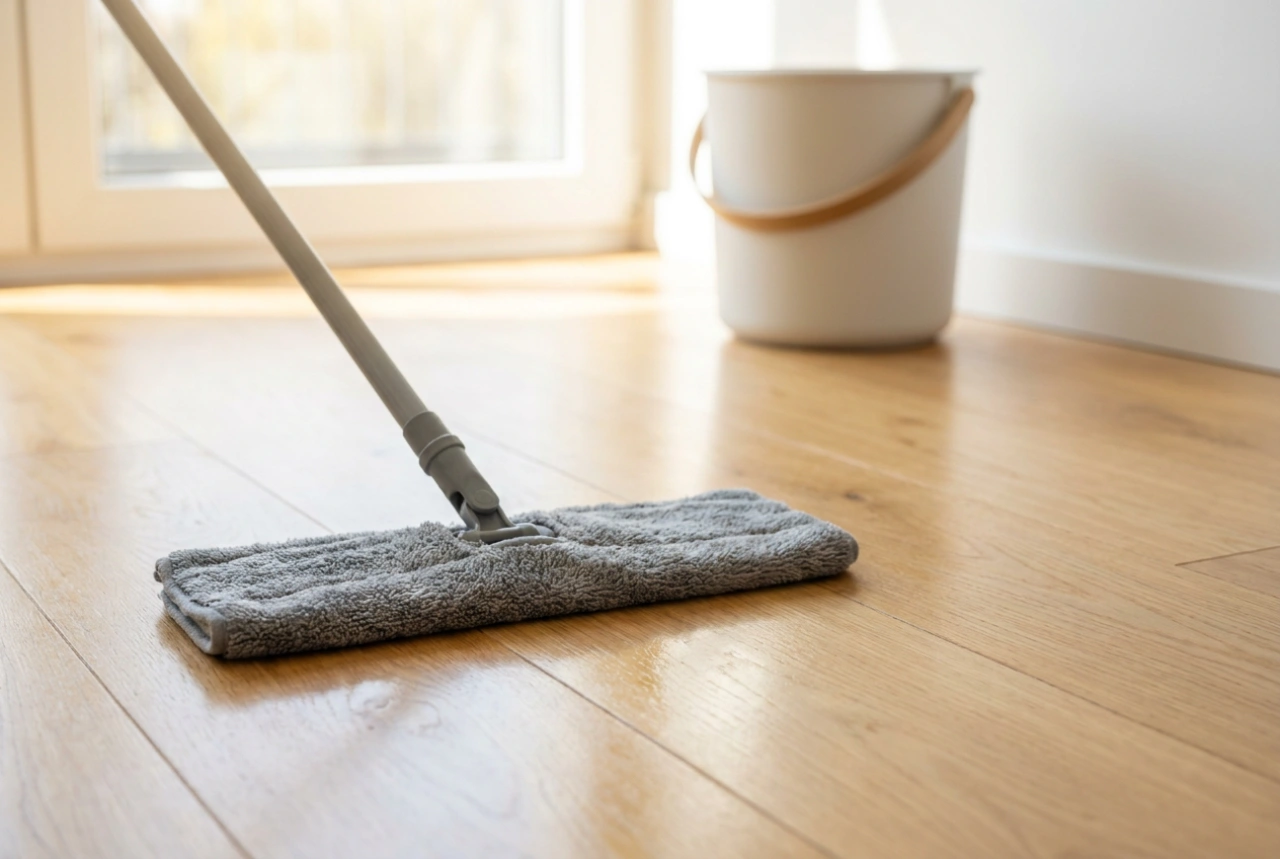
To achieve streak-free tiles, you must manage both the temperature of the steam and the saturation of the pad. Always start with a dry, clean pad. Pre-sweeping or vacuuming the floor is an absolute prerequisite; steam mops are designed for deep sanitisation and micro-particle removal, not for sweeping up loose grit, which can act as an abrasive under the pressure of the mop head. For a standard-sized living space, expect to change the pad at least once or twice. As soon as you notice the mop gliding with more resistance, or if the tile surface remains damp for more than thirty seconds after passing, the pad has reached its saturation limit and must be replaced immediately with a fresh, dry one. This prevents dirty water from pooling in the grout lines and causing long-term discolouration.