

Maximising wardrobe space while preserving the structural integrity of your footwear requires a systematic approach to shoe organisation based on material science and physics. Proper positioning prevents mechanical deformation, optimises airflow, and mitigates the accumulation of moisture and microbial pathogens.
The Physics of Shoe Storage: Airflow and Moisture Control
Every shoe, whether crafted from natural full-grain leather, vulcanised rubber, or synthetic polymer mesh, retains ambient and physiological moisture after wear. Storing footwear in an unventilated, cramped space creates a microclimate highly conducive to bacterial proliferation and fungal growth. When shoes are packed tightly together, air circulation is restricted, slowing down the natural evaporation of moisture.
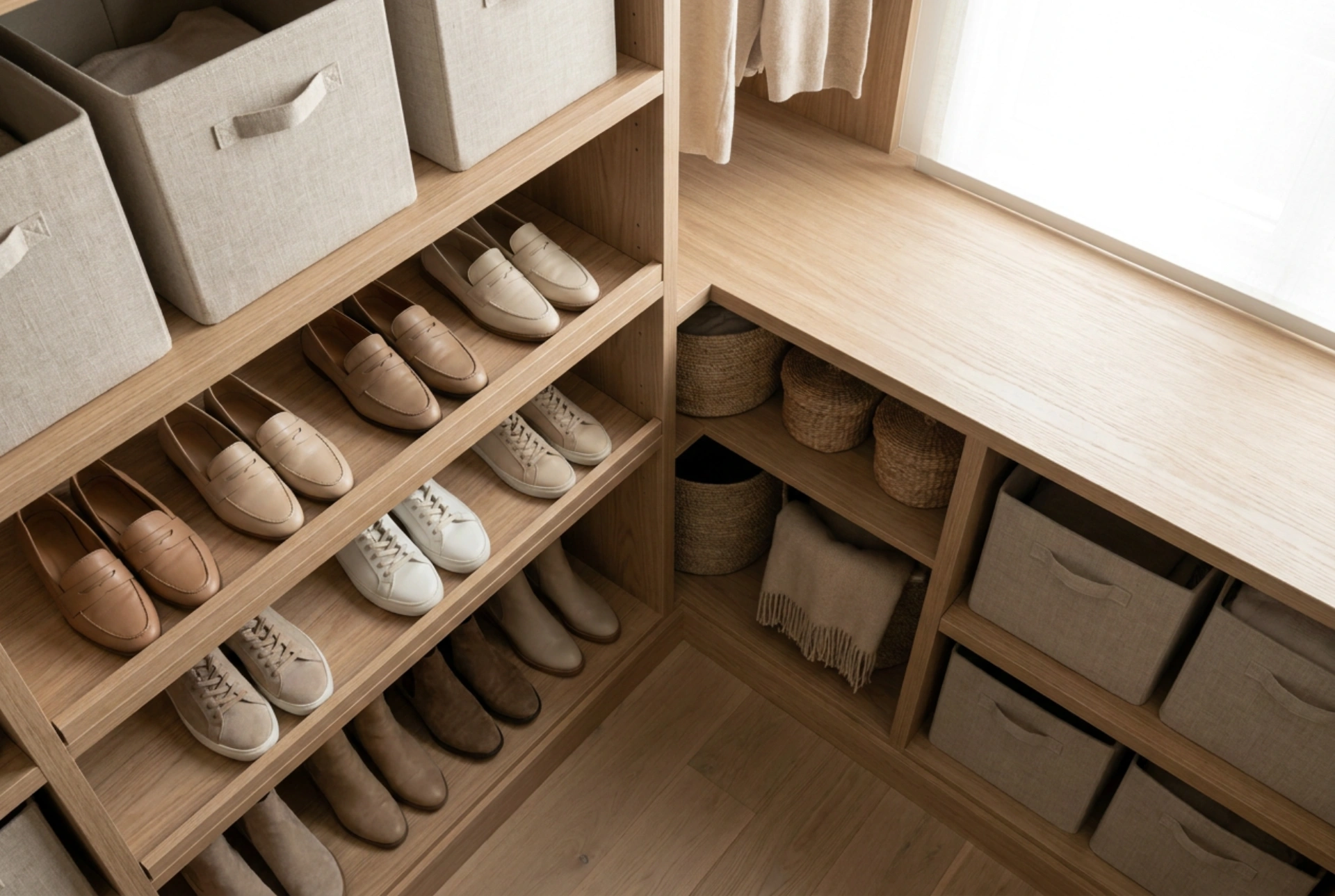
To prevent material hydrolysis—where moisture breaks down chemical bonds in polyurethane soles—and to stop leather from rotting, shoes need a continuous, gentle flow of air. An effective wardrobe organiser must facilitate this by maintaining a physical gap of at least two to three centimetres between each pair. Elevating shoes off the wardrobe floor on slatted or perforated shelves allows cooler, denser air to circulate underneath the soles, accelerating drying times and preventing musty odours.
Material Selection: Choosing the Right Organizer
The physical properties of your shoe organiser directly impact the preservation of your footwear.
- Non-woven synthetic fabrics: Breathable canvas or polypropylene hanging organisers are ideal for lightweight shoes, such as canvas trainers or slippers. The porous nature of these materials allows moisture to escape readily, though they offer limited structural protection.
- Thermoplastic polymers (Polypropylene and Acrylic): Rigid, transparent boxes protect shoes from dust and physical crushing. However, because these plastics are completely impermeable, they must feature integrated ventilation holes to prevent condensation. They are highly suitable for high-end leather footwear, provided the shoes are completely dry before insertion.
- Powder-coated metals and wood: Slatted metal or sealed wooden racks provide the most robust structural support. Metal is inert and easy to sanitise, while sealed wood offers structural stability without transferring natural oils or resins to the shoe outsoles.
The Geometry of Space Saving: Staggering and Gravity
To double the capacity of a standard wardrobe shelf without crushing your footwear, implement the alternating orientation technique. Placing one shoe facing forward (toe out) and its partner facing backward (heel out) exploits the natural wedge shape of most footwear. Because the widest part of the toe box rests adjacent to the narrowest part of the heel, this geometric arrangement reduces the required lateral shelf width by up to thirty percent per pair.
Furthermore, load distribution is critical for wardrobe stability. Heavy boots, which exert high gravitational force, should always occupy the lowest shelves. This lowers the overall centre of gravity of the organiser, preventing tipping. Lightweight footwear, such as sandals and plimsolls, should be positioned on higher tiers or in suspended pockets.
Systematic Rotation and Hygiene Protocol
An organized wardrobe relies on a strict operational order. Before placing any footwear into a semi-enclosed organiser, it must undergo a dry-cleaning process. Use a horsehair brush to remove abrasive particulate matter (silica, dirt) which can physically degrade shoe fabrics and scratch adjacent surfaces.
To maintain hygiene, categorise shoes by usage frequency and seasonal requirements. Store off-season footwear on the highest, least accessible shelves, wrapped in acid-free tissue paper to prevent yellowing or chemical migration from synthetic glues. Ensure that shoes are never stored damp; let them air out in a well-ventilated room for twenty-four hours post-wear before returning them to their designated slots in the organiser.