

Maximising floor space in a child's bedroom requires strategic use of vertical surfaces, where hanging shelves serve as both functional storage and developmental tools. By understanding the ergonomics of child-reach zones and the material physics of wall-mounted structures, you can create an organised, safe, and stimulating environment.
The Ergonomics of Vertical Zones in Children's Bedrooms
When planning the placement of wall shelves, it is essential to divide the wall space into three distinct ergonomic zones based on the child's height. The lower zone, located from the floor to the child's waist height, is the active reach zone. Shelves installed here should hold daily-use items such as soft toys, building blocks in lightweight fabric bins, and frequently read books. Placing items here encourages independence and fine motor skills as the child learns to retrieve and return objects voluntarily.
The middle zone, extending from the waist to eye level, is the supervised zone. This area is ideal for items that require parental guidance, such as puzzles with small pieces, art supplies, or delicate wooden figures. The upper zone, which sits well above the child's reach, acts as a safety and aesthetic zone. This space should be reserved for seasonal storage, decorative elements, or heavier items that pose a risk if pulled down. By adhering to this zoning, you prevent physical strain and eliminate the temptation for children to climb furniture.
Material Science: Selecting the Right Shelving Materials
The structural integrity of a hanging shelf depends heavily on its material composition. Solid hardwood, such as oak or beech, offers superior tensile strength and resistance to bending under load. Hardwood shelves are less prone to sagging over time, making them suitable for storing heavy children's books, which can exert significant static pressure. Engineered wood, like medium-density fibreboard, is a uniform material without natural knots, offering excellent stability; however, it has lower moisture resistance and can sag under concentrated loads if not properly supported.
For safety, always consider the weight distribution of objects placed on the shelf. The centre of gravity should be kept as close to the wall as possible. Placing heavier items at the back of the shelf reduces the rotational torque exerted on the wall brackets, minimising the risk of wall anchor failure. Additionally, choosing shelves with a front lip or railing prevents objects from sliding off due to vibrations or accidental bumps.
Optimising Storage: Book Rotation and Bin Systems
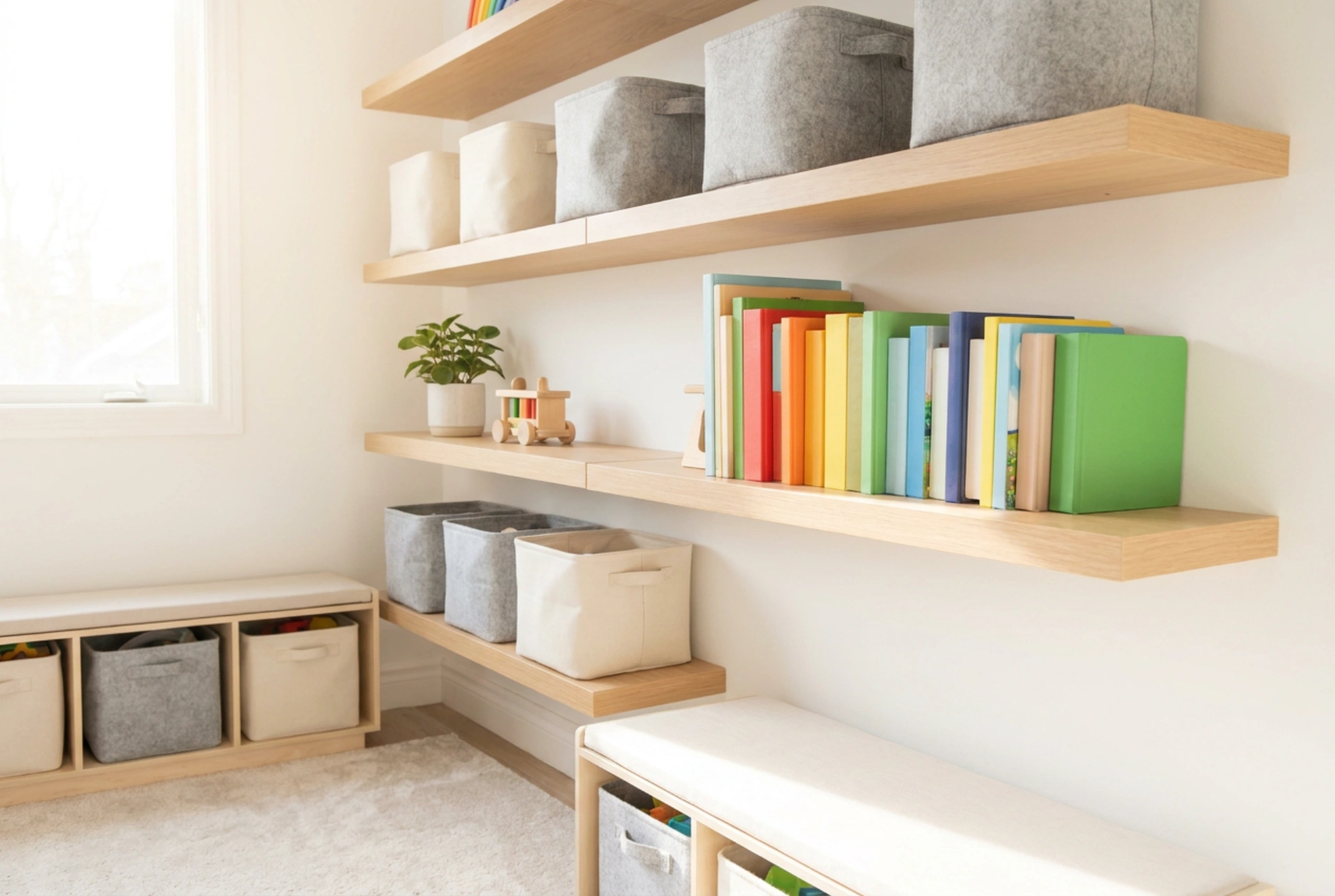
Open shelving can quickly become visually cluttered, which can overwhelm a child's sensory system. To prevent this, employ a book rotation system and integrated bin storage. Displaying books with their covers facing forward, rather than their spines, leverages a child's visual-spatial recognition. This technique mimics natural learning environments and significantly increases a child's engagement with reading materials.
For loose toys, integrate lightweight fabric or felt bins onto the shelves. Fabric bins are preferable to heavy plastic or wooden boxes because they reduce the risk of injury if dropped from a height. These containers should be sized precisely to match the shelf depth to maintain a clean visual line. Grouping toys by category within these bins simplifies the cognitive process of tidying up, turning a chore into a straightforward sorting task based on shapes and classes of objects.
Dust Control and Material Maintenance
Hanging shelves are highly exposed to dust accumulation, which can affect indoor air quality. Static electricity often attracts airborne dust particles to synthetic surfaces like laminates and plastics. To mitigate this, choose natural wood shelves treated with non-toxic, anti-static plant-based oils or water-based varnishes. These finishes seal the wood pores, preventing dust from adhering deeply into the wood grain.
When cleaning, avoid dry dusting, which merely redistributes particles into the air. Instead, use a damp microfibre cloth. The microfibres carry a slight positive charge that attracts negatively charged dust particles, trapping them within the cloth fibres. For stubborn grime, a mild solution of warm water and a small amount of neutral vegetable-based soap is sufficient to clean the surface without degrading the protective finish.