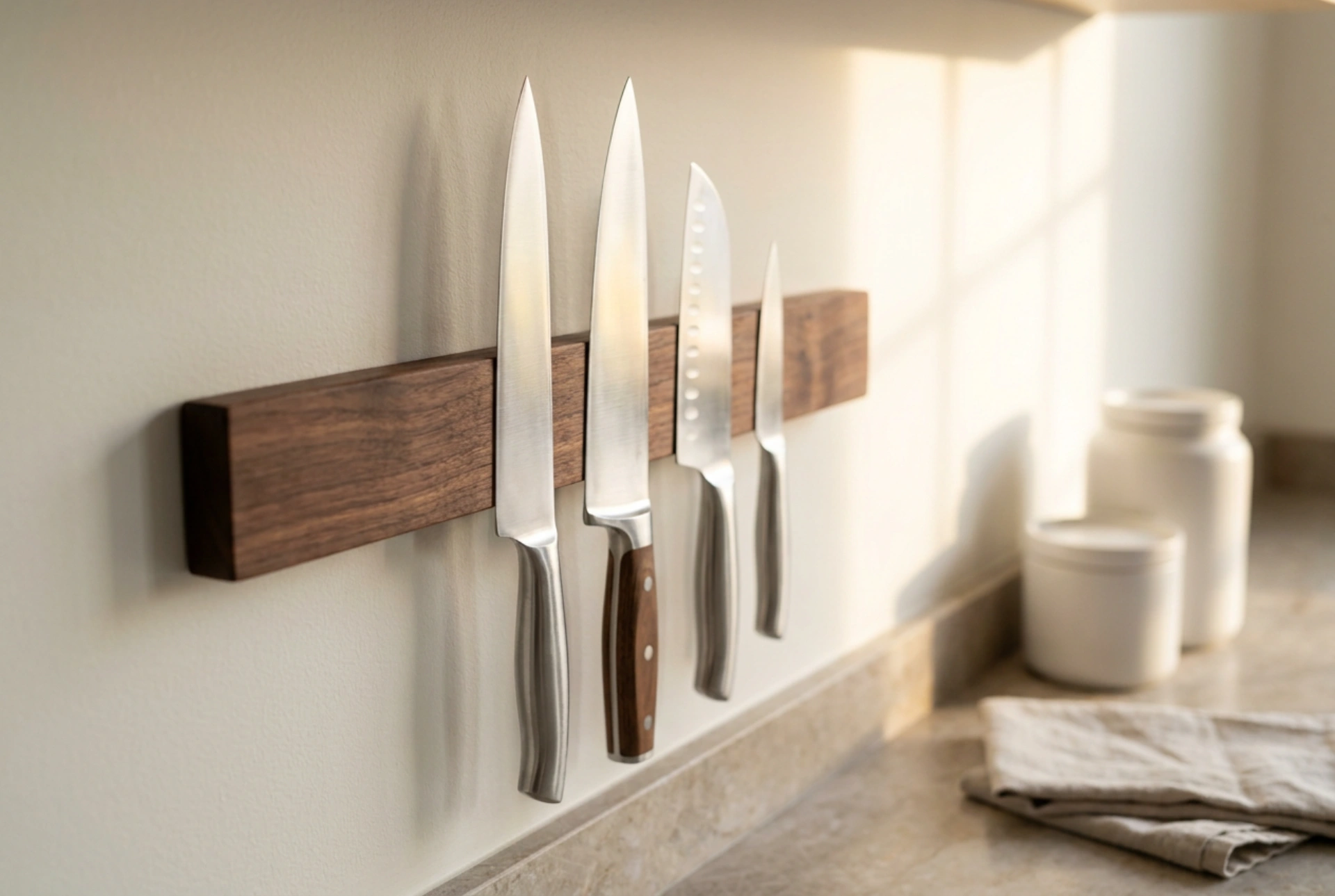


Storing high-quality kitchen knives on a magnetic strip is an excellent way to preserve their sharpness and keep them within arm's reach, provided you master the physical techniques of placement and understand the materials involved.
The Physics of Knife Steel and Magnetic Force
Not all stainless steel is magnetic, which is a critical detail when selecting knives for a magnetic holder. Kitchen knives are typically made from martensitic stainless steel (such as 400-series alloys, chromium-molybdenum-vanadium steel). This steel has a specific crystalline structure that makes it highly ferromagnetic. In contrast, austenitic stainless steel (such as the 304 or 18/10 steel used in many pots and pans) contains nickel, which alters the crystal lattice and renders it non-magnetic. Before mounting any knife, verify its magnetic attraction over a soft surface to ensure the magnetic pull is strong enough to hold the weight of the bolster and handle.
The Pivot Technique: Protecting the Cutting Edge
The most common cause of knife damage on magnetic strips is micro-chipping, which occurs when the delicate, razor-thin cutting edge collides with the hard surface of the magnet. To prevent this, you must train your muscle memory to use the "spine-first" pivot technique:
- Approach spine-first: Bring the knife to the strip leading with the spine—the thick, blunt back of the blade.
- Engage and pivot: Once the spine makes contact with the magnetic field, gently roll the flat of the blade onto the surface.
- Controlled release: Let go only when you feel the magnetic force fully capture the body of the blade.
- Roll to remove: To remove the knife, reverse the process. Peel the cutting edge away from the strip first by twisting the spine against the holder, breaking the magnetic seal before pulling the knife away.
Orientation and Gravity: Handle Up or Handle Down?
The direction of your knives on a magnetic strip affects both safety and ergonomics. Gravity acts on the heaviest part of the knife, which is typically the handle and the bolster. If you mount knives with the handles pointing upward, the center of gravity is high, making the knife prone to pivoting or slipping if bumped. Therefore, storing knives with the handles pointing downward is generally safer because the bolster acts as a physical stop against the top edge of the magnetic strip, preventing the knife from sliding downward. If your strip is mounted high above the countertop, ensure there is sufficient clearance below so that your hand does not accidentally brush against other blades when reaching for a handle.
Preventing Galvanic Corrosion and Moisture Damage
Kitchen environments are highly humid, which introduces the risk of electrochemical reactions. When two dissimilar metals—such as the steel of your knife and the metal housing of a magnetic strip—touch in the presence of moisture (even microscopic condensation), galvanic corrosion can occur. This leads to pitting on your blades and discoloration on the strip. To prevent this chemical reaction, follow these rules:
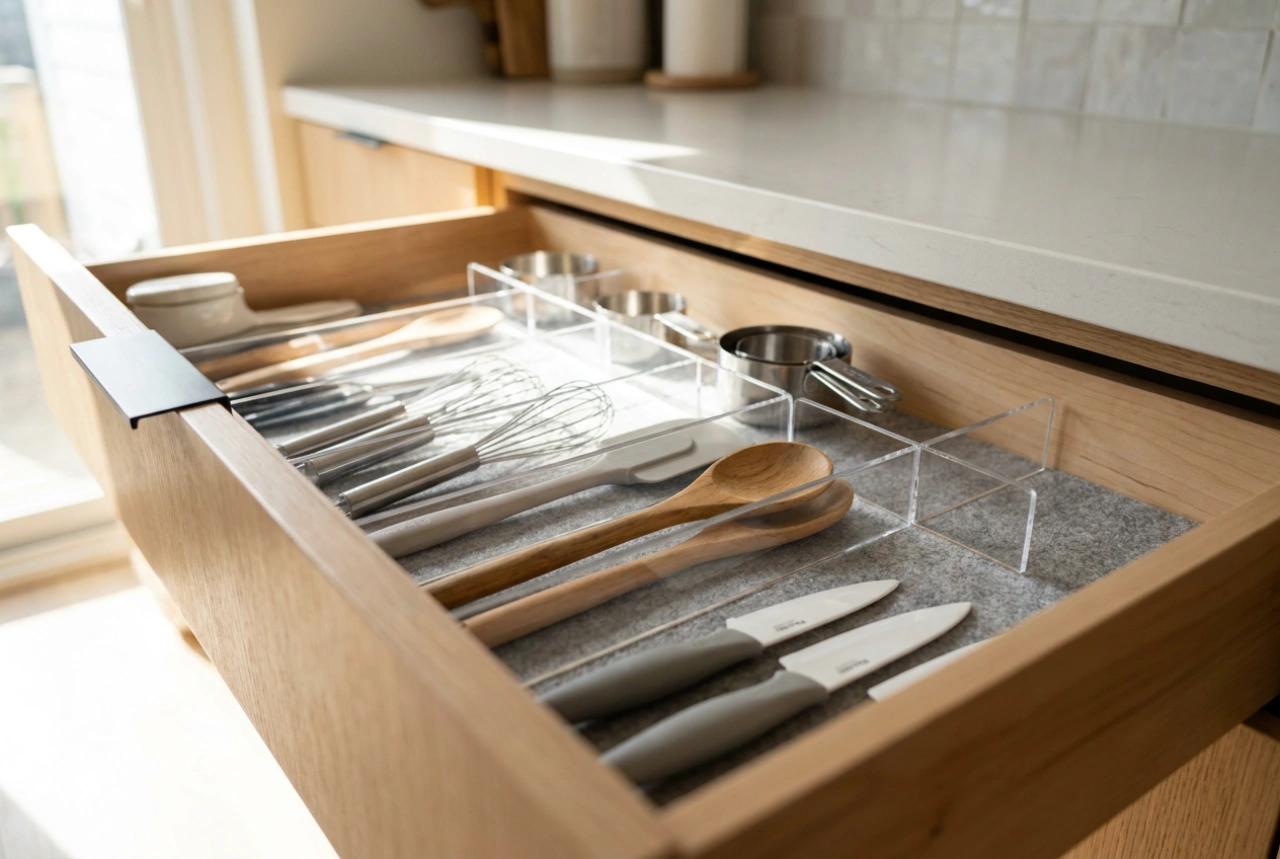
- Bone-dry storage: Never place a damp or even slightly moist knife onto a magnetic strip. Dry each blade thoroughly with a microfiber cloth immediately after washing.
- Wooden or silicone sheaths: Consider using magnetic strips encased in hardwood (like walnut or oak) or soft silicone. These materials act as physical barriers that prevent metal-on-metal contact, eliminate the risk of galvanic corrosion, and soften the impact when placing the knife.
Sizing, Spacing, and Weight Distribution
Overloading a magnetic strip compromises its safety. Always leave at least two to three centimeters of space between each knife. This spacing prevents the blades from knocking against one another and ensures your fingers have enough clearance to safely grip a handle without touching an adjacent blade. Position heavier knives, like cleavers or heavy chef's knives, directly over the magnetic anchors or mounting screws where the strip is physically sturdiest, while reserving the outer edges for lighter utility or paring knives.