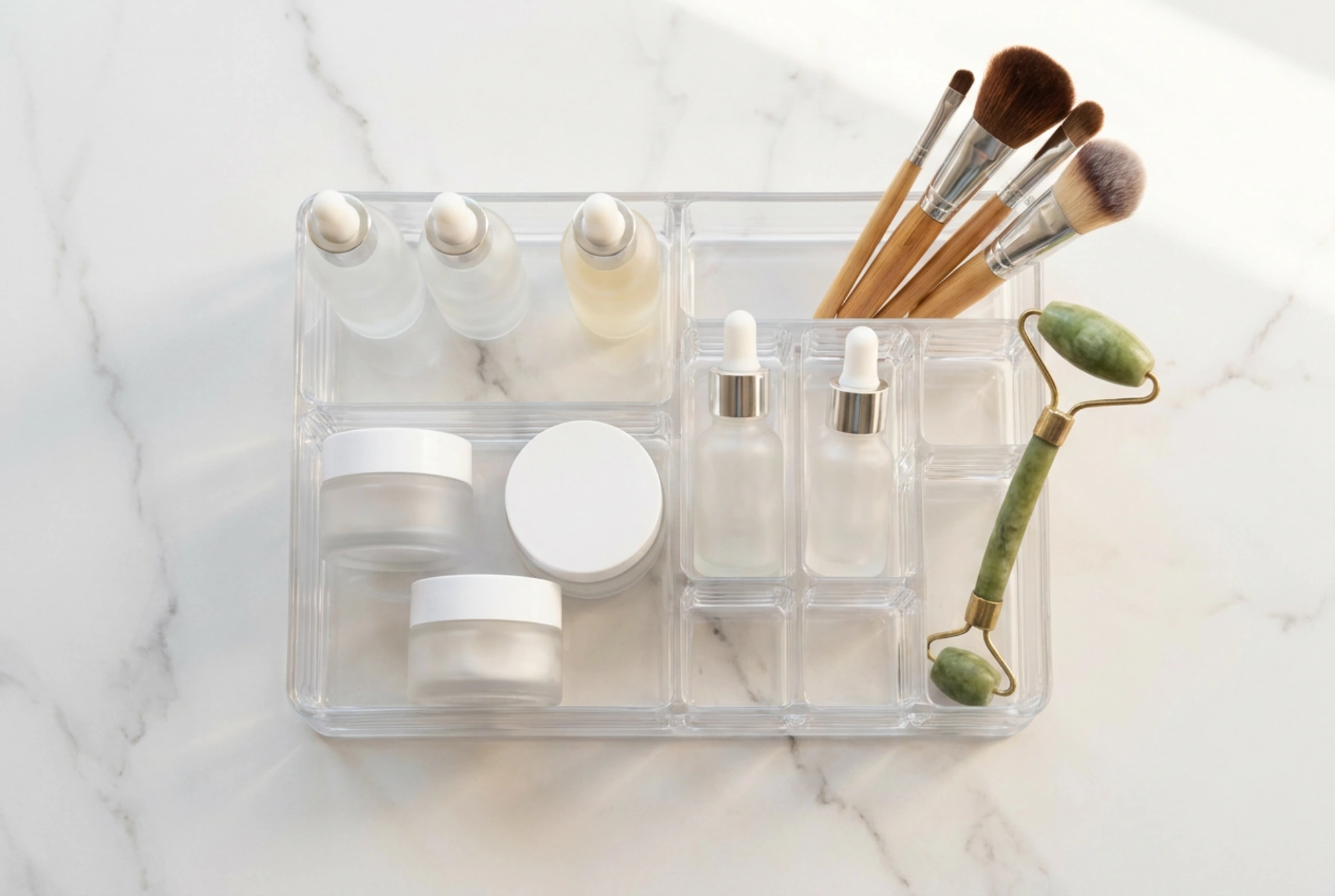


Structuring your skincare collection within a large organiser requires more than mere aesthetic placement; it demands an understanding of product chemistry, application order, and environmental preservation. By zoning your organiser based on molecular weight, chemical sensitivity, and daily workflow, you protect active ingredients from degradation while streamlining your daily routine.
The Chemistry of Skincare Layering and Spatial Mapping
To maximise the efficacy of skincare products, they must be applied in a specific sequence dictated by molecular weight: lightest (water-based) to heaviest (lipid-based). Replicating this progression inside your organiser prevents confusion and cross-contamination. Create a physical pathway from left to right, or front to back, that mirrors this sequence. Place lightweight serums, essences, and aqueous toners in the primary access zone. Thicker lipid-based formulations, such as occlusive creams, face oils, and emulsions, should occupy the subsequent zone. This layout prevents you from reaching over heavy oils—which can leave microscopic lipid residues on your hands—before handling delicate, highly penetrative water-based formulas.
Protecting Actives from Photodegradation and Thermal Fluctuations
Acrylic and plastic organisers are highly functional due to their transparency, but they offer zero protection against ultraviolet (UV) light and ambient heat. Active compounds like L-ascorbic acid (Vitamin C), retinol (Vitamin A), and various peptide chains are highly unstable and prone to oxidation when exposed to light and fluctuating temperatures. To preserve these volatile formulations, designate a dark, shielded zone within your organiser. This can be achieved by using opaque sub-containers inside the larger acrylic unit or placing the organiser away from direct window light. Furthermore, locate products containing active acids (like salicylic or glycolic acid) away from any heat-emitting bathroom appliances, as elevated temperatures accelerate chemical breakdown and reduce shelf life.
Zoning by pH and Chemical Function
The Cleanse and Prep Zone
This zone should house your surfactants, hydrophilic oils, and exfoliating acids. Because cleansing involves water interaction, place these items in a compartment constructed from non-porous, hydrophobic materials. Ensure that products designed for wet hands have dedicated drainage or sit on a quick-drying, washable silicone insert to prevent standing water from breeding microbial life.
The Hydration and Treatment Zone
Dedicated to humectants (such as hyaluronic acid and glycerin) and barrier-repair creams. These products require pristine, dust-free environments. Store them in lidded compartments or deeper drawers within your organiser to minimise exposure to airborne particulates and bathroom aerosols.
Preventing Microbial Growth and Managing Material Physics
Cosmetics organisers frequently suffer from capillary action—where small amounts of liquid spilt on the base creep upward beneath product bottles, creating a damp microenvironment ripe for bacterial and fungal growth. To counteract this, elevate individual bottles using textured silicone grids or wipe the base of each container dry before returning it to its designated slot. Additionally, acrylic plastic carries a static charge that actively attracts household dust. Minimise dust accumulation by wiping the organiser weekly with a damp microfibre cloth using a mild, non-ionic surfactant. Avoid alcohol-based solvents or abrasive cleaners, which induce micro-cracks (crazing) in acrylic, compromising its structural integrity and clouding its surface.
An Ergonomic Checklist for Weekly Maintenance
To maintain the functional integrity of your zoned skincare organiser, implement this simple maintenance sequence:
- Purge and Inspect: Every Sunday, check bottle rims for dried residue or lipid oxidation, wiping them down with a sanitising wipe.
- Dust Control: Use an anti-static cloth to wipe down empty compartments to prevent particulate build-up.
- Rotate Actives: Ensure that products nearing their period-after-opening (PAO) limit are pulled to the front of their respective zones to guarantee usage before expiration.