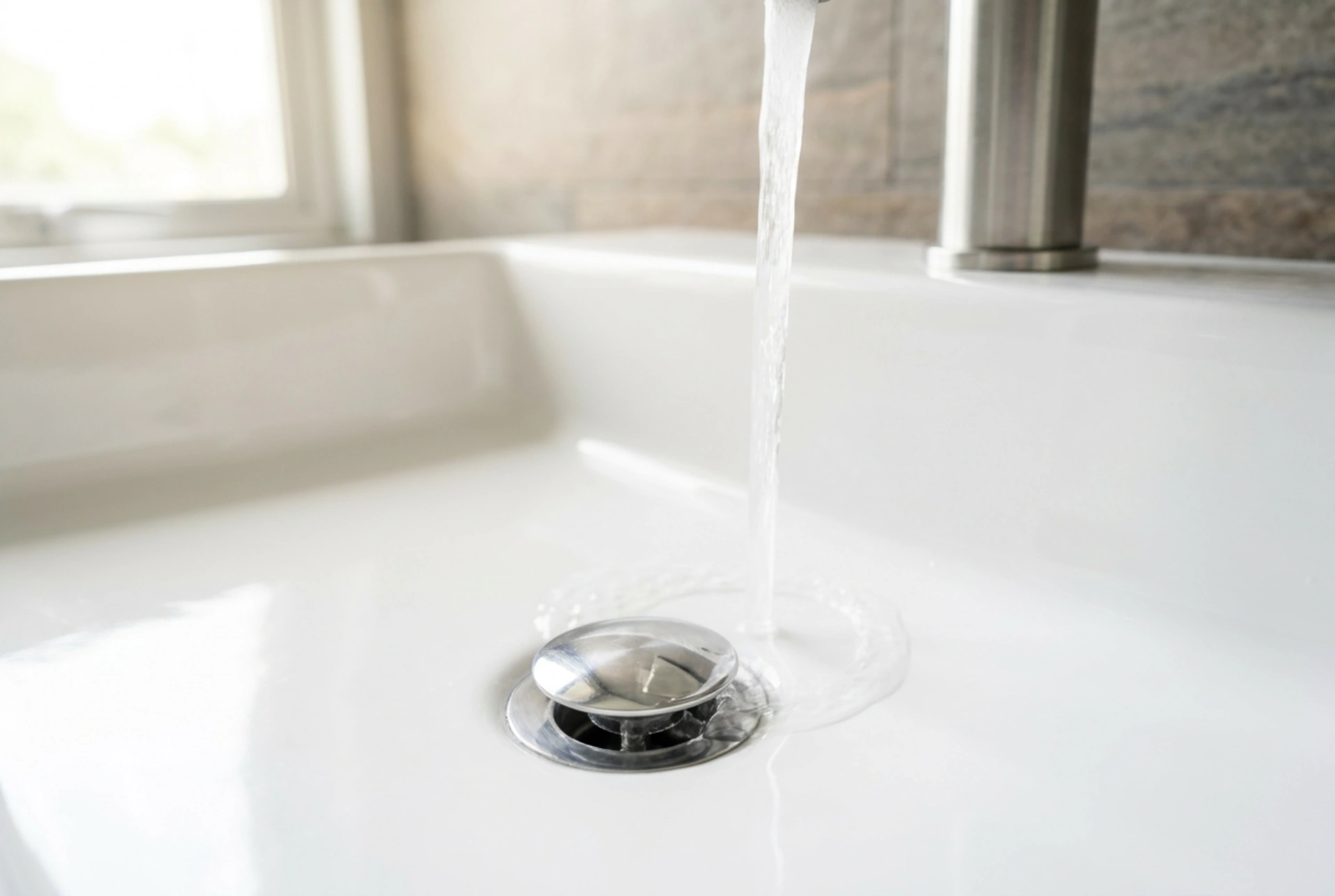


Basin wastes and overflow channels are highly susceptible to accumulating biofilm, soap scum, and organic debris due to constant exposure to water, skin cells, and personal care products. Understanding the physical structures and chemical mechanisms of these drainage systems is key to preventing unpleasant odours, bacterial growth, and slow drainage without damaging your plumbing fixtures.
The Anatomy of Basin Wastes and Overflows
A standard basin waste with an overflow features a dual-pathway system. While the primary drain carries away the main volume of water, the overflow channel serves as a safety bypass to prevent flooding. This channel is integrated into the ceramic of the basin or runs via an external flexible plastic tube. Because the overflow channel is rarely subjected to a high-velocity flush of clean water, it remains a damp, dark environment where stagnant water, dust, and aerosolised organic particles collect. Over time, bacteria establish a biofilm—a sticky, protective matrix of extracellular polymeric substances—which adheres firmly to the internal walls of the pipe, causing persistent odours and acting as a breeding ground for mould.
The Chemistry of Biofilm and Limescale Removal
To effectively clean these hidden surfaces, we must target both the inorganic binders and the organic matrix. Limescale (calcium carbonate) acts as a microscopic scaffold that traps organic matter and bacteria. Regular soap or simple water flushes cannot dissolve this structure.
- Mild Acids: Organic acids, such as citric acid or acetic acid (found in white vinegar), are highly effective at dissolving calcium carbonate. The acid reacts with the insoluble calcium carbonate to produce soluble calcium citrate or calcium acetate, which can be easily washed away. This breaks down the structural integrity of the biofilm.
- Oxygen Bleach: Sodium percarbonate (oxygen bleach), when dissolved in warm water, releases hydrogen peroxide and sodium carbonate. The active oxygen physically oxidises organic debris, breaking apart the biological matrix of the biofilm and destroying odour-causing bacteria without releasing corrosive fumes.
- Surfactants: Simple washing-up liquid reduces the surface tension of water, allowing cleaning solutions to penetrate deeply into the sticky lipid layers of soap scum.
Avoid using harsh chlorine-based bleaches or highly concentrated mineral acids on a regular basis. These chemicals can degrade the rubber seals, strip the lubrication from pop-up mechanisms, and corrode the underlying brass or zinc alloy of the waste assembly if the protective chrome plating has any microscopic imperfections.
A Step-by-Step Mechanical and Chemical Cleaning Protocol
Restoring hygiene to your basin waste requires a combination of chemical breakdown and targeted mechanical agitation. Follow this procedure monthly to maintain optimal flow and cleanliness.
Step 1: Disassemble and Clean the Pop-Up Plug
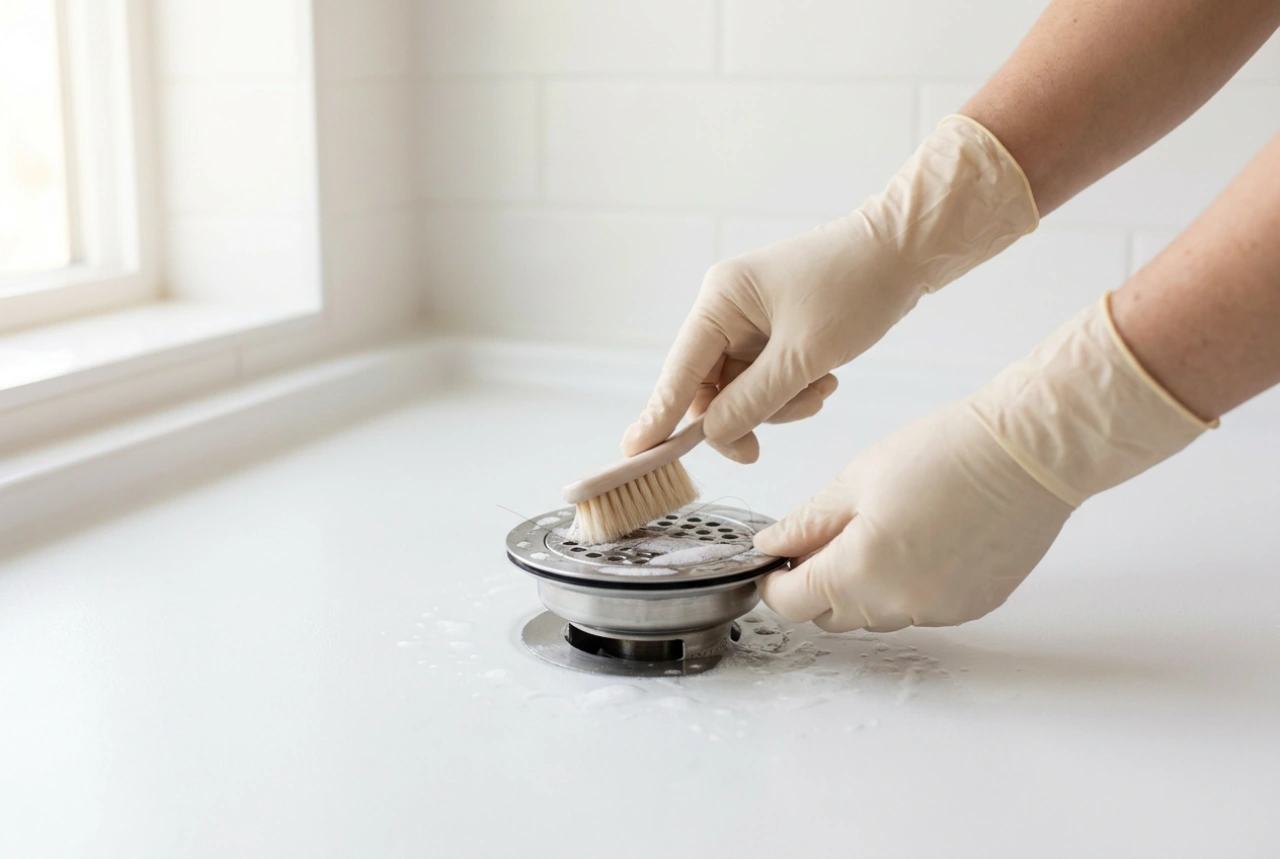
Many modern basin wastes feature a click-clack or pop-up plug that can be unscrewed or lifted directly out of the mechanism. Remove the plug and inspect the sealing ring. The silicone or rubber gasket is a common site for black yeast and mould accumulation. Clean the plug assembly using a soft-bristled brush and a solution of warm water, citric acid, and a drop of dish soap. Pay close attention to the spring-loaded clicker mechanism; do not use heavy grease, but ensure no grit remains in the thread.
Step 2: Treat the Overflow Channel
Because the overflow channel is difficult to reach with standard brushes, use a specialized flexible pipe brush or a clean mascara wand. Pour a concentrated solution of citric acid (two tablespoons dissolved in 500ml of warm water) directly down the overflow hole. Let it sit for fifteen minutes to dissolve the mineral binders. Next, insert the flexible brush as far as possible, using rotating motions to physically scrub the internal walls of the channel.
Step 3: The Oxygen Bleach Flush
Dissolve one tablespoon of sodium percarbonate in 1 litre of hot water (approximately 60 degrees Celsius—do not use boiling water, as extreme thermal shock can crack ceramic basins or warp plastic waste pipes). Carefully pour half of this effervescent solution down the overflow and the other half down the main drain. The foaming action will expand into the cavities, sanitising areas that brushes cannot reach. Allow it to work for ten minutes, then rinse thoroughly with warm tap water.
Long-Term Prevention Strategies
To prevent the rapid re-establishment of biofilms, practice preventive flushing. Once a week, run hot water directly into the overflow hole for thirty seconds. This simple action dilutes accumulated soap residue before it can cure into a hard film. Additionally, avoid washing heavy solids, cosmetic clays, or oil-rich products down the basin, as these substances act as binders that accelerate the clogging process of both the waste and the overflow channels.