

Organising trousers in a wardrobe is not merely a matter of aesthetics; it is a fundamental practice in textile preservation. Properly selected trouser hangers and hanging techniques utilise gravity and fabric physics to maintain the structure of garments, eliminating the need for frequent ironing.
The Physics of Fabric Creases and Gravity
To understand why trousers lose their shape, one must look at the molecular structure of textile fibres. Natural fibres such as wool (composed of keratin proteins) and cotton (composed of cellulose chains) are highly susceptible to deformation. When these fibres are subjected to warmth, moisture (from wear or atmospheric humidity), and pressure, their hydrogen bonds temporarily break and reform in new positions. This is what creates a crease.
When trousers are folded flat in drawers, the weight of the pile exerts concentrated pressure on the folds, locking the creases in place. Suspending trousers vertically reverses this process. By hanging trousers from their hems or waistbands, gravity acts as a continuous, gentle pulling force. This tension helps the fibres return to their natural, relaxed state, effectively smoothing out minor wrinkles overnight without applying heat. For delicate wool trousers, this natural recovery cycle is essential for maintaining the drape and longevity of the fabric.
Selecting the Optimal Trouser Hanger
The efficiency of a wardrobe system depends heavily on the mechanical design of the hangers. Different trouser designs require specific suspension methods to prevent fabric damage and slippage:
- Clamp Hangers: These hold the trousers by the hem or cuff, letting the entire weight of the garment pull downward. This is the most effective method for removing wear-creases from the legs. Ensure the clamp features a soft felt or rubber lining to distribute pressure evenly and prevent leaving indentations on the fabric.
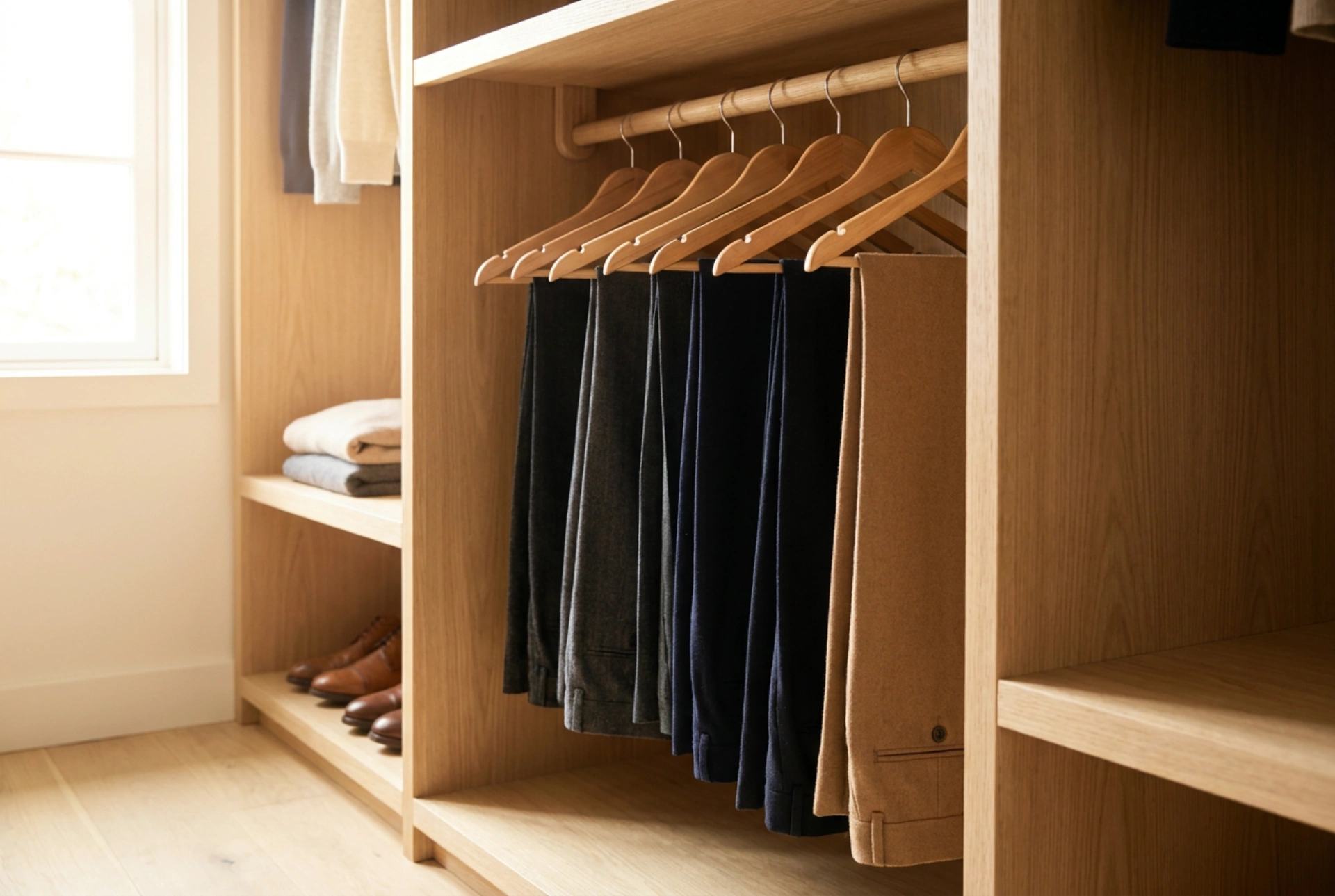
- Bar Hangers (Open-ended or Standard): These require folding the trousers in half. The critical factor here is the diameter of the bar and its surface friction. A thin metal wire hanger creates a sharp angle that introduces permanent horizontal creases. A thicker wooden or padded bar (ideally 1 to 2 centimetres in diameter) distributes the weight over a wider surface area. Non-slip coatings, such as silicone sleeves or flocked velvet, prevent the trousers from sliding off due to asymmetrical weight distribution.
- Multi-tier and Pull-out Racks: Designed for space optimisation, these systems slide out for easy access. While highly efficient for storage density, they require careful spacing to prevent the fabrics from pressing against one another, which blocks airflow and traps humidity.
The Savile Row Fold and Proper Hanging Techniques
How you hang your trousers is just as important as the tool you use. For standard bar hangers, the 'Savile Row fold' is a highly stable technique that prevents trousers from slipping off without using damaging clips. To execute this, hold the trousers upside down by the hems. Straddle one leg over the hanger bar and pull it down until the crotch is near the bar. Then, fold the second leg over the first leg in the opposite direction. The friction between the two fabric layers locks the trousers securely onto the hanger.
For formal trousers with a sharp front crease, always fold them along the existing crease lines rather than the side seams. This preserves the sharp, tailored silhouette of the garment. When using clamp hangers, ensure the pockets are empty and lying flat; leaving heavy items in pockets during hanging distorts the waistline and stretches the pocket bags over time.
Microclimate Control and Wardrobe Spacing
The environment inside the wardrobe plays a vital role in fabric care. Fibres need to 'breathe' to release moisture absorbed during wear. If trousers are packed too tightly together, air circulation is restricted. This traps humidity, which can lead to musty odours, fabric degradation, and stubborn, set-in wrinkles. Ideally, there should be a two-centimetre gap between each hanger. This spacing allows air to circulate, maintaining a stable relative humidity level of around 40 to 50 percent, which is optimal for textile preservation.
Additionally, material selection for wardrobe fittings matters. Avoid using cheap plastic hangers, which can degrade under UV light and release volatile organic compounds that can discolour delicate fabrics. Untreated cedar wood components are highly recommended, not only for their structural rigidity but also because they naturally absorb excess moisture and release volatile oils that act as a natural deterrent against textile pests.